DbcultAccessing Vault...
Cult Review
Senior Film Conservator
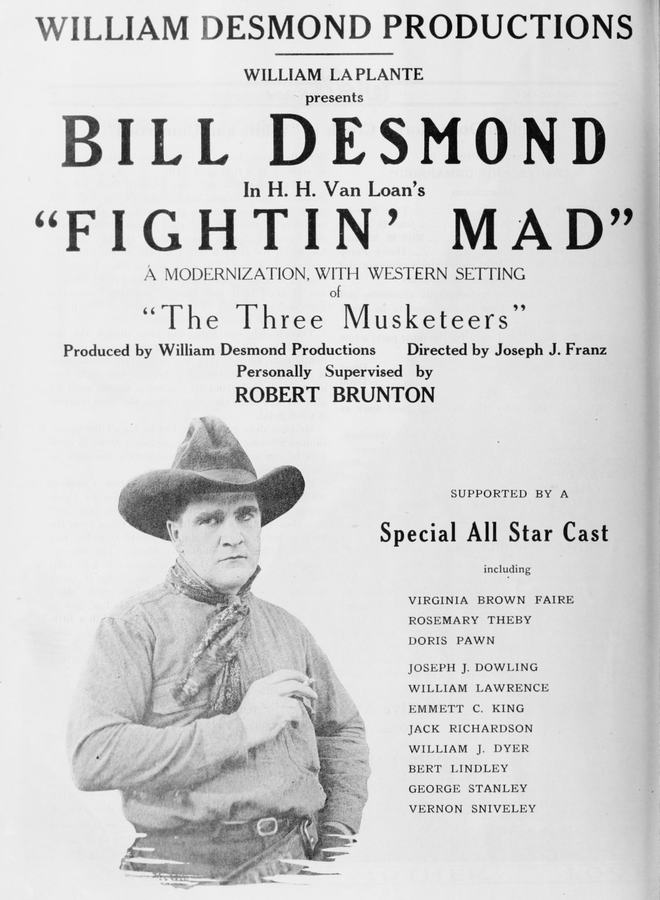
The 1921 release of Fightin' Mad arrives at a fascinating intersection of American cultural history. Following the Great War, the silver screen became a mirror for the collective psyche of returning veterans—men who had tasted the mechanized horrors of Europe and found the quietude of home to be an alien landscape. William Desmond, portraying Bud McGraw, encapsulates this jagged transition with a performance that transcends the standard tropes of the silent Western. Unlike the refined social navigation found in Barriers of Society, Fightin' Mad embraces the raw, unadulterated friction of a man seeking a purpose through the only medium he now understands: conflict.
The opening sequences on the McGraw ranch are masterfully claustrophobic. Despite the vastness of the Texas horizon, the camera lingers on Bud’s agitated movements, his inability to find comfort in the domesticity of his father’s legacy. This isn't merely a tale of a wayward son; it is a psychological profile of the 'lost generation' transposed onto the frontier. The decision to send him to the Border Police is presented not as a punishment, but as a therapeutic necessity—a way to channel his 'fighting madness' into the service of a burgeoning state. It shares a thematic DNA with Unconquered, where the protagonist must find a new frontier to tame their internal chaos.
The cinematography of Fightin' Mad utilizes the harsh, high-contrast lighting of the Texas-Mexico border to create a visual metaphor for moral ambiguity. The border isn't just a line on a map; it is a liminal space where the law is as shifting as the desert sands. Director Joseph J. Dowling, who also takes a role in the film, understands the kinetic energy required for such a setting. The scene where Bud retrieves Peggy Hughes' hat from the train tracks is more than a romantic gesture; it is a demonstration of physical prowess and a refusal to be intimidated by the industrial behemoths of the age.
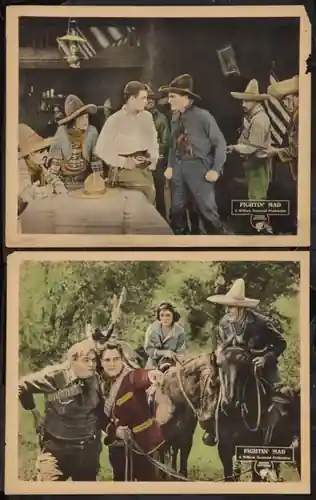
Doris Pawn as Peggy Hughes provides a necessary counterbalance to Desmond’s rugged intensity. While she could have easily remained a static damsel, her presence in the narrative serves as the catalyst for Bud’s integration into the Border Police. Her uncle, Graham, represents the bureaucratic side of the law—the customs inspector whose rigid adherence to rules provides a foil for Bud’s improvisational violence. This tension between the letter of the law and the spirit of the law is a recurring motif, reminiscent of the societal critiques found in The Truth About Husbands.
The introduction of Lazaro, played with a serpentine grace, elevates the film from a standard Western to a proto-noir thriller. Lazaro is a Secret Service agent—a man of the state—yet he harbors the heart of a bandit. This subversion of authority is a sophisticated narrative choice for 1921. It suggests that the greatest threats to the social order come not from the 'other' across the border, but from the corruption within the institutions designed to protect it. This exploration of hidden identities and moral rot echoes the dark undercurrents of Lady Audley's Secret.
Lazaro’s manipulation of Peggy and her aunt is chilling in its calculated nature. He uses the 'automobile ride'—a symbol of modern luxury and progress—as the vehicle for their capture. It is a striking juxtaposition: the modern world being used to facilitate ancient crimes like kidnapping and ransom. The bandit chief's refusal to release Peggy, even after the ransom is delivered, pushes the film into a darker territory, exploring the obsessive nature of power and the dehumanization of those caught in its wake.
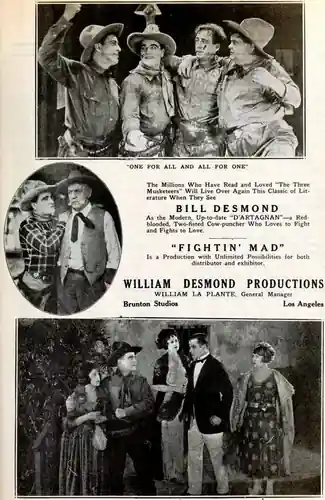
Perhaps the most compelling character in the third act is Nita de Garma, portrayed by Rosemary Theby. In a genre often dominated by male bravado, Nita represents the 'scorned woman' archetype but with a lethal agency that disrupts the binary of hero and villain. Her jealousy is not a weakness but a weapon. When she realizes Lazaro’s true nature and his fixation on Peggy, she doesn't wait for the Border Police to dispense justice; she takes it herself. This element of feminine retribution adds a layer of complexity similar to the performances in Her Greatest Performance.
The climax of the film is a whirlwind of action, but it is Nita’s bullet that truly concludes the conflict. This narrative choice decentralizes Bud as the sole savior, suggesting that the resolution of such deep-seated corruption requires a confluence of forces—both the official arm of the law and the personal vengeance of those wronged by the system. The arrival of the Border Police serves as the final seal on the chaos, restoring a semblance of order to the frontier, yet the memory of the betrayal remains.
From a technical perspective, Fightin' Mad is a testament to the sophistication of early 1920s filmmaking. The editing during the chase sequences and the fights at the headquarters is remarkably tight, maintaining a rhythmic urgency that keeps the viewer engaged. The use of location shooting lends an authenticity that studio-bound Westerns of the era lacked. The dust is real, the sun is punishing, and the horses move with a weight that feels tangible. It lacks the melodrama of From Dusk to Dawn, opting instead for a gritty realism that would later define the genre in the decades to come.
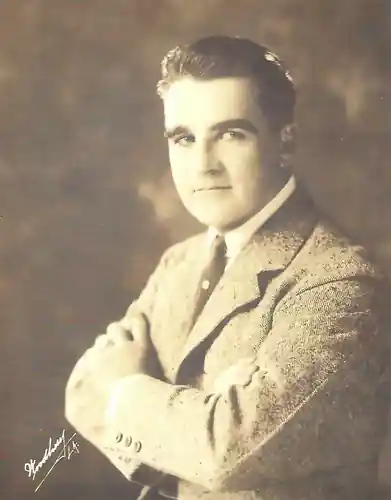
The ensemble cast, including Virginia Brown Faire and Jack Richardson, provides a robust supporting framework for the central drama. Each character, no matter how brief their screen time, contributes to the sense of a living, breathing community on the edge of civilization. This attention to world-building is what separates Fightin' Mad from the more disposable 'shorts' of the time. It is a fully realized vision of the American Southwest in transition—a place where the ghosts of the old world meet the anxieties of the new.
In comparing this work to others of the period, such as Souls in Pawn, we see a shift from moralistic parables to more action-oriented storytelling that still maintains a core of character-driven depth. While Souls in Pawn deals with the spiritual weight of one's choices, Fightin' Mad focuses on the physical manifestation of those choices. Bud McGraw doesn't just ponder his path; he fights his way through it. This physicality was the hallmark of William Desmond’s career, earning him a place among the elite action stars of the silent screen.
As we look back at Fightin' Mad from a modern perspective, its influence on the Western genre is undeniable. The 'returning soldier' trope would become a staple of cinema, from the post-WWII noirs to the Vietnam-era revisionist Westerns. Bud McGraw is a precursor to the cynical, yet ultimately noble, heroes played by John Wayne or Clint Eastwood. He is a man defined by his scars—both seen and unseen—and his journey from restlessness to purpose is a universal human story.
The film also serves as a poignant reminder of the power of silent cinema to convey complex emotional states through visual storytelling alone. The interplay of glances between Bud and Peggy, the menacing shadow of Lazaro, and the defiant stance of Nita de Garma all communicate volumes without the need for a single line of dialogue. It is a masterclass in economy and impact. For those interested in the evolution of the genre, Fightin' Mad is an essential text, standing alongside works like The Floor Below in its ability to blend suspense, romance, and social commentary into a seamless whole.
Ultimately, Fightin' Mad is a celebration of resilience. It acknowledges the trauma of the past but insists on the possibility of a future forged through courage and the defense of the vulnerable. It is a film that demands to be seen not just as a historical curiosity, but as a vibrant, living piece of art that still speaks to our contemporary struggles with identity, duty, and the search for peace in a turbulent world. Whether it's the thrill of the chase or the quiet moments of romantic connection, the film remains a testament to the enduring power of the Western mythos.
IMDb 7.3
1924
Community
Log in to comment.