DbcultAccessing Vault...
Cult Review
Senior Film Conservator
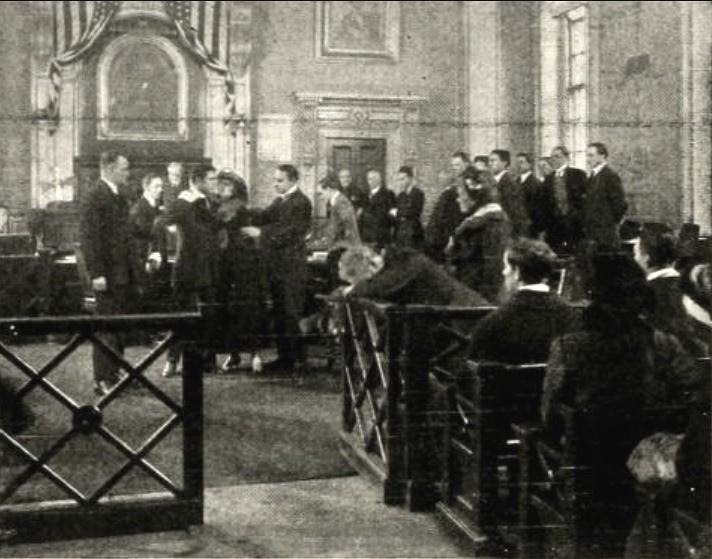
In the annals of early cinema, where narratives often grappled with the nascent language of visual storytelling, a film like The Pursuing Shadow emerges not merely as a relic of a bygone era but as a surprisingly sophisticated tapestry of human duplicity, mistaken identity, and the relentless pursuit of justice. Released at a time when the medium was still finding its voice, this picture, penned by the collaborative genius of Victorien Sardou and William Terriss, transcends its period limitations to deliver a plot so convoluted and rich in dramatic irony that it could easily serve as a blueprint for thrillers decades its junior. It’s a testament to the enduring power of a well-crafted story, even when conveyed through the flickering images and sparse intertitles of the silent age.
At its core, The Pursuing Shadow is a grand exercise in deception, beginning with the seemingly innocuous setting of a high-society dance hosted by Earl Dexter. Yet, beneath the veneer of aristocratic charm, a sinister undercurrent flows. Dexter himself is a man bifurcated, living a perilous dual existence, his respectable public persona a stark contrast to his criminal alter ego, Tony Oscaros. This foundational premise imbues the entire narrative with a pervasive sense of unease, a constant whisper of impending revelation that keeps the audience on edge. The initial catalyst for the film's spiraling events is a pearl necklace, an object of desire and a potent symbol of the wealth and privilege that Dexter, as Oscaros, seeks to undermine and exploit. Viscount Acheson, the necklace's owner, unknowingly sets the stage for his own demise by allowing Dexter's wife to wear it – a seemingly innocent whim that becomes a pivotal error in judgment.
Enter Craig Dare, the quintessential gentleman thief, a figure whose suave demeanor masks a predatory cunning. His seduction of Dexter's wife is a masterclass in calculated charm, a performance within a performance designed solely to facilitate the theft. The seamless transfer of the pearls to Oscaros, waiting outside, is executed with a precision that speaks volumes about the criminal enterprise at play. This opening sequence, while perhaps brief in screen time, establishes the film's tone of sophisticated villainy and foreshadows the intricate machinations that will follow. The immediate aftermath – the party's descent into confusion upon the announcement of the theft – serves as a stark reminder of how quickly order can dissolve when confronted with chaos.
The narrative then takes a darker turn, escalating from mere theft to outright murder. Dare, with a chilling efficiency, orchestrates Acheson's fatal encounter. Knowing Acheson carries a considerable sum and is headed to an inn owned by Dexter's father, Dare guides the unsuspecting Viscount directly into Oscaros's trap. This sequence highlights Dare's role not just as a thief, but as a facilitator of greater crimes, a shadowy figure pulling strings from the periphery. The inn, a seemingly innocuous location, transforms into a locus of violence, a stark contrast to the earlier ballroom's opulence. It's here that the film's central tragedy unfolds, a brutal act that will reverberate through the lives of all involved.
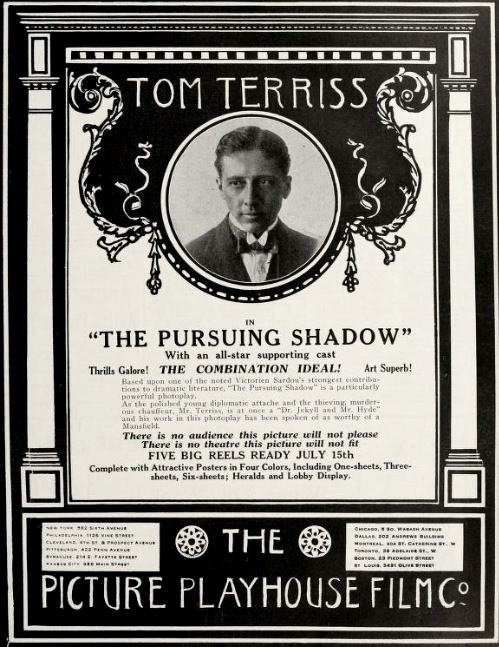
The subsequent arrival of Earl Dexter at the inn, just moments before the murder, sets up the excruciating irony that defines much of the film's dramatic tension. His father's return, discovering the murdered Acheson and witnessing Oscaros's escape, is a moment laden with dramatic weight. What follows is perhaps the most audacious plot device: the uncanny resemblance between Tony Oscaros and Earl Dexter. This physical sameness, so profound that it deceives even Dexter's own father, becomes the linchpin of the film's central conflict. It's a contrivance, certainly, but one that silent cinema often leveraged to great effect, allowing for heightened melodrama and a clear visual representation of internal turmoil and external injustice. The ease with which Dexter is accused and convicted of Acheson's murder speaks volumes about the fallibility of perception and the swift, often brutal, nature of justice in the era depicted.
One might draw parallels here to other films of the period that explored the fragility of identity and the devastating consequences of being wrongly accused. While not directly a story of a mistaken identity leading to an execution, the intense drama and social commentary found in a film like The Dishonored Medal or even the psychological strain depicted in The Labyrinth, hint at the era's fascination with individuals trapped by circumstance or deception. The Pursuing Shadow pushes this further, making the very face of the innocent man his undoing. It's a narrative choice that, while stretching credulity for modern audiences, was a potent engine for suspense and pathos in its time.
Just as hope seems lost, and Earl Dexter faces an unjust fate, the narrative introduces its most poignant and ultimately redemptive element: Tony Oscaros's little boy. This child, with the unblemished clarity of youth, becomes the unlikely hero. His recognition that the man facing conviction is not his father is a moment of profound revelation, a small, innocent voice cutting through the layers of adult deception and judicial error. It's a classic deus ex machina, certainly, but one that resonates with emotional power, underscoring the idea that truth, however obscured, will eventually surface. The police, finally equipped with the crucial clue, embark on the titular pursuit, culminating in Oscaros's capture. This resolution, while perhaps tidily wrapped, provides a satisfying closure to a story fraught with tension and injustice.
The use of a child as the ultimate catalyst for justice is a trope seen in various forms across early cinema, often symbolizing purity and an uncorrupted sense of right and wrong. It’s a narrative device that taps into universal sentiments, providing an emotional anchor in otherwise morally ambiguous tales. The contrast between the child's simple perception and the adults' complex web of misunderstanding and villainy is particularly effective here.
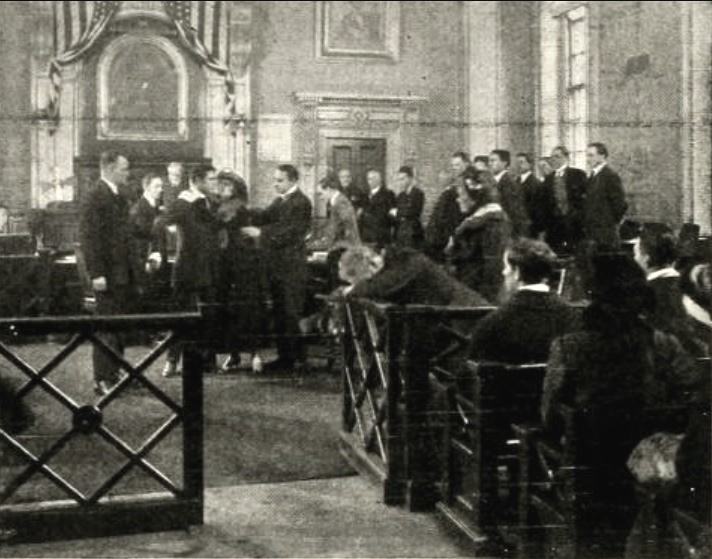
The performances in The Pursuing Shadow are, as expected for the era, largely expressive and theatrical. Kathryn Adams, Rienzi De Cordova, and Milly Terriss lead a cast that, under the direction, navigates the demands of silent acting with commendable skill. Actors like Cornish Beck, Tom Terriss, DeVore Palmer, Anna Luther, Alfred Hemming, and Lionel Pape, though perhaps less centrally featured, contribute to the ensemble's overall effectiveness. The challenge of conveying complex emotions and intricate plot points without dialogue required a mastery of gesture, facial expression, and physical presence. The actors here often rely on broad strokes, yet within those conventions, they manage to imbue their characters with discernible motivations and emotional states. The dual role, in particular, would have presented a significant challenge for the actor portraying both Earl Dexter and Tony Oscaros, demanding a nuanced portrayal that could distinguish between the two personalities despite their physical resemblance.
Pacing in silent films can often feel deliberate to modern viewers, but The Pursuing Shadow maintains a surprising momentum, propelling the audience through its twists and turns with an almost breathless urgency. The transitions between the elegant ballroom, the clandestine hand-off, the ill-fated inn, and the dramatic courtroom scenes are handled with a fluidity that belies the technical constraints of the period. This briskness prevents the more outlandish plot points from feeling too drawn out, allowing the audience to be swept along by the sheer force of the narrative.
Beyond its intricate plot, The Pursuing Shadow explores several timeless themes. The most prominent is the concept of duality – the respectable facade versus the hidden criminality. This is personified not just in Earl Dexter/Tony Oscaros, but subtly in Craig Dare, whose gentlemanly exterior masks a ruthless opportunism. It's a theme that resonates across various genres and periods, from classic literature to modern thrillers, exploring the hypocrisy inherent in societal structures and the dark secrets that individuals harbor. The film also touches upon the fragility of reputation, the ease with which an innocent man can be condemned, and the ultimate triumph of truth, even if arrived at through seemingly miraculous means.
The film's exploration of class distinctions is also notable. The Earl and Viscount represent the upper echelons of society, their lives of luxury providing the backdrop for criminal exploits. Oscaros, as a chauffeur, initially occupies a subservient role, highlighting the tension between the classes and perhaps hinting at a resentment that fuels his criminal endeavors. This subtext adds another layer to the narrative, suggesting that the shadows pursued are not just those of individuals, but of societal inequalities.
In an era that also produced films like The Club of the Black Mask, which undoubtedly also delved into themes of secret societies and criminal underworlds, The Pursuing Shadow stands out for its particularly personal and familial stakes. The mistaken identity between father and son, and the child's eventual role in setting things right, inject a powerful emotional core that elevates it beyond a mere crime thriller. Films like A Modern Magdalen might explore moral dilemmas, but The Pursuing Shadow grounds its morality in the stark, black-and-white terms of innocence and guilt, albeit through a labyrinthine plot.
Ultimately, The Pursuing Shadow is more than just an artifact of early cinema; it's a testament to the nascent medium's capacity for complex storytelling and dramatic engagement. Its intricate plot, though occasionally reliant on convenient coincidences, is meticulously constructed, holding the audience captive with its relentless forward momentum. The performances, while adhering to the stylistic conventions of the silent era, convey the necessary emotional weight to make the characters' plights resonate. As a piece of cinematic history, it offers invaluable insight into the narrative aspirations and technical ingenuity of its time. For enthusiasts of classic film, it provides a compelling example of how foundational tropes of mystery and suspense were established and refined, proving that even in the absence of spoken dialogue, a compelling story, well-told, can cast a long, enduring shadow. It reminds us that the pursuit of justice, and the unmasking of deception, are themes as old as storytelling itself, and as fresh as the latest blockbuster, proving that some narrative threads are truly timeless. The legacy of films like this is not just in their existence, but in the echoes of their narrative ingenuity that we continue to see in cinema today.

IMDb 7.2
1927
Community
Log in to comment.