DbcultAccessing Vault...
Cult Review
Senior Film Conservator
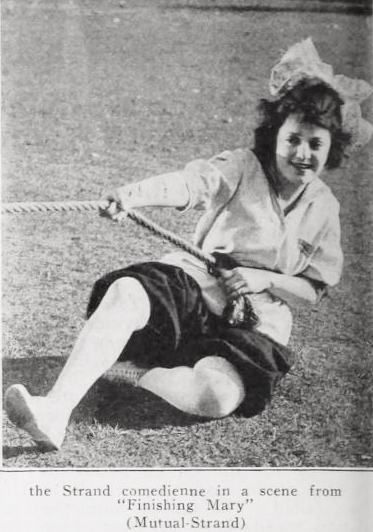
In the annals of early cinema, where narratives often grappled with grand melodramas or slapstick farces, a particular gem emerges that, despite its apparent simplicity, offers a nuanced and profoundly engaging exploration of youthful agency. Eugenie Forde's "Finishing Mary," a silent-era comedic marvel, transcends its rudimentary plot synopsis to deliver a remarkably prescient commentary on individuality battling institutional rigidity. Set within the confines of a finishing school, an establishment designed to mold young women into paragons of societal expectation, the film introduces us to Mary, a protagonist whose very essence is antithetical to such passive conformity. Her journey is not one of dramatic rebellion in the conventional sense, but rather a series of ingenious, often hilarious, subversions that illuminate the enduring human desire to assert selfhood against an overbearing system. This isn't merely a tale of a mischievous student; it's a vibrant character study, a testament to the power of wit, and a surprisingly resonant piece of social observation, particularly when viewed through a contemporary lens.
At the heart of "Finishing Mary" lies its eponymous character, brought to life with an effervescent charm by Eugenie Forde. Mary is not merely a rule-breaker; she is an architect of loopholes, a strategist of circumvention. The finishing school, under the eagle-eyed supervision of Miss Sprout, portrayed with delightful severity by Billie Rhodes, presents a veritable fortress of regulations. From strictures on comportment to prohibitions on communication, every facet of a young woman's existence is meticulously controlled. Yet, Mary perceives these rules not as insurmountable barriers but as intricate puzzles awaiting her clever solutions. Her methods are never crude or confrontational; instead, they are characterized by a subtle artistry, a series of elegant deceptions that rely on keen observation and a nimble intellect. Whether it's finding an ingenious way to pass notes, surreptitiously enjoy forbidden treats, or simply evade the incessant scrutiny, Mary’s actions are less about defiance for defiance’s sake and more about preserving a sliver of personal liberty and joy within an otherwise restrictive environment. Her spirit is infectious, her resourcefulness boundless, and her quiet acts of rebellion form the very comedic and thematic backbone of the film. She embodies a kind of proto-feminist spirit, asserting her right to autonomy through cunning rather than overt protest, a fascinating precursor to more overt cinematic explorations of female agency.
This portrayal of Mary resonates with certain aspects of other narratives centered on young women navigating societal expectations. One might draw a parallel, albeit a lighter one, to the nuanced social commentary found in films like The Apple-Tree Girl, where youthful idealism confronts the realities of a structured world. However, Mary's approach is distinctly more mischievous, less overtly romantic, and purely focused on outwitting a system rather than finding her place within it. Her character is a masterclass in non-verbal communication, a necessity in the silent era, conveying mischief, intelligence, and a delightful sense of triumph through subtle glances, knowing smiles, and perfectly timed physical comedy. It’s a performance that holds up remarkably well, inviting audiences to cheer for her small victories against the imposing, if somewhat comically exaggerated, figure of authority.
Opposite Mary stands Miss Sprout, the preceptress, a character who, in the hands of Billie Rhodes, becomes more than a mere caricature of a strict disciplinarian. While her role is fundamentally that of the antagonist, the embodiment of the rules Mary seeks to bend, there's a certain tragicomic grandeur to her relentless pursuit of order. Miss Sprout is the unyielding guardian of tradition, the zealous enforcer of an antiquated code of conduct. Her every posture, every facial expression, every authoritative gesture is designed to project an aura of unshakeable authority. Yet, it is precisely this rigid adherence to protocol that makes her so susceptible to Mary's imaginative ploys. She is a figure of unwavering dedication, perhaps even conviction, in the necessity of these 'finishing' touches, believing wholeheartedly in the transformative power of her institution's methods. The humor often derives from her increasing exasperation as Mary continually slips through her fingers, not through brute force, but through sheer cleverness. Miss Sprout's inability to comprehend, let alone anticipate, Mary's unconventional thinking becomes a running gag, highlighting the futility of dogmatic adherence in the face of inventive spirit.
The dynamic between Mary and Miss Sprout is foundational to the film's comedic success. It is a classic battle of wits, a narrative engine fueled by the constant push and pull between youthful exuberance and seasoned, if somewhat rigid, authority. This interplay can be seen as a lighter, more comedic echo of the struggles against oppressive systems explored in other films of the era, such as Strife, which might depict more serious confrontations with institutional power. Here, however, the conflict is contained within the delightful bounds of a finishing school, making the stakes personal and charming rather than broadly societal. Rhodes’ performance, much like Forde’s, relies heavily on exaggerated expressions and gestures characteristic of silent cinema, yet she imbues Miss Sprout with enough conviction to make her a credible, if often outwitted, foil. Her dramatic sighs, her narrowed eyes, and her increasingly frantic attempts to catch Mary in the act are all masterfully executed, creating a perfectly balanced comedic duo.
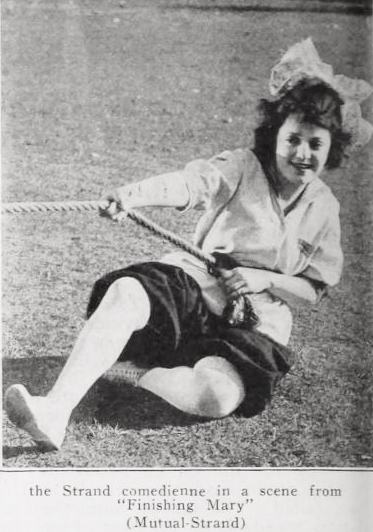
"Finishing Mary" is a superb example of how silent cinema, devoid of spoken dialogue, could convey intricate narratives and complex character dynamics through purely visual means. The film’s humor is derived from its impeccable comedic timing, relying heavily on physical gags, exaggerated expressions, and the clever use of intertitles to punctuate moments of revelation or internal monologue. The screenplay, though uncredited in its writers, demonstrates a keen understanding of comedic structure, building suspense around Mary’s latest scheme before delivering a satisfying punchline as Miss Sprout invariably falls into her trap or is left bewildered. The camera work, while simple by modern standards, is effective in establishing the setting, framing the characters, and directing the audience’s attention to the crucial elements of Mary’s trickery. Close-ups are used judiciously to highlight reactions, particularly Miss Sprout’s growing frustration or Mary’s triumphant smirk.
The film’s reliance on visual storytelling elevates it beyond mere slapstick. Each of Mary’s tricks is a mini-narrative in itself, requiring the audience to follow her thought process and anticipate the outcome. This engagement makes the humor more sophisticated than a simple pie-in-the-face gag. It’s a testament to the directorial prowess and the strength of the performances that such intricate comedic sequences could be conveyed without a single spoken word. One might compare its ingenious visual problem-solving to the clever narrative structures found in films like The Transgressor, which also relied on subtle visual cues to build tension, though "Finishing Mary" applies this skill to a decidedly lighter, more playful context. The film effectively uses its setting—the finishing school—as a stage for these comedic ballets, with its various rooms, hallways, and strict routines providing ample opportunities for Mary to exercise her ingenuity. The inanimate objects within the school, from books to teacups, often become unwitting accomplices in her schemes, further enhancing the visual comedy.
While "Finishing Mary" is undoubtedly a comedy, its underlying themes resonate with deeper societal observations. The finishing school itself is a microcosm of broader societal pressures placed upon women during that era. It represents the expectation that women should conform to a prescribed ideal of gentility, decorum, and subservience, effectively "finishing" them into a predefined role. Mary's constant subversion of these rules, however lighthearted, is a powerful statement about the human spirit's innate resistance to absolute control. Her desire for autonomy, for the simple freedom to express herself or enjoy a forbidden pleasure, speaks to a universal yearning that transcends the specific historical context. The film, in its own charming way, champions the individual against the collective, the creative spirit against rigid dogma. It subtly critiques the notion that true refinement can be externally imposed rather than cultivated from within, suggesting that genuine character emerges not from strict adherence to rules, but from the navigation of them with intelligence and a touch of rebellion.
This thematic undercurrent elevates "Finishing Mary" beyond a mere historical curiosity. It touches upon timeless questions about education, conformity, and the definition of a "finished" individual. In an age where discussions about personal freedom and the right to self-expression are ever-present, Mary's quiet acts of defiance feel remarkably contemporary. It’s a film that, without preaching, invites reflection on the arbitrary nature of many rules and the often-unintended consequences of attempting to stifle natural human impulses. While not as overtly political as, say, Strejken (Strike), which directly addressed labor disputes and social unrest, "Finishing Mary" offers a more personal, localized, but no less significant, commentary on individual liberty within a structured environment. It celebrates the ingenuity required to maintain one's identity when external forces seek to erase it, albeit in a context of charming lightheartedness.
"Finishing Mary," though a product of its time, possesses a timeless quality that allows it to resonate with modern audiences. Its simple yet effective narrative, coupled with strong, expressive performances from Eugenie Forde and Billie Rhodes, ensures its enduring appeal. The film reminds us that humor can be a potent tool for social commentary, capable of critiquing norms without resorting to overt didacticism. It’s a delightful cinematic experience that transcends language barriers and the passage of time, proving that a well-crafted story of wit and resilience can charm generations. The film's compact nature and focused narrative make it an accessible entry point into silent comedy, showcasing the genre's capabilities beyond the more common slapstick routines. It’s a testament to the foundational storytelling principles that continue to inform cinema today: strong characters, clear conflict, and satisfying resolution, even if that resolution is just Mary getting away with another delightful trick.
In an era that saw the burgeoning of cinema as both an art form and a popular entertainment, "Finishing Mary" carved out its niche as a smart, engaging comedy. It offers a charming glimpse into the social mores of the early 20th century while simultaneously celebrating the universal human spirit of ingenuity and the quiet rebellion against conformity. Its legacy lies not in grand pronouncements, but in its ability to elicit genuine laughter and spark thoughtful consideration about the subtle ways individuals assert their will. For anyone interested in the evolution of cinematic comedy, the portrayal of female characters in early film, or simply a charming tale of a clever young woman outsmarting the system, "Finishing Mary" remains an essential, thoroughly enjoyable watch. It stands as a vibrant testament to the power of a well-told story, proving that even the most restrictive environments can be fertile ground for the most ingenious acts of liberation, all wrapped in a package of delightful, silent-era mirth.
IMDb 5.6
1919
Community
Log in to comment.