DbcultAccessing Vault...
4.6/10
Senior Film Conservator
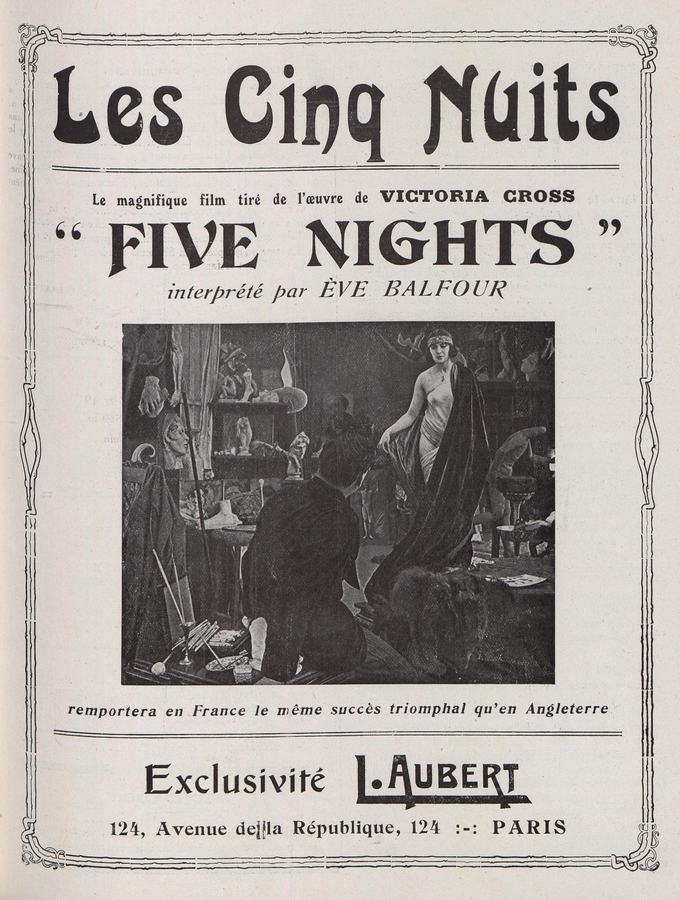
A definitive 4.6/10 rating for a film that redefined the boundaries of cult cinema. Five Nights remains a cornerstone of transgressive art.
The cinematic landscape occasionally yields a work that transcends mere storytelling, burrowing deep into the subconscious, leaving an indelible imprint. Five Nights, a tour de force from the pens of Rowland Talbot and Victoria Cross, and brought to vivid, unsettling life by a masterful ensemble, is precisely such a film. It is not merely a narrative; it is an experience, a slow-burning descent into the labyrinthine corridors of grief, deception, and the insidious nature of buried truths. From its opening frames, the film establishes a pervasive atmosphere of unease, a quiet dread that clings to every shadow within the ancestral estate where the bulk of the action unfolds. This isn't a jump-scare driven thriller, but rather a meticulously crafted psychological drama that preys on the viewer's intellect and emotional vulnerability, much like its central antagonist preys on its protagonist.
At the heart of this intricate web sits Eve Balfour's portrayal of Eve Balfour, a woman fractured by the inexplicable disappearance of her husband, Alistair, five years prior. Balfour delivers a performance of breathtaking vulnerability and simmering intensity. Her Eve is a study in controlled disintegration, a celebrated artist whose vibrant palette has been muted by sorrow, leaving her to navigate a world that feels both too vast and too confining. The camera lingers on her, capturing the subtle shifts in her gaze, the tremor in her hands, the almost imperceptible tensing of her jaw – each nuance a testament to the profound internal struggle she endures. Her performance is a masterclass in conveying a mind teetering on the precipice of sanity, constantly battling the specters of memory and the crushing weight of uncertainty. It's a portrayal that demands comparison to the quiet power seen in performances from films like A Woman's Triumph, where the female lead navigates immense personal turmoil with a compelling blend of fragility and resilience.
The catalyst for Eve's further unraveling arrives in the form of Tom Coventry, played with an unnerving blend of charm and menace by Tom Coventry. Coventry’s performance is a tightrope walk, maintaining an exquisite ambiguity that keeps both Eve and the audience perpetually off-balance. He is the serpent in Eve’s carefully tended garden of solitude, offering solace with one hand while subtly tightening the noose with the other. His character, ostensibly a long-lost confidant of Alistair, carries an aura of calculated mystery, his pronouncements laced with half-truths and insidious suggestions. The dynamic between Balfour and Coventry is electric, a dance of manipulation and desperate resistance that forms the pulsating core of the film. Their scenes together are charged with an almost unbearable tension, each line of dialogue a volley in a psychological war where the stakes are Eve's sanity and, potentially, her life. The subtle, creeping dread he evokes is reminiscent of the best noir villains, a slow revelation of malevolence that truly disturbs.
The supporting cast provides crucial anchors and counterpoints to this central duality. Sybil de Bray, as Eve's steadfast yet often dismissed friend, brings a grounding presence. Her character embodies the external voice of reason, the alarm bell that Eve, in her fractured state, struggles to hear. De Bray's nuanced performance conveys genuine concern mixed with frustration, her efforts to protect Eve often met with the impenetrable wall of Eve's grief and Tom's manipulative charm. Her character serves as a vital perspective, allowing the audience to witness the unfolding deception from a slightly detached, yet deeply invested, viewpoint. Then there is Thomas H. MacDonald, portraying a retired detective whose quiet, almost spectral presence looms on the periphery. MacDonald’s portrayal is understated brilliance; his watchful eyes and measured movements convey a man who understands the shadows of human nature, a silent arbiter observing a tragedy in the making. His investigative instincts, though initially subtle, gradually coalesce into a powerful force, akin to the quiet, methodical uncovering of truth found in films like The Secret of the Old Cabinet, where patience and keen observation ultimately pierce through layers of obfuscation.
The screenplay by Rowland Talbot and Victoria Cross is a marvel of intricate plotting and psychological depth. They eschew conventional narrative structures, opting instead for a meticulously paced unraveling that mirrors Eve's own descent. The titular five nights are not merely a temporal device but a thematic framework, each evening peeling back a new layer of the mystery surrounding Alistair's disappearance, simultaneously exposing the rot at the core of Eve's own past. The dialogue is sharp, evocative, and laden with subtext, every word carefully chosen to advance the plot, deepen character, or heighten the ever-present tension. There are no wasted lines, no superfluous scenes; every element serves a precise purpose in constructing this edifice of suspense. The writers masterfully weave together threads of memory, betrayal, and obsession, creating a tapestry so rich and complex that it demands multiple viewings to fully appreciate its nuances. Their ability to maintain such a high degree of suspense over an extended period, relying almost entirely on psychological warfare rather than overt action, is a testament to their skill, echoing the sustained tension found in classics like A London Flat Mystery.
Visually, the film is a triumph of atmospheric storytelling. The ancestral estate itself becomes a character, its opulent yet decaying grandeur reflecting Eve's internal state. The cinematography employs a palette of rich, muted tones, punctuated by moments of stark contrast – the encroaching darkness of night, the piercing light of a revelation. Shadows are not merely an absence of light; they are active participants, concealing truths, distorting perceptions, and amplifying the pervasive sense of dread. The director (whose vision is palpable throughout) utilizes close-ups to magnificent effect, drawing the viewer into the intimate torment of Eve's mind, making her paranoia palpable. The use of natural light and the strategic deployment of artificial sources create a visual language that is both beautiful and deeply disquieting. The sound design, too, is exceptional, from the creaking of old floorboards to the distant hoot of an owl, each auditory detail contributes to the oppressive, isolated world Eve inhabits, further immersing the audience in her psychological prison.
Thematic resonance is where Five Nights truly excels. It delves into the corrosive nature of unresolved grief, the way it can warp perception and render one vulnerable to manipulation. The film explores the fine line between memory and delusion, questioning the reliability of our own narratives when faced with traumatic events. It's a profound meditation on identity – how we construct it, how it can be shattered, and the lengths to which individuals will go to protect or destroy it. The film subtly critiques societal expectations placed upon women, particularly those in positions of perceived fragility, highlighting how easily their voices can be dismissed or their sanity questioned. The power dynamics at play, the insidious gaslighting, and the slow erosion of trust are handled with a chilling realism that feels disturbingly relevant. This exploration of psychological torment and identity crisis puts it in conversation with the more introspective dramas of its era, perhaps even drawing parallels to the internal struggles depicted in a film like 'Tween Heaven and Earth, albeit with a far darker edge.
In an era often dominated by spectacle, Five Nights stands as a testament to the enduring power of character-driven suspense and intelligent storytelling. It is a film that rewards patience and invites contemplation, leaving a residue of unsettling questions long after the credits roll. The performances are uniformly excellent, with Balfour and Coventry delivering career-defining turns that will undoubtedly be studied for their depth and complexity. Talbot and Cross’s screenplay is a masterclass in tension building and thematic exploration, ensuring that the film operates on multiple intellectual and emotional levels. The visual and auditory craftsmanship elevates the narrative, transforming a confined setting into a universe of psychological torment. It’s a work that challenges, disturbs, and ultimately enthralls, solidifying its place as a significant contribution to the psychological thriller genre. Its impact is not fleeting; rather, it lingers, compelling reflection on the fragility of truth and the enduring shadows of the past, much like the indelible mark left by a truly great work of art, perhaps even holding up a mirror to the societal anxieties explored in a film like The Sins of the Mothers, albeit through a more personal, intimate lens of domestic psychological horror.
This is not merely entertainment; it is an examination of the human condition under duress, a harrowing journey into the depths of a soul besieged by external forces and internal demons. The film’s deliberate pacing, far from being a weakness, is its strength, allowing the tension to build organically, like a storm gathering on the horizon. Each of the five nights brings with it a new revelation, a new twist of the knife, culminating in a denouement that is both shocking and tragically inevitable. The lasting impression is one of profound unease, a testament to the film's ability to tap into universal fears of betrayal, loss, and the terrifying prospect of losing one's grip on reality. It reaffirms the potency of cinema as a medium for exploring the darkest corners of the human psyche, solidifying Five Nights not just as a film to be watched, but to be experienced and dissected. Its intricate design and powerful performances ensure its status as a compelling, enduring work that will resonate for years to come, a true cinematic achievement.
IMDb 6.7
1936
Community
Log in to comment.