DbcultAccessing Vault...
Cult Review
Senior Film Conservator
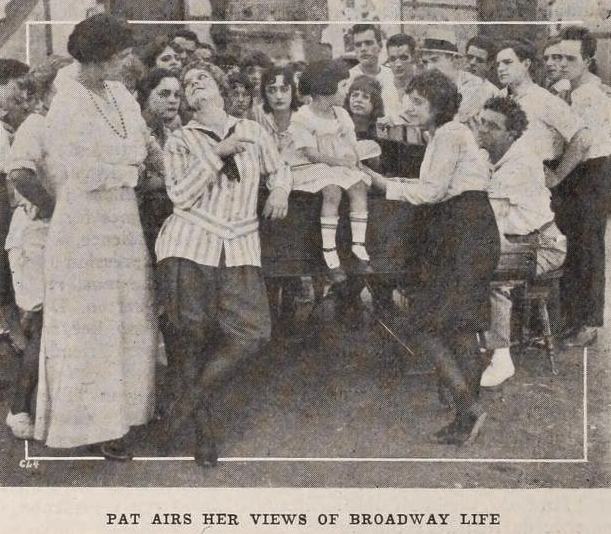
Stepping back into the nascent days of cinema, when storytelling relied on the eloquent ballet of gesture and the dramatic power of the close-up, we encounter a gem that, despite its century-plus vintage, pulsates with themes as contemporary as today's headlines. 'The Chorus Lady', a 1915 silent film directed by Frank Reicher and written by James Forbes and Marion Fairfax, is far more than a simple melodrama; it’s a profound exploration of sisterly devotion, the perils of urban ambition, and the heartbreaking chasm between appearance and reality. It's a narrative that challenges us to look beyond the surface, to understand the true cost of love and the often-misunderstood nature of sacrifice.
At its core, the film introduces us to Patricia O'Brien, portrayed with a compelling blend of tenacity and vulnerability by the remarkable Cleo Ridgely. Pat, known affectionately as the 'Chorus Lady,' embodies a paradox: a woman navigating the potentially morally ambiguous world of turn-of-the-century stage life, yet possessing an unblemished character and a sharp wit that keeps her grounded. She is the anchor in her own life, anchored further by her engagement to Danny Mallory, a detective whose earnest ambition is to escape the clamor of city life for the tranquil embrace of a farm. Their shared dream of a pastoral future forms a poignant counterpoint to the glittering, yet often treacherous, world Pat inhabits.
The delicate balance of Pat's existence, however, is shattered by the arrival of her younger sister, Nora, played by Marjorie Daw. Nora is everything Pat is not: idealistic, impressionable, and utterly stage-struck. Pat, keenly aware of Nora's yielding nature, has meticulously kept her sister shielded in a quiet country store, a 'million miles from Broadway,' under the watchful eye of a strict guardian. But the siren song of the stage proves irresistible. Nora, fueled by envy and a naive longing for the perceived glamour of her sister's life, abandons her rural sanctuary, hurtling headlong into the very world Pat has tried so desperately to protect her from. This dramatic juxtaposition of rural innocence against urban temptation immediately sets a powerful thematic tone, reminiscent of other films of the era that explored the corrupting influence of the city, such as The Sin of a Woman or even the broader societal critiques found in The Daughters of Men, which often depicted the moral struggles faced by women in modernizing society.
Nora's swift immersion into the theatrical world is expedited by Crawford, a suave, predatory 'man-about-town' and the show's backer, deftly portrayed by Richard Grey. Struck by Nora's fresh beauty and youth, Crawford wastes no time in showering her with attention, drawing her into his manipulative orbit. Nora, inexperienced and flattered, quickly succumbs to his charms, falling deeply in love with him. Pat, witnessing this dangerous liaison unfold, understands Crawford's true character with an almost painful clarity. Her attempts to open Nora's eyes, however, are met with the predictable antagonism of a young girl blinded by first love and resentment. Nora, convinced of her sister's jealousy rather than her protective instincts, pushes Pat away, deepening the chasm between them.
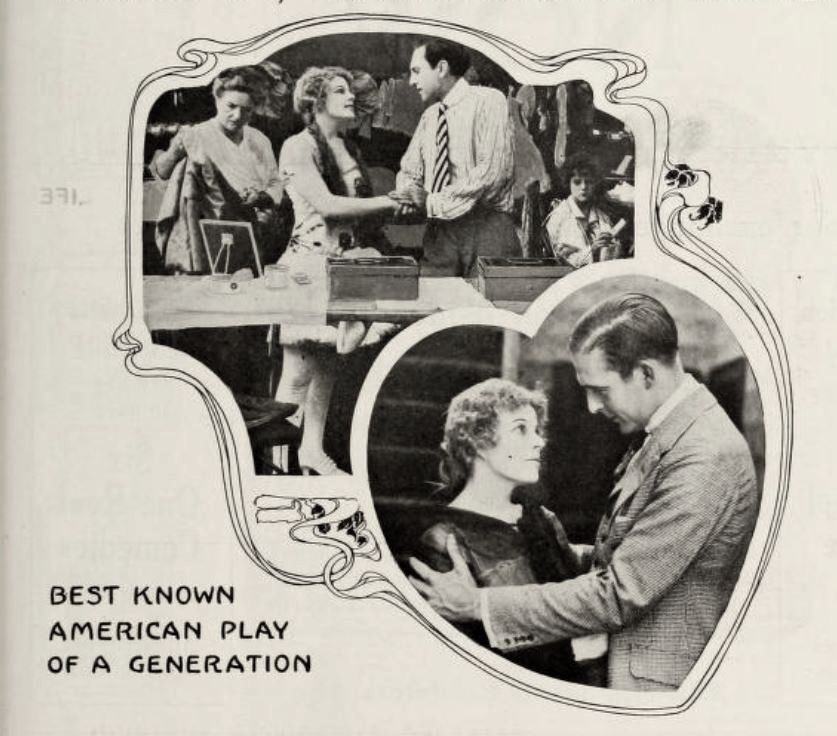
It is at this critical juncture that Pat makes a decision that defines the film's emotional core and elevates it beyond a mere cautionary tale. Realizing that direct persuasion is futile, and that Nora is slipping inexorably towards ruin, Pat embarks on a desperate, self-sacrificing strategy: she begins a calculated flirtation with Crawford herself. This is not an act of infidelity, but a meticulously planned gambit, a theatrical performance within a performance, designed to expose Crawford's fickle nature and disillusion Nora. Pat's actions are a testament to the depth of her love for her sister, a love so profound that she is willing to compromise her own reputation, and even her relationship with Danny, to save Nora. This act of profound self-abnegation echoes the thematic sacrifice seen in films like The Lion and the Mouse, where characters often jeopardize their personal standing for a greater cause, or even Joseph and His Coat of Many Colors in its depiction of moral rectitude under duress.
The irony, and indeed the tragedy, of Pat's plan lies in its immediate repercussions. Danny, witnessing Pat's seemingly brazen flirtation with Crawford, becomes consumed by jealousy. His steadfast trust in Pat, built on their shared dreams and her unblemished character, begins to crumble. Despite Pat's desperate attempts to explain her motives, Danny, blinded by his own emotions and the seemingly damning evidence, refuses to believe her. This emotional entanglement forms a powerful narrative thread, showcasing how easily good intentions can be misconstrued, and how the perception of truth can be far more damaging than the truth itself. The film expertly builds tension, drawing the audience into Pat's agonizing predicament, knowing her pure intentions while watching her world unravel around her.
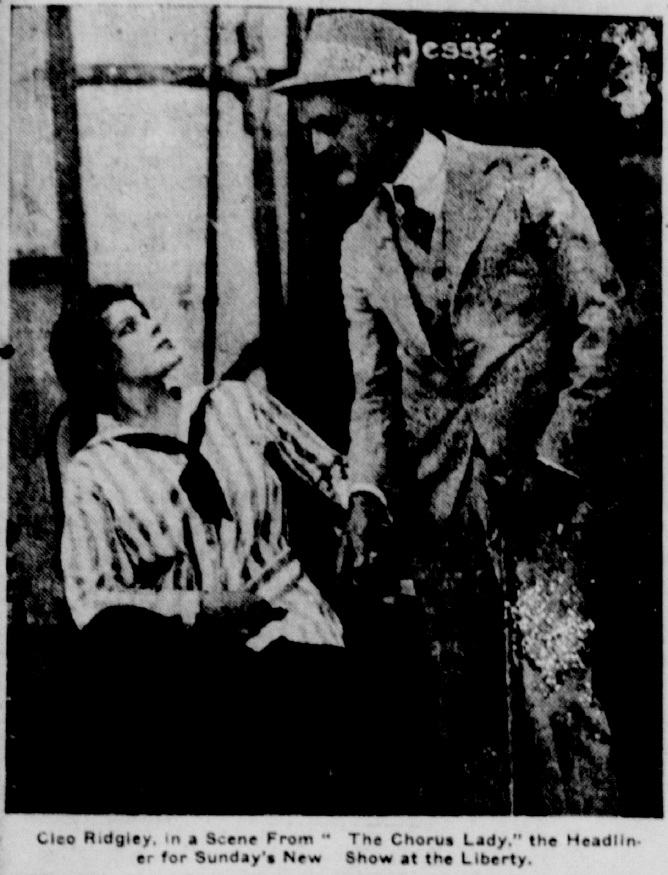
The dramatic crescendo arrives during the dress rehearsal of the play in which both Pat and Nora are to appear. A twist of fate, the star's sudden illness, presents Pat with a golden opportunity: the chance to step into the leading role, a career-defining moment. Yet, even this professional triumph is overshadowed by her personal crisis. Nora, believing Pat is tied to the theater, leaves a note announcing her intention to go to Crawford, slipping home to pack. Pat, half-dressed for her momentous debut, discovers the note. In a moment of profound, gut-wrenching decision, she sacrifices her career opportunity, wraps herself in a cloak, and races to Crawford's apartment, desperate to intercept Nora.
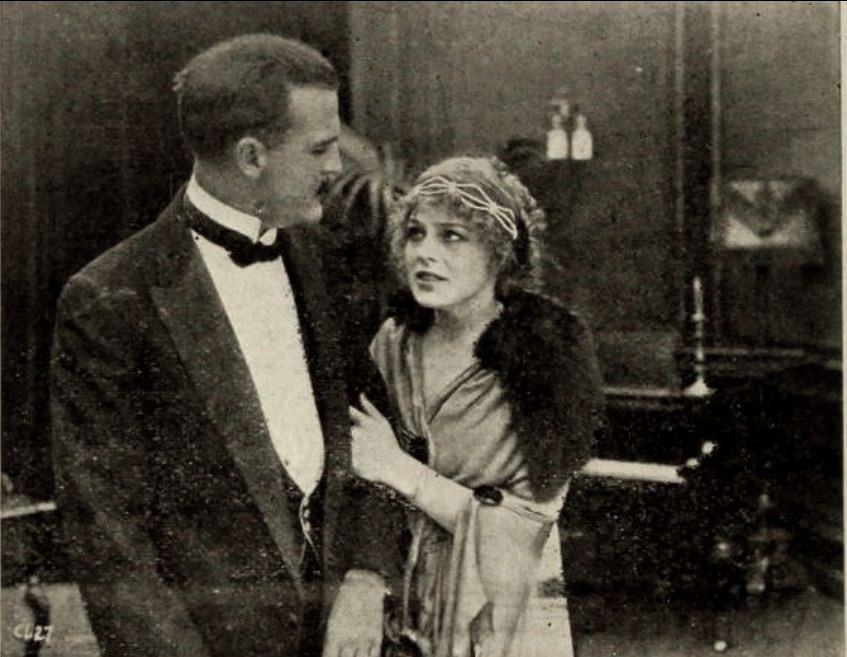
What unfolds next is a masterclass in silent film melodrama, a scene dense with irony and devastating misunderstanding. Pat arrives first, confronting Crawford. In a desperate bid to expose his true colors, she forces him into a declaration of love, just as Nora appears. Pat then demands that Crawford choose between them, a cruel but necessary maneuver designed to reveal his shallow affections. He chooses Pat, a hollow victory that serves its purpose by shattering Nora's romantic illusions. However, the scene is far from over. Unbeknownst to Pat, Danny has been dispatched to Crawford's apartment on a professional assignment: to gather divorce evidence for Crawford's estranged wife. Bursting into the room, Danny finds Pat, seemingly caught in a compromising embrace with Crawford. The borrowed cloak slips, revealing Pat in her stage undergarments, a visual indictment that confirms Danny's worst fears. The evidence, though circumstantial and tragically misinterpreted, is overwhelmingly against her. Pat, unable to articulate the complex web of her intentions, is utterly unable to establish her innocence. Danny, heartbroken and betrayed, cannot reconcile the woman he loves with the scene before him, yet his inherent decency prevents him from testifying against her.
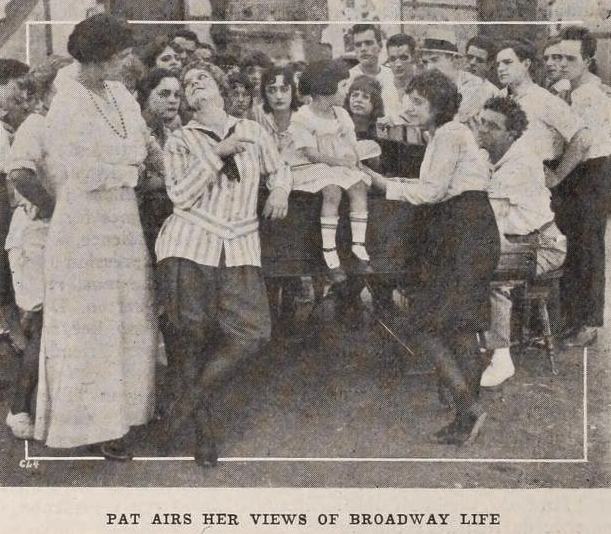
The fallout is immediate and catastrophic. Nora and Danny depart, leaving Pat alone with the contemptible Crawford. With her mission accomplished and her reputation in tatters, Pat unleashes her true feelings, exposing Crawford for the cad he is. He, in turn, dismisses her from the company and orders her from his rooms, leaving her professionally ruined and personally devastated. Danny, true to his word, resigns his position rather than appear against Pat, ensuring the divorce suit never reaches court, a silent testament to his lingering love and moral compass, even in his confusion. This sequence of events, rife with miscommunication and tragic irony, finds echoes in other films where characters are caught in the machinery of legal and social judgment, such as Chains of the Past, where actions have unforeseen and binding consequences, or even Brother Against Brother in its exploration of familial loyalty tested by external pressures.
Pat's sacrifice leaves her adrift. Out of a job, unable to secure another engagement, and facing eviction from her boarding house, her future appears bleak. It is in this nadir of despair that the seeds of redemption finally begin to sprout. Nora, having witnessed Crawford's true colors and perhaps piecing together the fragments of Pat's desperate actions, finally realizes the profound loyalty and selflessness that drove her sister. This awakening, though delayed, is crucial. Nora, now mature enough to understand the depth of Pat's love, makes the call that begins to mend the fractured lives: she telephones Danny, revealing the full, unvarnished truth of Pat's intentions. The weight of misunderstanding lifts, and truth, as it often does in classic narratives, ultimately prevails.
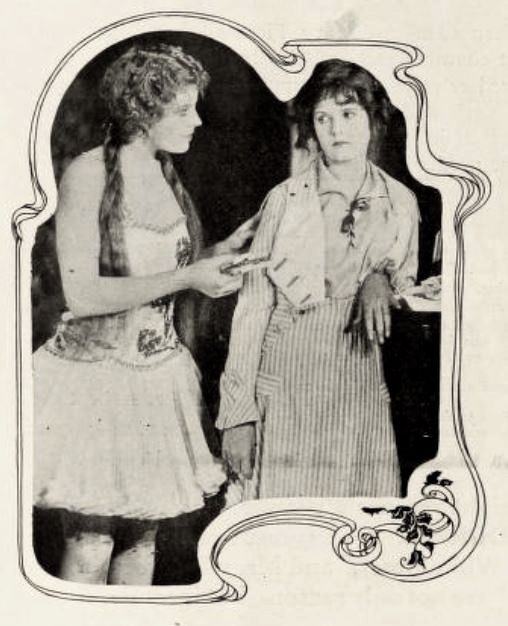
The resolution is a bittersweet one, yet deeply satisfying. Danny, vindicated in his love and now understanding the true heroism of Pat's actions, finally realizes his long-cherished dream of owning a farm. The film concludes with a poignant tableau of a new beginning: Pat, Danny, and Nora embarking on their rural life, taking with them 'Bobs,' the young assistant stage-manager who has quietly harbored an honest passion for Nora. This ending, while perhaps a touch idealistic, reinforces the film's core message: that true love, loyalty, and integrity, even when tested by the most harrowing circumstances, can ultimately lead to a form of peace and happiness. It’s a testament to the idea that quiet heroism, often unseen and unrewarded in the moment, eventually finds its just recognition. The journey from the dazzling, deceptive lights of Broadway to the honest, grounding soil of a farm symbolizes a return to fundamental values, a rejection of superficiality for authentic connection.
Cleo Ridgely's performance as Pat is the cornerstone of 'The Chorus Lady'. Her ability to convey complex emotions – fierce love, desperate resolve, profound sadness, and quiet dignity – through facial expressions and body language, without the aid of spoken dialogue, is truly remarkable. She embodies the archetype of the strong, self-sacrificing woman, a figure often celebrated in early cinema, much like the resolute protagonists in films such as Florence Nightingale, who championed a cause, or even The Heart of a Painted Woman, which delved into the inner lives of women often judged by society. Wallace Reid, as Danny, projects an earnest sincerity that makes his jealousy understandable, and his eventual understanding deeply moving. Marjorie Daw's Nora skillfully navigates the transition from naive innocence to hardened disillusionment and finally, to empathetic understanding. The chemistry, or lack thereof, between the characters is palpable, driving the narrative forward with emotional intensity.
Frank Reicher's direction, while typical of the era, effectively utilizes the tools of silent cinema to heighten dramatic impact. The use of intertitles is judicious, conveying necessary dialogue and exposition without bogging down the visual flow. The staging of key scenes, particularly the climax in Crawford's apartment, is expertly crafted to maximize tension and emotional resonance. The film's visual language, though perhaps quaint by modern standards, speaks volumes about the social mores and anxieties of 1915, particularly concerning female independence, moral integrity, and the perceived dangers of the entertainment industry. It’s a snapshot of a particular cultural moment, yet its themes resonate universally.
In conclusion, 'The Chorus Lady' is more than a historical curiosity; it is a compelling piece of cinematic art that explores the enduring power of familial love and the often-painful journey towards truth. It reminds us that appearances can be deceiving, that true heroism often resides in quiet sacrifice, and that forgiveness and understanding are ultimately the keys to redemption. For aficionados of silent film and anyone interested in the evolution of dramatic storytelling, this film offers a rich, emotionally charged experience that transcends the limitations of its era, proving that a powerful story, well told, never truly loses its voice. It stands as a testament to the enduring human spirit, capable of navigating the most treacherous waters of misunderstanding and emerging, eventually, into the light of truth and reconciliation.
IMDb —
1920
Community
Log in to comment.