DbcultAccessing Vault...
Cult Review
Senior Film Conservator
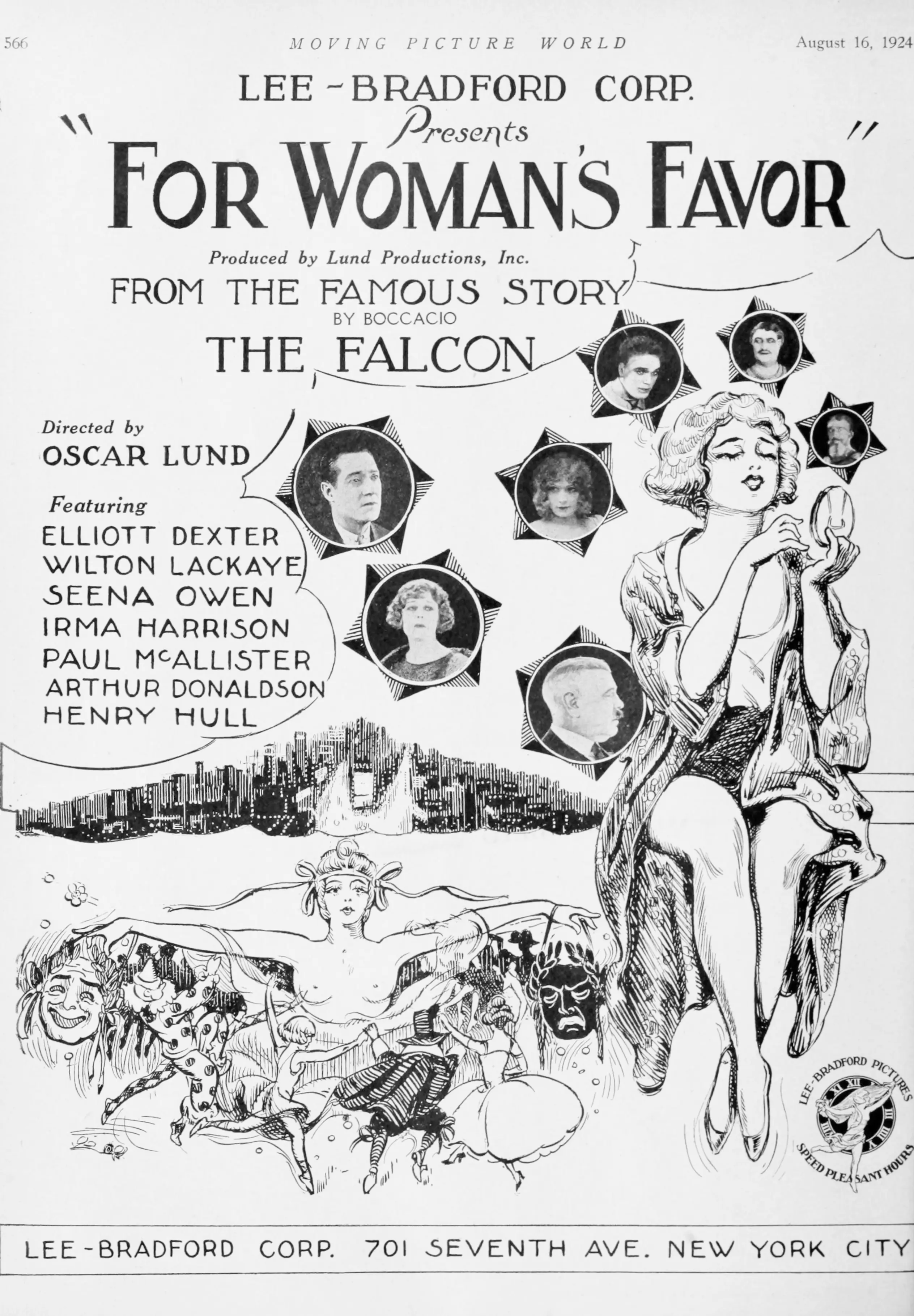
The year 1924 stood as a precipice for the cinematic medium, a moment when the grammar of silent film had reached a zenith of expressive potential. Among the artifacts of this era, For Woman's Favor occupies a unique niche, bridging the gap between the gritty realism of the post-war American landscape and the lush, romantic tapestries of European literature. It is a film that understands the crushing weight of capital, yet refuses to allow the human spirit to be entirely commodified by the ledgers of men like Bracken.
The narrative arc of Howard Fiske is one that resonates with a haunting contemporary relevance. Henry Hull delivers a performance that eschews the exaggerated gesticulation common in the early twenties, opting instead for a restrained, internalised agony. When Fiske loses his fortune, the film doesn't merely depict a loss of currency; it portrays a loss of identity. In the eyes of the societal elite, Fiske ceases to exist as a suitor the moment his bank accounts are emptied. This thematic preoccupation with wealth as a prerequisite for love is handled with a cynical sharp edge that reminds one of the darker undertones in Menschen im Rausch, where the intoxication of the era is inextricably linked to the fragility of status.
The introduction of June Paige (Seena Owen) and her forced union with Bracken (Elliott Dexter) highlights the transactional nature of marriage in a world where sentiment is a luxury the poor cannot afford. Owen plays June with a stoic grace, a woman trapped in a gilded cage of necessity. This dynamic sets the stage for the film’s most daring pivot: the retreat into the subconscious. Unlike the straightforward heroics of Nothing But Nerve, where action is the primary driver, 'For Woman's Favor' suggests that the true battlefield of the soul is the imagination.
When Fiske opens the pages of Boccaccio, the film undergoes a stylistic metamorphosis. The cinematography shifts, embracing a more ethereal, soft-focus aesthetic that contrasts sharply with the high-contrast shadows of the modern-day sequences. The enactment of "Federigo’s Falcon" is not merely a play-within-a-play; it is a visual manifesto. The falcon itself, a creature of immense value sacrificed for the sake of hospitality and love, becomes the central motif of the film. This sequence possesses a lyrical quality that rivals the atmospheric depth of The Black Night, utilizing the dream logic to justify a level of visual grandiosity that the contemporary setting would otherwise forbid.
The production design during this dream sequence is nothing short of opulent. The costumes, the palatial settings, and the deliberate pacing evoke a sense of timelessness. It is here that we see the influence of the great European directors of the era, a nod to the burgeoning internationalism of cinema that would later be seen in works like The Queen's Jewel. The dream serves as a psychological crucible for Fiske. By witnessing the ultimate sacrifice of Federigo, Fiske realizes that true favor is not bought with gold, but earned through the integrity of the heart. It is a radical notion in the face of Bracken’s cold industrialism.
Henry Hull’s dual presence—both as the modern Fiske and the dream-bound Federigo—allows him to showcase a remarkable range. He navigates the transition from a broken man to a legendary figure with a seamlessness that anchors the film’s more fantastical elements. In contrast, Elliott Dexter’s Bracken is a masterclass in understated villainy. He is not a mustache-twirling antagonist but a man who genuinely believes that his wealth entitles him to the world’s beauty. This clash between the romantic idealist and the pragmatic materialist is a recurring trope in 1920s cinema, often explored in films such as Die weißen Rosen von Ravensberg, yet it feels particularly visceral here due to the literary framing.
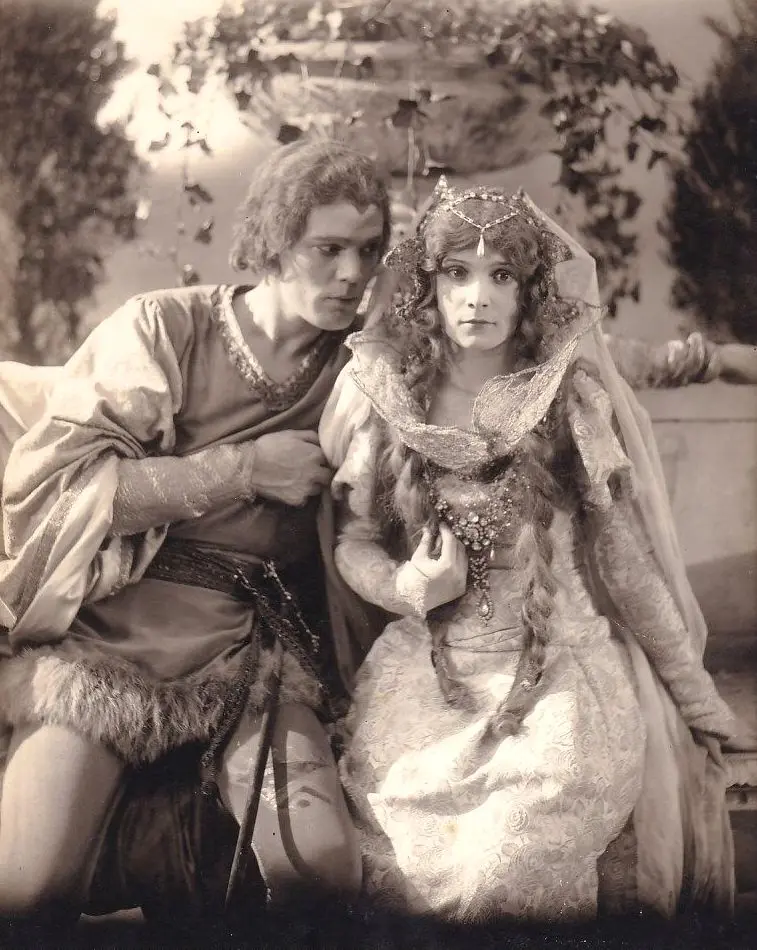
The supporting cast, including the venerable Wilton Lackaye and Paul McAllister, provides a sturdy foundation for the central drama. Their presence adds a layer of gravitas, ensuring that the film never feels like a mere trifle. Even the smaller roles, like those found in the ensemble of Gypsy Anne or Cora, contribute to a sense of a lived-in world, where every character has a stake in the moral outcome of Fiske’s journey. The direction maintains a steady hand, balancing the melodrama with moments of quiet introspection that were rare for the period.
To understand the impact of 'For Woman's Favor,' one must look at it through the lens of its contemporaries. While God's Country and the Woman focused on the rugged externalities of the American frontier, this film turns inward, exploring the frontier of the human mind. The use of a dream sequence to drive character motivation was a technique also utilized in The Bells, though here it is used for inspiration rather than haunting guilt. The film’s structure—a modern framing device surrounding a historical or legendary core—prefigures the narrative complexity we would see in later silent masterpieces.
Furthermore, the film’s treatment of duty and sacrifice echoes the sentiments found in For King and Country, though it transposes these themes from the battlefield to the ballroom and the library. There is a certain Russian-esque gloom in the early scenes that might remind viewers of Doch Anny Kareninoy, yet the resolution is distinctly American in its optimism. The film refuses to succumb to the nihilism that often pervaded European art films of the time, choosing instead to believe in the transformative power of art and literature.
The lighting in 'For Woman's Favor' deserves a dissertation of its own. In the scenes depicting Fiske’s poverty, the light is harsh, unforgiving, and stark—reminiscent of the documentary-style realism found in Kino-pravda no. 10. However, as the Boccaccio story takes over, the screen is bathed in a warm, amber glow, a visual shorthand for the richness of the spirit over the richness of the purse. This use of color (even in a black-and-white medium through tinting and lighting) creates a sensory experience that transcends the limitations of the technology.
The maritime motifs present in the film, though subtle, provide an interesting parallel to the adventurous spirit of Wild Waves and Women or the maritime drama of Hurricane's Gal. Fiske is a man lost at sea in his own life, and the Boccaccio book is the lighthouse that guides him back to shore. The metaphorical weight of the 'falcon'—a bird that can soar but is tethered—perfectly encapsulates June’s situation and Fiske’s ambition. It is this layering of meaning that elevates the film from a standard romance to a work of genuine artistic merit.
As we reflect on the contributions of Henry Hull and the vision of the writers who brought Boccaccio to the silver screen, we see a film that was ahead of its time. It understood that the stories we tell ourselves—the myths we inhabit—are more real than the economic realities that seek to define us. Like the protagonist in My Lady's Slipper, Fiske finds that the trappings of the past can provide the keys to the future.
'For Woman's Favor' is a testament to the power of adaptation. It doesn't just translate a story from page to screen; it translates a philosophy. It argues that even in a world governed by the cold calculations of men like Bracken, there is still room for the grand gesture, the noble sacrifice, and the enduring power of love. It is a film that demands to be seen not just as a historical curiosity, but as a living piece of art that continues to speak to the human condition. In the end, Fiske’s victory is not just over his rival, but over the cynicism of his age—a victory fueled by a centuries-old tale and the unwavering belief that some things are truly beyond price.
IMDb —
1929
Community
Log in to comment.