DbcultAccessing Vault...
5.6/10
Senior Film Conservator
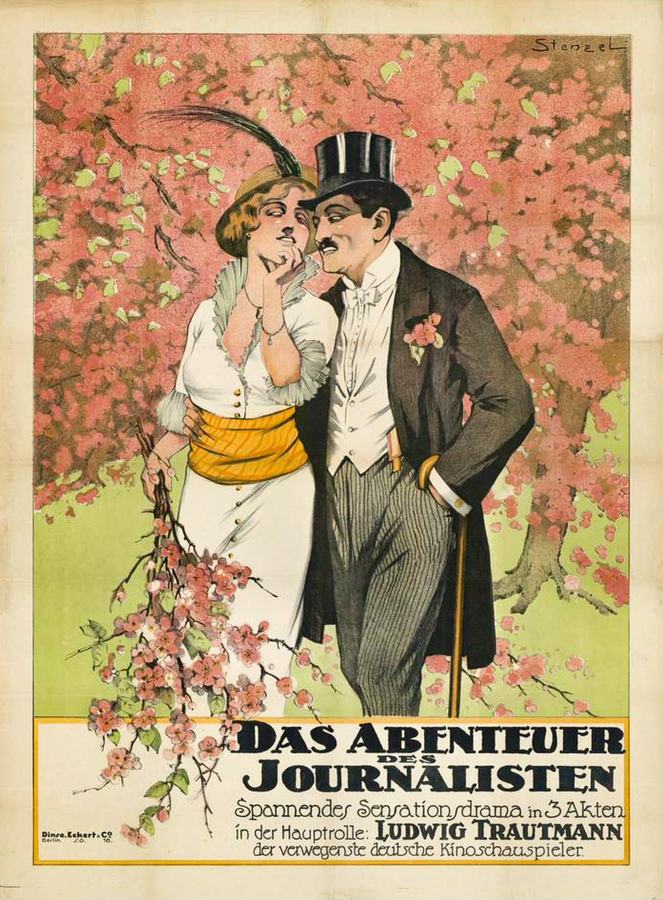
A definitive 5.6/10 rating for a film that redefined the boundaries of cult cinema. Das Abenteuer eines Journalisten remains a cornerstone of transgressive art.
Before the polished artifice of modern blockbusters, there existed a raw, unbridled form of cinematic expression known as the Sensationsfilm. At the vanguard of this movement was Harry Piel, a filmmaker whose name became synonymous with daredevil stunts and relentless pacing. His 1914 opus, Das Abenteuer eines Journalisten, stands as a testament to an era when celluloid was a frontier of physical possibility. Starring the stalwart Ludwig Trautmann, the film transcends the simplistic detective tropes of its contemporaries, such as Der Hund von Baskerville, opting instead for a visceral engagement with movement and environmental hazard.
The journalist protagonist is not the sedentary intellectual one might find in The Banker's Daughter; he is a man of action, a precursor to the modern investigative thriller hero. Trautmann imbues the role with a rugged sophistication, navigating a plot that feels remarkably modern in its cynicism toward institutional power. Unlike the moral grandiosity found in Les Misérables, Part 2: Fantine, Piel’s world is one of immediate, tactile stakes. There is no time for the protracted ethical agonizing of The Scales of Justice; here, the truth is something to be fought for in the shadows and seized through sheer physical endurance.
Harry Piel’s direction is characterized by a refusal to let the camera remain a passive observer. In Das Abenteuer eines Journalisten, the framing is tight, almost claustrophobic at times, emphasizing the journalist's entrapment within a conspiracy that dwarfs his initial scope. This sense of impending doom and the necessity of flight mirrors the tension found in The Escape, yet Piel elevates the stakes by integrating the urban landscape as an active antagonist. Roofs, alleys, and speeding vehicles are not merely settings; they are obstacles that demand a specific type of cinematic choreography.
While many films of 1914 were content with theatrical tableaus, Piel was experimenting with the rhythm of the edit. The way the film cuts between the journalist's frantic search for a scoop and the encroaching menace of the criminal element creates a pulse. It lacks the epic scale of Spartacus, but it compensates with an intimacy of peril that feels far more immediate. The viewer is not watching history; they are experiencing a moment of acute crisis. This is where Piel’s genius lies—in the democratization of the hero. Trautmann’s journalist is a everyman thrust into extraordinary circumstances, a theme that resonates through the ages.
Ludwig Trautmann was the perfect vessel for Piel’s ambitions. In an era where acting often veered into the hyperbolic, Trautmann maintained a grounded presence. His journalist is observant, his eyes darting with a mixture of professional calculation and genuine fear. This performance stands in stark contrast to the more stylized portrayals in The Queen's Jewel or the romanticized stoicism of For Napoleon and France. Trautmann brings a modernity to the screen that bridges the gap between the Victorian stage and the kinetic cinema of the future.
The chemistry between the camera and the lead actor is palpable. Every leap across a chasm or desperate scramble away from an assailant is captured with a grit that defies the technical limitations of 1914. When compared to the sentimental journeys of Love Everlasting, Das Abenteuer eines Journalisten feels like a jolt of electricity. It rejects the pastoral and the domestic in favor of the industrial and the dangerous. The journalist’s quest is not for love or spiritual redemption, but for the cold, hard currency of information—a pursuit that feels eerily relevant in our own information-saturated age.
The film’s influence on the sub-genre of the 'reporter-as-detective' cannot be overstated. While the The Secret Seven might deal with collective mystery-solving, Piel focuses on the singular, often lonely, struggle of the individual against a corrupt system. There is a darkness here that prefigures the film noir movement. The shadows in the journalist's office and the murky depths of the waterfront locations evoke a sense of moral ambiguity that is rarely found in the more straightforward narratives of Doc or The Dawn of Freedom.
Technically, the film is a marvel of its time. Piel’s use of location shooting gives the piece a documentary-like authenticity that clashes beautifully with the heightened reality of the stunts. It avoids the static theatricality of The Riddle of the Tin Soldier, opting for a fluid visual language that keeps the viewer off-balance. The atmosphere of dread is as thick as that in During the Plague, yet it is driven by human malice rather than supernatural or biological catastrophe. It is a world where one can easily be Lost in Darkness if they step off the narrow path of the headline.
Ultimately, Das Abenteuer eines Journalisten is more than a historical curiosity; it is a masterclass in early genre filmmaking. Harry Piel understood that cinema is the art of the 'now,' the art of the heartbeat and the gasp. By placing a journalist at the center of this maelstrom, he highlighted the inherent drama of the search for truth. This film is a foundational stone in the edifice of action cinema, a work that continues to vibrate with the energy of its own creation. It reminds us that before there were pixels and green screens, there was only the actor, the stunt, and the flickering light of a projector capturing a moment of pure, unadulterated sensation.
IMDb —
1917
Community
Log in to comment.