DbcultAccessing Vault...
Cult Review
Senior Film Conservator
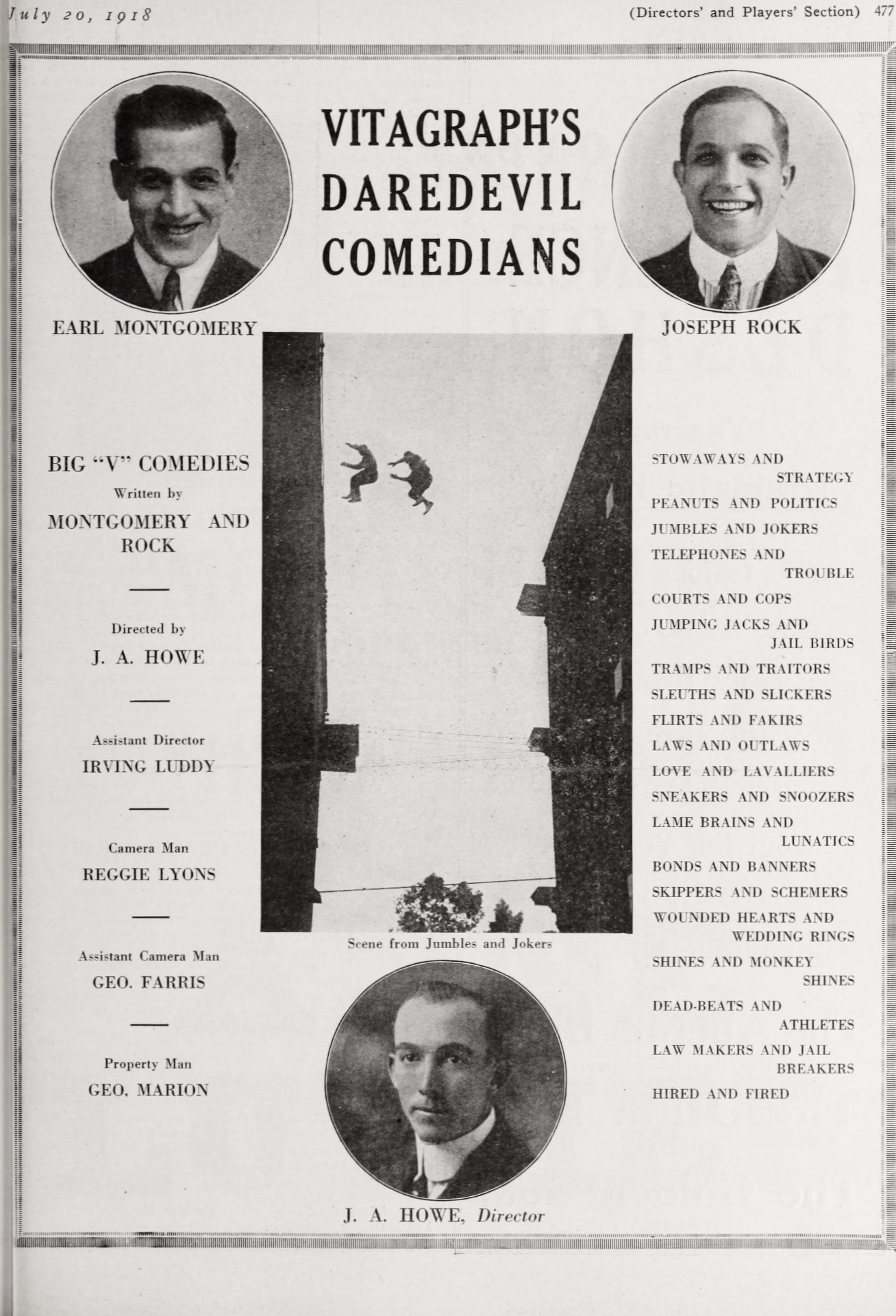
Stepping back into the raucous, glittering world of the 1920s, one finds few cinematic artifacts that capture its intoxicating blend of liberation and underlying tension quite like Flappers and Friskies. This film, a collaborative brainchild of its stars and writers, Earl Montgomery and Joe Rock, isn't merely a period piece; it's a vibrant, often poignant, snapshot of a pivotal cultural moment. It unfurls a narrative tapestry rich with both slapstick hilarity and subtle social commentary, drawing the viewer into a milieu where traditional mores clashed spectacularly with burgeoning freedoms.
The genius of Flappers and Friskies lies not just in its meticulously crafted set pieces or its energetic performances, but in its ability to encapsulate the very essence of an era defined by its contradictions. On one hand, you have the unbridled exuberance, the short skirts, the bobbed hair, the illicit gin flowing freely in clandestine speakeasies. On the other, a lingering conservatism, a moral compass still attempting to navigate the uncharted waters of modernity. Montgomery and Rock, both in front of and behind the camera, demonstrate a profound understanding of this delicate balance, weaving a story that feels both authentically historical and timelessly resonant.
At its core, the film chronicles the journey of Elmer P. Bumble, portrayed with a delightful blend of wide-eyed naiveté and burgeoning self-awareness by Earl Montgomery. Elmer, fresh from the quietude of rural life, inherits a fortune that becomes his ticket to the perceived glamour of the big city. His arrival is less a confident stride and more a bewildered tumble into a world utterly alien to him. Montgomery imbues Elmer with a compelling vulnerability, making his initial missteps and earnest attempts to 'fit in' both humorous and genuinely endearing. He's not merely a caricature of the country bumpkin; he's a representation of traditional values grappling with the relentless march of progress.
The catalyst for Elmer's metropolitan initiation is 'Jazzy' Jack, a character brought to life with charismatic menace by Joe Rock. Jack is the quintessential urban impresario of the Prohibition era – smooth-talking, opportunistic, and utterly devoid of scruples. His speakeasy, 'The Gilded Cage,' is more than just a watering hole; it's a microcosm of the era's illicit charm and underlying deceit. Rock's performance as Jack is a masterclass in nuanced villainy, a magnetic force that draws Elmer, and the audience, deeper into the city's shadowy underbelly. He's not just a foil for Elmer; he's a symbol of the dangerous allure that accompanied the era's newfound freedoms.
The 'friskies' of the title – the vivacious chorus girls and high-society socialites who frequent Jack's establishment – are initially presented as a homogenous group of glittering distractions. Yet, within this ensemble, the character of Lila emerges, a captivating flapper whose initial complicity in Jack's schemes gives way to a complex emotional arc. Her growing affection for Elmer, rooted in his unvarnished sincerity, introduces a vital moral dimension to the narrative. The film cleverly uses her internal conflict to reflect the broader societal shift, where women were breaking free from traditional roles but still navigating a world rife with exploitation and expectation. This narrative thread elevates the film beyond mere comedic escapades, lending it a surprising depth of character exploration.
The directorial choices, credited to the collaborative vision of Montgomery and Rock, are particularly noteworthy. They masterfully orchestrate a bustling, dynamic environment, particularly within the confines of 'The Gilded Cage.' The camera work is fluid, capturing the frenetic energy of jazz dances and the clandestine whispers in shadowy corners with equal precision. The use of innovative lighting techniques creates stark contrasts between the dazzling facade of the speakeasy and the moral ambiguities lurking beneath. One can observe parallels in the ambitious scope of their mise-en-scène with films like The Common Law, which also sought to visually articulate complex social dynamics, albeit in a more dramatic vein. Here, the visual language serves to amplify both the comedic absurdity and the underlying tension.
Montgomery's performance as Elmer is a delightful showcase of physical comedy and understated emotional resonance. His transformation from an awkward, easily duped newcomer to a man of quiet conviction is handled with admirable subtlety. He navigates the comedic beats with impeccable timing, yet never loses sight of the character's inherent decency. Joe Rock, on the other hand, commands the screen with a more theatrical, yet equally compelling, presence. His 'Jazzy' Jack is a force of nature, exuding a dangerous charm that makes his eventual comeuppance all the more satisfying. The chemistry between the two leads is palpable, forming the bedrock of the film's success. Their dual roles as writers are evident in the sharp dialogue (even in a silent film, the intertitles convey wit) and the well-paced narrative structure, a testament to their comprehensive understanding of storytelling.
While ostensibly a comedy, Flappers and Friskies offers a surprisingly incisive commentary on the societal shifts of its time. The Prohibition era, with its moralistic legislation and flourishing illicit underworld, provides a fertile ground for exploring hypocrisy and the human desire for escape. The film cleverly satirizes the superficiality of certain societal circles, where appearances often masked darker intentions. The 'flappers' themselves, while emblematic of female liberation, are also depicted with an awareness of the vulnerabilities inherent in their newfound freedoms. It's a nuanced portrayal, avoiding simplistic glorification or condemnation.
The film's exploration of identity, particularly Elmer's struggle to forge his own path amidst external pressures, resonates deeply. It's a theme that echoes in other contemporary works, such as Broadway Jones, which also explored the clash between provincial values and urban sophistication, albeit through a more direct comedic lens. However, Flappers and Friskies adds layers of moral ambiguity, suggesting that the journey to self-discovery in a rapidly changing world is fraught with peril and temptation. The climax, set against the backdrop of a grand, illicit gala, is not just a comedic resolution but a moment of profound personal reckoning for Elmer, where he must confront the carefully constructed illusions around him.
Comparing Flappers and Friskies to other films of its era reveals its unique position. While it shares the comedic sensibilities of lighter fare like Half a Hero, its thematic depth and willingness to delve into the darker aspects of the Jazz Age set it apart. Where some films might offer straightforward narratives of romance or adventure, Flappers and Friskies engages with the complexities of moral choice and the intoxicating dangers of urban life. One might even draw a thematic parallel with the serious dramas of the era, such as Her Debt of Honor or Chained to the Past, in its examination of consequences, albeit filtered through a comedic prism. The film's ability to blend these disparate elements is a testament to the sophisticated writing of Montgomery and Rock.
The film's visual flair, particularly its depiction of the vibrant nightlife, also brings to mind the kinetic energy seen in documentaries or ethnographic studies of urban life, though it's obviously a fictionalized account. Even something as seemingly disparate as Sanz y el secreto de su arte, a documentary exploring a specific craft, shares with Flappers and Friskies a dedication to capturing an authentic slice of its subject, albeit through vastly different lenses. Here, the 'art' is the construction of a convincing, living world of the 1920s.
The lasting appeal of Flappers and Friskies lies in its multifaceted approach to storytelling. It's a film that entertains with its physical comedy and witty situations, yet also provokes thought about the societal transformations it depicts. It doesn't shy away from portraying the darker undercurrents of the Prohibition era, nor does it preach. Instead, it invites the audience to experience this tumultuous period through the eyes of its compelling characters. Its influence can be seen in subsequent comedies that attempted to blend social commentary with humor, establishing a benchmark for how to tackle significant cultural shifts without sacrificing entertainment value.
Ultimately, Flappers and Friskies stands as a robust and enduring piece of cinematic history. It's a testament to the creative synergy between Earl Montgomery and Joe Rock, whose combined talents as actors and writers forged a work that transcends mere period entertainment. It offers a window into a past that, despite its specific historical context, continues to resonate with contemporary themes of aspiration, disillusionment, and the eternal search for authenticity. The film’s intricate plot, memorable performances, and keen social observations ensure its place not just as a delightful comedy, but as a significant cultural document of the Roaring Twenties. It remains a vibrant, essential viewing experience for anyone wishing to understand the pulse of that extraordinary decade, proving that even amidst the laughter and the illicit revelry, there were profound truths being explored about the human condition and the relentless march of time.
The film’s vibrant energy and astute characterizations make it a perennial favorite, a delightful romp through an era of profound change. Its legacy is not merely in its entertainment value but in its subtle yet potent reflection of a society in flux, captured with an artistry that continues to captivate and enlighten. Its capacity to evoke both hearty laughter and contemplative thought is a rare feat, cementing its status as a timeless classic from a dynamic period in cinematic history.
IMDb 5
1913
Community
Log in to comment.