DbcultAccessing Vault...
7.5/10
Senior Film Conservator
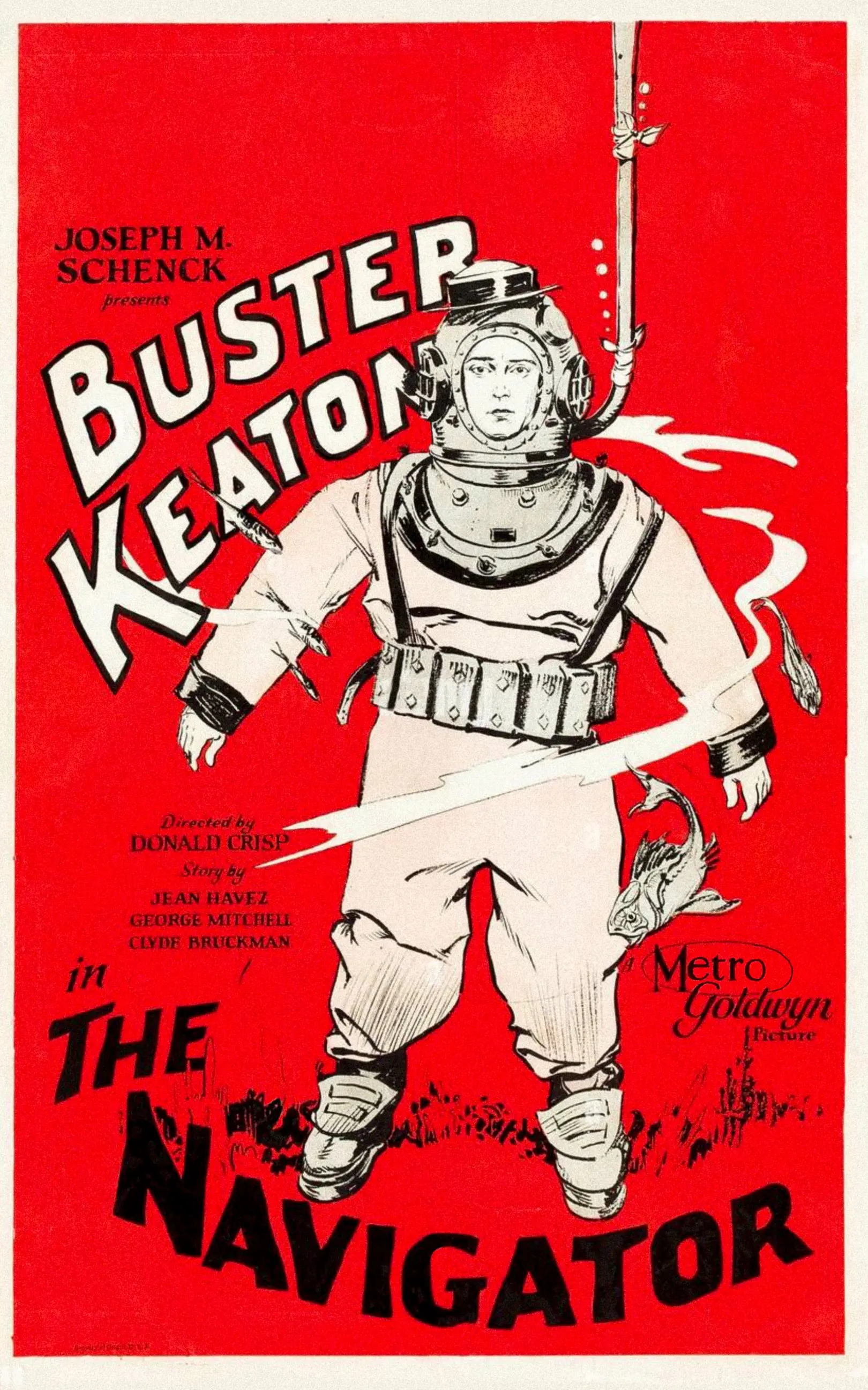
A definitive 7.5/10 rating for a film that redefined the boundaries of cult cinema. The Navigator remains a cornerstone of transgressive art.
Stepping into the world of Buster Keaton is akin to entering a meticulously constructed, yet utterly chaotic, dreamscape. His films are not merely comedies; they are breathtaking ballets of physical prowess, engineering ingenuity, and a stoic resilience that defies the most outlandish predicaments. Among his most celebrated works, The Navigator, released in 1924, stands as a monumental testament to his singular vision, a grand spectacle of silent-era filmmaking that continues to captivate audiences with its audacious stunts and profound comedic brilliance. This isn't just a movie; it's a masterclass in visual storytelling, an intricate dance between man and machine, set against the vast, indifferent backdrop of the open sea.
The premise itself is deceptively simple, yet ripe for Keaton’s brand of elaborate slapstick: two impossibly wealthy, utterly pampered individuals find themselves marooned on an enormous, deserted passenger ship. Rollo Treadway, portrayed by Keaton himself, is a character so insulated by his inherited fortune that he operates on a completely different plane of reality. His decision to propose to his equally privileged neighbor, Betsy O'Brien (Kathryn McGuire), is less an act of passionate love and more a whimsical fancy, a casual decree from a man unaccustomed to denial. Her immediate rejection, delivered with a charmingly blunt directness, sets in motion the cascade of events that will strip them of their comfort and force them into a crucible of self-reliance.
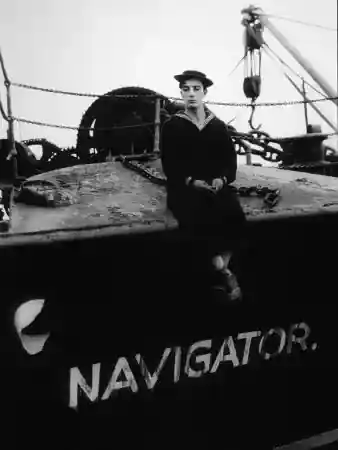
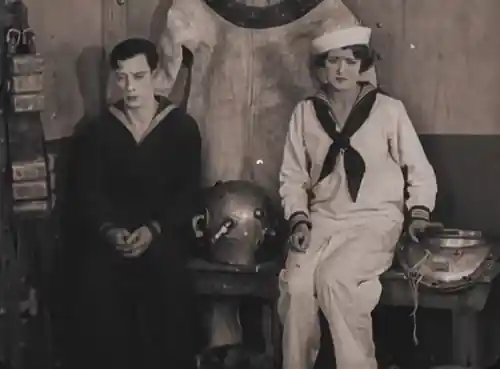
The sheer improbability of their predicament is part of the film's charm. Through a series of contrivances involving international saboteurs and mistaken identities, Rollo boards the colossal liner, the "Navigator," believing it to be his honeymoon vessel. Simultaneously, Betsy, having missed her own family's departure, is inadvertently shanghaied onto the very same ghost ship. The initial scenes of them discovering each other, amidst the echoing silence of a completely empty luxury liner, are pure comedic gold. Their mutual bewilderment, their helplessness in the face of basic needs like food and shelter, highlights the profound absurdity of their sheltered lives. They are fish out of water, or rather, landlubbers adrift at sea, utterly devoid of any practical skills.
Keaton’s genius lies not just in his physical performance, but in his ability to imbue his characters with a quiet dignity even in the most ludicrous circumstances. Rollo Treadway, despite his initial fecklessness, possesses an innate, if clumsy, ingenuity. He doesn't panic; he observes, he adapts, he attempts. The ship itself becomes a character, a sprawling, complex machine that Rollo must learn to master. The film masterfully exploits the vastness of the empty ship, turning its opulent lounges and intricate engine rooms into playgrounds for elaborate gags. Every attempt to prepare a meal, every effort to navigate the ship, every interaction with its myriad mechanisms, transforms into a meticulously choreographed sequence of escalating comedic failure and eventual, hard-won triumph.
Consider the iconic breakfast scene, a tour de force of Rube Goldbergian mechanics. Rollo, attempting to prepare a meal for Betsy and himself, transforms the entire galley into a sprawling, interconnected contraption. From the complicated opening of a can to the perilous journey of an egg across a series of pulleys and levers, it’s a brilliant display of cause-and-effect comedy, showcasing Keaton’s fascination with machinery and his ability to integrate it seamlessly into his physical humor. This scene, like many others, speaks to the collaborative brilliance of the writers, Jean C. Havez, Clyde Bruckman, and Joseph A. Mitchell, who consistently crafted scenarios that allowed Keaton's unique talents to shine. Their ability to weave together intricate plot points with opportunities for spectacular visual gags is nothing short of remarkable.
As the film progresses, the comedy shifts from mere situational humor to a more adventure-driven narrative. The appearance of hostile natives, led by Noble Johnson, who mistake the stranded ship for a deserted vessel and attempt to board it, injects a thrilling element of danger. This development forces Rollo and Betsy to move beyond their squabbles and truly work together. It’s here that Rollo’s latent resourcefulness truly comes to the fore. He repurposes the ship’s formidable cannon, not with military precision, but with a series of hilarious misfires and accidental successes, demonstrating his ability to improvise under pressure. The sight of him attempting to load and fire the massive weapon, a tiny figure dwarfed by its scale, is both incredibly funny and genuinely suspenseful.
The supporting cast, though often in minor roles, plays its part in setting the stage for Keaton's brilliance. Figures like Clarence Burton and Frederick Vroom, even in their brief appearances as saboteurs or family members, contribute to the narrative's initial setup, providing the necessary catalysts for Rollo and Betsy's predicament. H.N. Clugston, too, helps fill out the world, ensuring that the initial chaos feels grounded before the main characters are cast adrift.
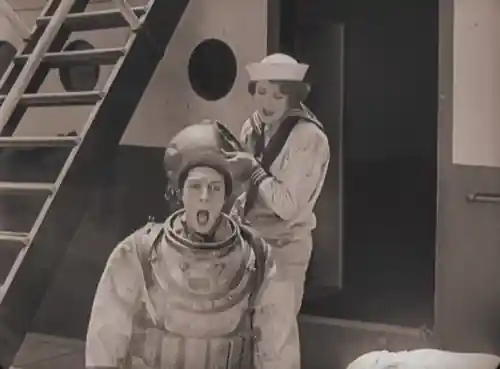
The climax of The Navigator is arguably one of the most audacious and memorable sequences in silent film history: the underwater escapade. Donning a deep-sea diving suit, Rollo plunges into the ocean to repair the ship’s propeller, which has been sabotaged by the natives. This sequence is a marvel of technical innovation and comedic timing. Keaton’s movements underwater, clumsy yet determined, are intrinsically funny, and his encounters with various marine life, including a swordfish that threatens to skewer him and an octopus that grapples with him, are both thrilling and hilarious. It’s a testament to his commitment to realism and spectacle, pushing the boundaries of what was achievable in filmmaking at the time. This daring sequence elevates the film beyond mere comedy, transforming it into a full-fledged adventure, a testament to the human spirit's ability to adapt and overcome.
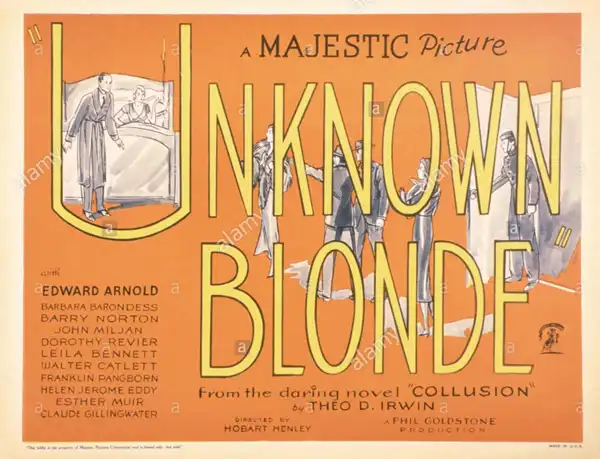
Comparing The Navigator to other films of its era, or even later works, reveals its unique standing. While films like Piccadilly Jim offered charming romantic comedies, and Love's Redemption explored dramatic romantic tropes, The Navigator blends romance with an unprecedented level of physical action and mechanical ingenuity. The sheer scale of the set, the 'Navigator' itself, is reminiscent of the grand ambitions seen in adventure films like The Indian Wars, but here, the threats are often self-imposed or comically exaggerated, rather than historically dire. The film’s focus on survival against the odds, albeit with a comedic slant, can be seen as a lighter parallel to the isolation and peril found in more serious narratives, even if the tones are vastly different.
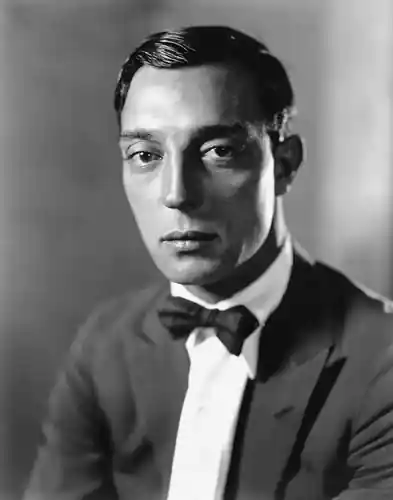
Keaton's distinctive 'Great Stone Face' is central to his appeal. Unlike the exaggerated expressions of many of his contemporaries, Keaton's impassive demeanor allows the audience to project their own emotions onto his character, making his reactions, or lack thereof, all the more hilarious. This poker face, combined with his incredible athleticism and precision timing, creates a unique comedic persona that remains unparalleled. His ability to perform dangerous stunts with an almost casual grace makes the extraordinary seem ordinary, and the impossible, merely a challenge to be overcome.
The cinematography throughout The Navigator is exceptional, capturing the vastness of the ship and the ocean with sweeping shots that emphasize the characters' isolation. The camera is not merely a passive observer; it's an active participant, framing Keaton's intricate movements and the elaborate gags with an acute sense of spatial awareness. The editing, too, is masterful, maintaining a brisk pace that keeps the audience engaged, while allowing individual gags to breathe and develop their full comedic potential. Every cut serves a purpose, driving the narrative forward or punctuating a moment of physical comedy.
Beyond the laughs, The Navigator offers a subtle commentary on class and self-reliance. Rollo and Betsy, initially helpless products of their wealth, are forced to shed their aristocratic pretensions and learn practical skills. Their journey from pampered idleness to active problem-solvers is a central arc, demonstrating that true capability isn't inherited, but earned through experience and necessity. This thematic depth elevates the film beyond mere entertainment, giving it a resonant quality that transcends its comedic framework.
The influence of The Navigator on subsequent filmmakers and comedians is undeniable. Its innovative stunts, its use of a unique setting as a character, and Keaton's unparalleled physical comedy have left an indelible mark on cinematic history. One might even draw a comparison, albeit a distant one, to the buddy-comedy elements of films like Almost Heroes, where two mismatched individuals are thrown into an adventure, forced to rely on each other despite their inadequacies. Or the sheer physical commitment to performance found in films like Der Tänzer, highlighting the expressive power of the human body in motion.
Ultimately, The Navigator remains a towering achievement in silent cinema, a film that showcases Buster Keaton at the absolute zenith of his powers. It is a work of art that seamlessly blends daring physical comedy with genuine thrills, a testament to the boundless creativity of its star and director. It speaks to the universal human experience of confronting the unknown, adapting to adversity, and finding humor in the most dire of circumstances. For anyone seeking to understand the enduring appeal of silent film, or simply to witness pure cinematic genius, The Navigator is an essential voyage.
IMDb 6.8
1936
Community
Log in to comment.