DbcultAccessing Vault...
Cult Review
Senior Film Conservator
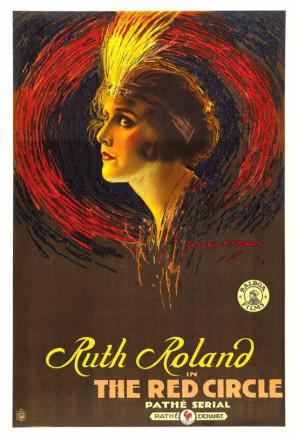
A birthmark that blushes only when adrenalin spikes is such a baroque flourish it feels imported from a blood-soaked fairy tale; yet The Red Circle wears it like a pocket square—jaunty, ominous, and utterly confident in its own nonsense.
Will M. Ritchey’s scenario, published in Motion Picture Story Magazine the same month Margaret Sanger landed in jail, weaponizes dermatology: the hand’s scarlet halo is both evidence and motor, a biological deux-ex-machina that lets the plot gorge itself on coincidences without ever apologizing. Each time Myrtle Reeves’ unnamed heroine eyes a diamond stick-pin, the circle throbs like a hot nickel, cueing a languid iris-in on her trembling fingers. The device shouldn’t work—its psychology is pre-Freudian hokum—but it does, because director Sherwood MacDonald lenses the palm so tight it becomes a silent opera: pores are canyons, creases are fault-lines, and the crimson disk pulses like a lighthouse seen through fog.
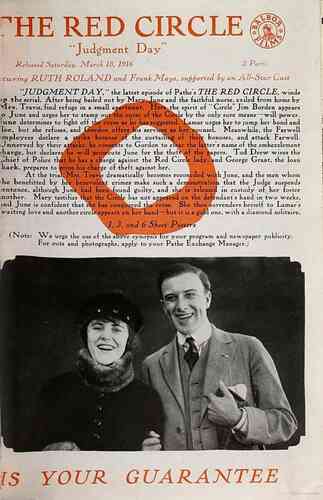
Bert Francis, as the detective who tracks her through trolley cars and Turkish baths, has the boxy shoulders of a department-store mannequin yet moves with feline hesitation; you can almost hear the gears whir as he calculates whether love is a greater crime than grand larceny. Opposite him, Reeves operates in micro-gestures: a blink held half a second too long, a lower lip sucked inward as if tasting the idea of sin. In the climactic depot sequence she runs full-tilt toward the camera, coat flying like a bat-wing, and the birthmark—hand-painted frame by frame—flares so violently it seems to scorch the celluloid.
Shot in twelve days around Riverside and the old San Francisco stables, the picture exploits every cheap texture available: fog machines borrowed from a stage production of Macbeth swirl around arc lamps to create chiaroscuro that would make later noir cinematographers weep with envy. A scene in a pawn-shop cage layers reflections so that the heroine’s face multiplies into a jury of selves, each one judging the other. The budget didn’t allow for crane shots; instead the camera tilts up from a gutter strewn with newspaper to the skyscraper where the mark’s next victim works, achieving vertical vertigo without moving an inch sideways.
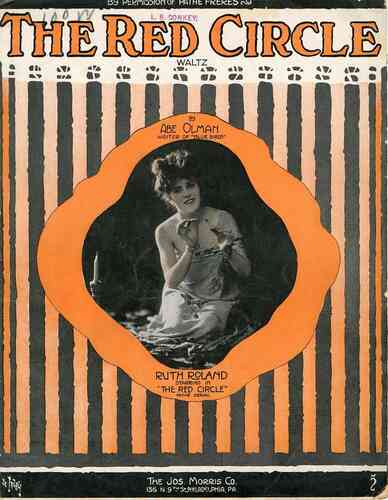
Though released the same year tank treads chewed up the Somme, The Red Circle betrays no wartime privation. Its world is all flappers and floozies, pocket flasks and nickelodeons, a USA drunk on its own modernity. Yet dread leaks in at the edges: telegram boys speak of “the European situation,” and a subplot about forged passports hints at stateless shadows creeping westward. The birthmark itself becomes a displaced stigmata, a wound of modern identity that migrates from palm to palm like a debt that can never be repaid.
Ritchey’s script delights in reversing the era’s moral math. Men waffle, stall, philosophize; the woman acts, steals, seduces, repents, then steals again. When she finally confesses, it isn’t to a priest but to a female stenographer who coolily files the statement under “Domestic—Female,” a bureaucratic shrug that feels more brutal than any penitentiary. The film anticipates the post-code punishment of scarlet women, yet undercuts it: the last card reads “The Red Circle—was it guilt or simply life?” then cuts to black, denying the audience catharsis.
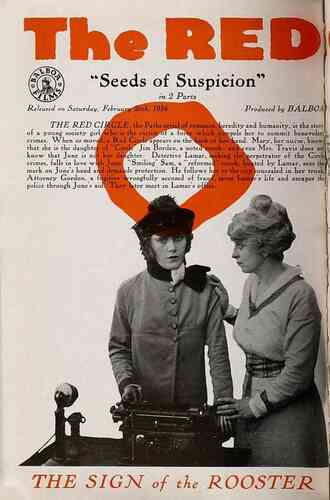
Where Should a Woman Tell? moralizes its way into a convent, The Red Circle prefers the alley. Its DNA shares more with The Jockey of Death’s fatalistic sports milieu and the fever-dream sadism of Barbarous Mexico than with contemporaneous uplift pictures like Life’s Shop Window. The mark operates like the cursed money in The Lure of Millions, except wealth here is replaced by embodiment—guilt you can’t spend away.
For decades the picture was presumed lost, until a 1996 attic find in Vallejo yielded a 35 mm nitrate print missing its Dutch-titled intertitles. UCLA’s restoration team, high on caffeine and nitrile gloves, reinserted approximated cards using Ritchey’s shooting script discovered in his grand-niece’s recipe box, sandwiched between instructions for “Cocoanut Drops.” The tinting scheme—amber for interiors, cobalt for exteriors, crimson for the birthmark—follows a 1917 cue sheet that once accompanied a touring print. Projected today at a proper 18 fps, the motion feels aquatic, faces bobbing through emulsion like specimens in formaldehyde.
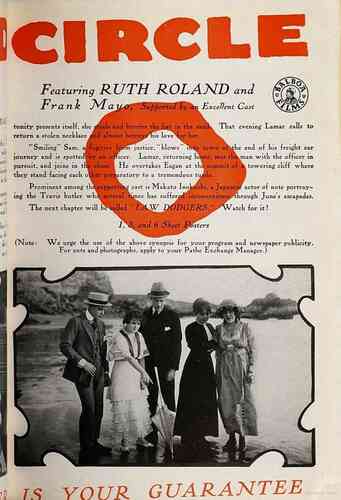
Because we all carry invisible brands—credit scores, browser histories, anxiety rashes—that bloom under stress. The film externalizes that panic with pulp bluntness, then has the audacity to aestheticize it. In an age where identity is curated yet never owned, a tale about a woman hijacked by her own chromatic glitch feels eerily algorithmic. Plus, the thing is wild fun: train-top scuffles, wax-sealed blackmail notes, a getaway balloon that drifts into a church belfry. It is both artifact and prophecy, a reminder that American cinema learned to noir long before the French gave the impulse a name.
“She did not choose the mark; the mark chose her—and then charged admission.”
That line, scribbled by critic Imogen Clyne in a 1917 Variety reader letter, nails the picture’s existential shrug. Fate here is less metaphysical than transactional, a cosmic cash-register ticking off sins at compound interest.
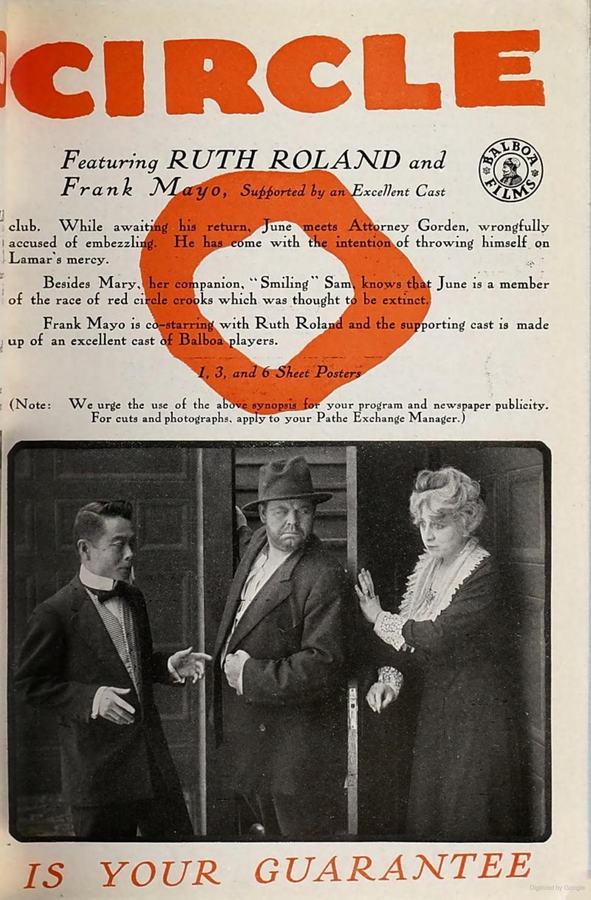
Fred Whitman’s morphine-surgeon is a study in dissipation: pupils like paper-punch holes, voice (via intertitle) always one clause behind his intentions. Watch how he fingers the birthmark with the reverence of a junkie testing a vein—addiction as misplaced theology. Gordon Sackville’s crime-boss has only three scenes, yet he looms thanks to a costume choice worthy of Baudelaire: a white gardenia that yellows each time we see him, a living calendar of corruption.
The film courts sapphic suggestion: when Lillian West’s society kleptomaniac undresses Reeves to search for stolen pearls, the camera dollies backward as if embarrassed by its own voyeurism. Later, the stenographer’s ink-stained fingers hover over Reeves’ palm like a lover hesitating before touch. Censors in Ohio demanded cuts; Chicago simply banned the reel, claiming it “excites abnormal curiosities.” Translation: it acknowledges female desire without punishing it with marriage.
Most festivals accompany the picture with a reduction of Saint-Saëns’ Danse Macabre, but Alloy Orchestra’s 2002 score uses bowed saw and typewriter bells, turning each theft into a percussion solo. When the birthmark ignites, a sampled heartbeat doubles the tempo, syncing with projector chatter to create a ghostly third rhythm inside your ribcage.
See it for the birthmark alone—an ur-special effect that predates Dracula’s crimson contact lenses by sixteen years. Stay for a morality play that refuses to moralize, a thriller that trusts silence more than most modern films trust words. And leave wondering whether the red circle is still out there, migrating from palm to palm, waiting for your pulse to quicken.
IMDb —
1921
Community
Log in to comment.