DbcultAccessing Vault...
5.4/10
Senior Film Conservator
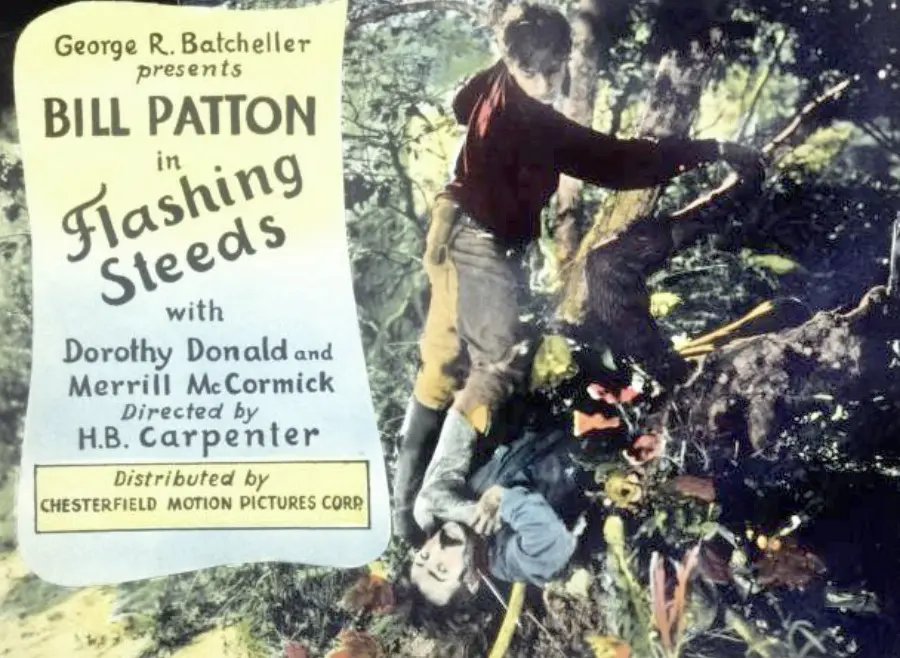
A definitive 5.4/10 rating for a film that redefined the boundaries of cult cinema. Flashing Steeds remains a cornerstone of transgressive art.
Flashing Steeds, a 1923 silent film, serves as a masterful blend of suspense, romance, and early Hollywood style. The narrative, with its intricate plot and charming characters, is a testament to the artistry of silent cinema. Directed by Horace B. Carpenter, this film tells the story of government agent Bill Swift, who is tasked with catching the Rathburne swindlers, a pair of international con artists, while simultaneously navigating the complex web of emotions that develop with his boss's daughter, Helen.
The film opens with a sense of foreboding as we see the Rathburne swindlers planning their next big heist, targeting an expensive black pearl owned by Bill's employer, retired sea captain Randall. Swift, in a daring move, disguises himself as a cowhand and lands a job on the ranch, setting the stage for his covert operation. His cover is as flawless as his intentions are pure; however, his mission soon intertwines with personal matters as he finds himself drawn to the captivating Helen.
Swift's journey is filled with tension and excitement. The swindlers are cunning, and their plans are meticulously laid out, making it a thrilling challenge for our hero. As Swift delves deeper into their scheme, the lines between his professional and personal life begin to blur. His interactions with Helen, a character portrayed with grace and charm by Dorothy Donald, add a layer of complexity to the narrative. The chemistry between the actors is palpable, especially during Helen's scenes, which are imbued with a tender vulnerability that resonates with the audience.
One of the most intriguing aspects of Flashing Steeds is the way it portrays the social dynamics of the early 20th century. The film captures a snapshot of a bygone era, where societal norms and expectations are challenged by the characters' actions. The relationship between Bill and Helen is particularly poignant, as they navigate a world where love and duty often clash. Their interactions are filled with subtle nuances, conveyed through expressive body language and the actors' ability to convey emotions without dialogue.
Technically, Flashing Steeds is a remarkable achievement. The cinematography, by the legendary cinematographer of the era, captures the beauty of the ranch and the rugged landscape with stunning clarity. The use of lighting and shadow is particularly effective in creating mood and atmosphere, contributing to the film's overall sense of mystery. The editing, though simplistic by modern standards, is skillfully executed, maintaining the pacing and flow of the narrative with precision.
The cast, led by Dorothy Donald as Helen and Merrill McCormick as Bill, brings a level of authenticity to their roles. Their performances are nuanced and heartfelt, and their chemistry is evident in every scene. Supporting actors, including Alfred Hewston and Ethel Childers, also contribute to the film's success, adding depth and dimension to the story. The portrayal of the Rathburne swindlers, played by Harry O'Connor and Pat Patton, is equally impressive, showcasing their crafty and calculated approach to their schemes.
Comparatively, Flashing Steeds stands out among its contemporaries. Films like No Parking and Le marchand de plaisirs, while also offering suspense and romance, often fall short in terms of character development and emotional resonance. Flashing Steeds, however, excels in both areas, making it a standout in the genre. The film's ability to balance the tension of the swindle with the tender moments of romance is a testament to its well-crafted script and skillful direction.
Flashing Steeds is not just a film; it is a window into a bygone era, a time when the power of storytelling was in the hands of the silent screen. It is a reminder of the artistry and craft that went into creating these early films, and a celebration of the enduring power of narrative to captivate and inspire. Whether you are a silent film enthusiast or simply someone who appreciates well-crafted storytelling, Flashing Steeds is a must-watch. It is a film that will leave you enthralled, and perhaps, a little in love with the characters on screen.
For those interested in exploring more of this genre, films like The Fly Ball, The Boer War, and The Cricket on the Hearth offer similar experiences. Each of these films, in their own way, captures the essence of early 20th-century cinema, making them worthy companions to the viewing of Flashing Steeds.
IMDb —
1917
Community
Log in to comment.