DbcultAccessing Vault...
Cult Review
Senior Film Conservator
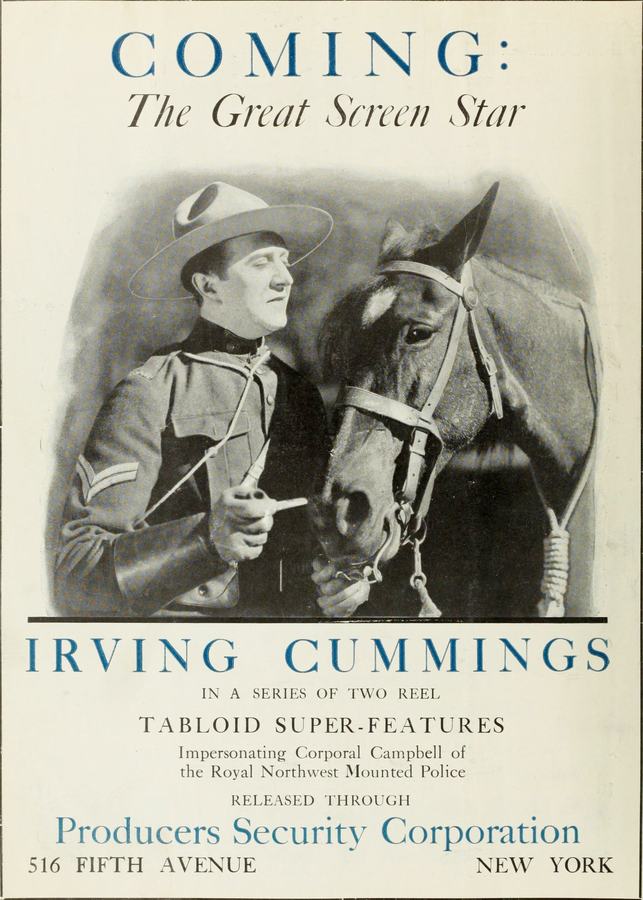
A mirage of redemption flickers above alkali flats in this blistering 1919 parable, now resurrected from nitrate anonymity.
Irving Cummings—still years away from the velvet swagger of talkie escapism—here embodies a conscience in rawhide, a man whose spurs jangle with the metallic aftertaste of wrongful death. The plot, deceptively linear, coils like a snake: a marshal escorts settlers toward a promised Eden sketched on fraudulent charts, only to learn that the snake-oil dreamer riding point is the same phantom who once baited his own lethal error. What follows is less a chase than an autopsy of American optimism, each reel peeling back another layer of skin to reveal the copper wire of speculation humming beneath.
Notice how cinematographer Friend Baker frames every horizon slightly off-level—an optical whisper that the moral ground itself is askew.
The film’s grammar predates the psychological westerns of the fifties, yet anticipates their existential hangover. When Cummings’ lawman fingers the frayed edge of a wanted poster, the close-up is held so long the paper seems to perspire; guilt, we realize, has a temperature. Intertitles—usually functional in silents—here flare with bitter poetry: “Water sold by the future, paid for in blood already spilled.” It’s as if the film senses its own century-hence resurrection and wants to leave breadcrumbs for critics not yet born.
Cummings works with the economy of a man counting bullets. His eyes—narrow, slate-gray—carry the entire backstory of a hanging he can’t undo. Watch the way he removes his badge: not with ceremonious flourish but with the absent-minded fatigue of a farmer unhooking a rusted gate. Around him, the ensemble throbs with frontier authenticity. The settler matriarch, face like a topographical map, registers each betrayal as a barely perceptible twitch at the corner of her mouth; her silence is louder than any auctioneer’s cry.
A child actor—uncredited, perhaps a local rancher’s kid—delivers the film’s emotional detonation in a single shot: letting soil slip through his fingers while a locomotive whistle howls off-camera. No cutaway, no musical underline, just the dry percussion of earth on earth.
Baker’s photography exploits the tonal limitations of orthochromatic stock: skies bleach to white-hot parchment, faces sink into charcoal masks. The result is a chiaroscuro of desperation. In one bravura sequence, moonlight slashes through the slats of a half-built gallows, striping the marshal’s torso like prison bars he’s already internalized. Compare this to the pastoral glow of The Sheriff of Hope Eternal—a film that still believes law and virtue can share the same saddle—and you’ll see how The False Trail gouges out the genre’s utopian eye.
Yet the film is no mere catalogue of despair. Its critique is surgical: it indicts not only the confidence man but the settlers’ hunger to be conned. Each time the drifter unfurls his canvas map—painted with lakes that never existed—the camera pans across upturned faces blazing with covetous belief. The con works because the marks dream in communal unison. In that regard, the film feels startlingly contemporary; swap water rights for crypto wallets and you could release it tomorrow without a single reshoot.
Being a silent, the picture weaponizes absence. The gallows sequence arrives with no orchestral cue—only the hollow creak of rope against beam, a metronome counting down to communal damnation. Contemporary press sheets claim exhibitors were encouraged to “remove musical accompaniment for full ethical impact.” Imagine 1919 audiences gasping not at gunfire but at the hush that follows a man’s public admission of fallibility.
It’s the inverse of the cathartic shoot-out we’d later codify; violence here is linguistic, a confession hurled into a void that answers with indifferent wind.
The female characters refuse the saint-or-harlot binary still plaguing westerns two decades later. The settler wife who bargains her wedding ring for a canteen of water isn’t romanticized; she’s a pragmatist whose morality is measured in fluid ounces. Later, when she spits in the drifter’s face, the glob arcs in slow-motion clarity—an act of reclamation filmed with the same reverence usually reserved for slow-motion bullets. In contrast, Daughter Angele sentimentalizes maternal sacrifice; The False Trail presents motherhood as a negotiable commodity, breasts bartered for the illusion of security.
The auction scene is a diabolical circus. Watch how the drifter climbs atop a crate of dynamite—literally selling futures built on explosive debt—while the crowd’s bidding paddles resemble nothing so much as a lynch mob’s raised arms. Each shout of “five dollars an acre!” is intercut with flash-frames of the earlier hanging: a montage that implicates every spectator in historical recurrence. Eisenstein would not formalize such intellectual juxtaposition for another seven years; this obscure oater stumbles upon it through sheer moral urgency.
Editorial rumor claims the original negative was trimmed by two reels after test audiences in Wichita rioted—not at the hanging, but at the film’s refusal to let the marshal re-cinch his badge and save the day. Studio hacks wanted redemption; the director, anonymous in the trade papers, allegedly mailed them a single reply: “Let them riot until they understand.”
Place this beside Into the Primitive and you’ll see two divergent philosophies of man-versus-wilderness. Where Primitive celebrates self-reliance, False Trail insists that self is already mortgaged to the next grift. Pair it with Sold—another tale of transactional bodies—and a pattern emerges: 1919 was the year American cinema discovered the price tag stapled to the soul.
Curiously, the film also rhymes with the Germanic fatalism of Treibende Kraft, though made half a world away. Both share a protagonist who realizes too late that progress is merely a rebranded sin. The difference: where the European work succumbs to nihilism, The False Trail maintains a thorny, near-religious belief in confession—even if no one is listening.
Surviving prints were cobbled from a 1950s collector’s 9.5 mm reduction, itself struck from a Czech archive dupe. The photochemical scars—scratches like lightning across a midnight plain—only enhance the film’s thesis: history arrives to us damaged, dripping with the nitrate sweat of previous convictions. Digital cleanup was resisted; instead, the restoration team opted to stabilize the frame and let the scars breathe. Result: every flicker feels like a kerosene lamp guttering in a homestead about to be foreclosed.
Viewers expecting the pastoral balm of Pardners will instead find an existential blister that refuses to pop.
So what lingers? Not the plot—its twists are as brittle as drought-stricken twigs—but the afterimage of Cummings’ back, stooped beneath a horizon that keeps receding. The film understands that the American West wasn’t conquered; it was swindled, acre by acre, dream by dream. And the true false trail is not the map hawked by the grifter, but the cultural myth that equates expansion with virtue. Long after the house lights rise, you’ll taste alkali on your tongue and hear the phantom creak of a rope that never quite breaks. That’s the mark of art that refuses to stay historical; it hitches a ride on your pulse, a stowaway whispering that every contemporary hustle—every SPAC, every NFT, every prosperity gospel—is the same dusty drifter, just wearing a new Stetson.
Seek it out wherever archival miracles screen. Drink beforehand—your throat will thank you.

IMDb —
1932
Community
Log in to comment.