DbcultAccessing Vault...
5.2/10
Senior Film Conservator
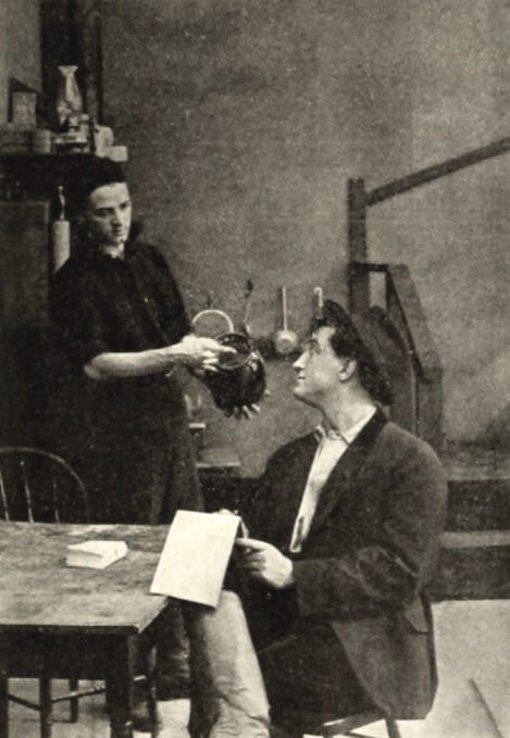
A definitive 5.2/10 rating for a film that redefined the boundaries of cult cinema. The Mail Order Wife remains a cornerstone of transgressive art.
Scrape away the nitrate bloom and what remains is a bruise-colored love triangle etched onto 35 mm: three faces, one prairie, zero guarantees.
Edison’s 1912 one-reeler The Mail Order Wife runs scarcely fifteen minutes, yet its emotional half-life lingers like alkali dust in the lungs. Director James W. Horne—still a year away from sculpting Glacier National Park vistas—compresses epic longing into a rectangle of flickering shadow play. The result is a pocket-sized Wuthering Heights where the moor is mile-high buffalo grass and the demons are loneliness, land deeds, and the U.S. Postal Service.
Horne shoots courtship like a robbery: faces emerge from darkness, swap glances, retreat. May’s first appearance—backlit against the Chicago mailroom—frames her in a halo of envelopes, as though destiny itself were addressed to her. Later, when she steps from the immigrant wagon onto Utah’s cracked salt pan, the camera tilts up to swallow her in sky; the cut feels like a gasp. Compare this to the static tableaux of From the Manger to the Cross released the same year; Horne’s mobility is proto-Kuleshov, trading piety for pulse.
Bushman’s John White is less cowboy than cartographer of regret. Watch the way he fingers the envelope addressed to “Occupant, Great American Desert,” eyes narrowing as if the words themselves were barbed wire. His shoulders carry the same slouch that would later haunt What Happened to Mary, but here the pose is purified: no serial cliffhanger, just the ache of a man who plows fields to forget a woman and ends up plowing her back into his life.
As Bob Strong, Washburn oscillates between buffoon and bruised saint. The postscript gag—written with the same flourish he uses to order axle grease—could have played as misogynist prank. Instead, Washburn lets the smirk evaporate the instant he realizes his jest has lungs and a heartbeat. His final gesture, surrendering May without fistfight or sermon, elevates the film from nickelodeon novelty to moral fable. Try finding that nuance in the prizefight bluntness of The Corbett-Fitzsimmons Fight.
The character’s name survives only in vintage synopses; the actress remains uncredited, a ghost signed “Anonymous” in the ledger of history. Yet her performance is kinetic autobiography: every button she fastens on the westbound train chokes back second thoughts; every blink at the campfire counts down courage like a metronome. She is both package and purchaser, letter and envelope, anticipating the self-fashioning heroines of Anna Karenina serials a decade later.
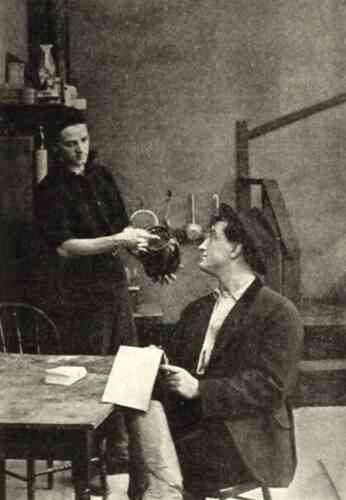
Horne’s location—likely California’s Antelope Valley—doubles for the Nebraska Territory the way memory doubles for truth. The same scrub that appears barren sprouts tiny defiant flowers when May kneels to wash her face, a visual whisper that love, like wild flax, needs only the crack of possibility. The austerity contrasts sharply with the baroque excesses of Dante’s Inferno or Cleopatra, proving that intimacy can trump spectacle if the camera knows where to place its reverence.
In 1912 the parcel post was barely four years old; the idea that a woman could be shrink-wrapped into the same crate as cavalry boots was scandalous and seductive. Today the film reads like an analog ancestor of algorithmic matchmaking: swipe right on a catalogue, wait for the algorithmic prairie to deliver longing in a box. The difference? May retains veto power over her own narrative. She answers the ad, but she also answers the call of her own past, rewriting the ending in real time—a privilege no amount of modern swipe-ware guarantees.
Most extant prints circulate without cue sheets, so contemporary accompanists improvise. At the 2019 Pordenone Silent Film Festival a klezmer trio scored the lovers’ reunion with a slow clarinet lament that turned the dusty clearing into a synagogue of secular prayer. The absence of authoritative score is blessing, not lacuna; each fresh performance re-authors the emotional ledger, something you can’t say for the fixed hymn overlays of Life and Passion of Christ.
The film’s Manifest Destiny optimism—land for the taking, brides for the ordering—skirts the bloodier ledger of dispossession. No Native faces appear; the prairie is vacuum-sealed for white desire. That erasure stings more in hindsight, especially when compared to the self-flagellating colonial guilt of The Redemption of White Hawk. Yet the absence itself becomes a text: the emptiness behind May’s wagon is the same emptiness that swallowed cultures. The viewer’s discomfort is the unwritten subtitle.
The lone surviving 28 mm print—rescued from a flooded Montana barn—shrunk like memory. Digital stewards at MoMA enlarged it to 35 mm, grain blooming like desert aster. Some cinephiles decry the softness; I celebrate it. The image wears its damage the way John wears his five-year ache: imperfect, legible, defiantly alive. Every fleck of emulsion feels like alkali dust settling on the collar of your coat long after the train departs.
By the time the end card flickers, the film has delivered three miracles: it indicts the commodification of affection without wagging a moral finger; it grants its lone female protagonist the agency to rewrite her own address; and it proves that even in 1912 narrative economy could feel like emotional largesse. The Mail Order Wife is less a curio than a compass: it points toward the horizon where desire and conscience share the same wagon track. Follow that trail and you arrive, dusty but unbroken, at the doorstep of your own better nature.
Verdict: Essential viewing for anyone who still believes the past is a letter we can choose to answer.
IMDb —
1934
Community
Log in to comment.