DbcultAccessing Vault...
Cult Review
Senior Film Conservator
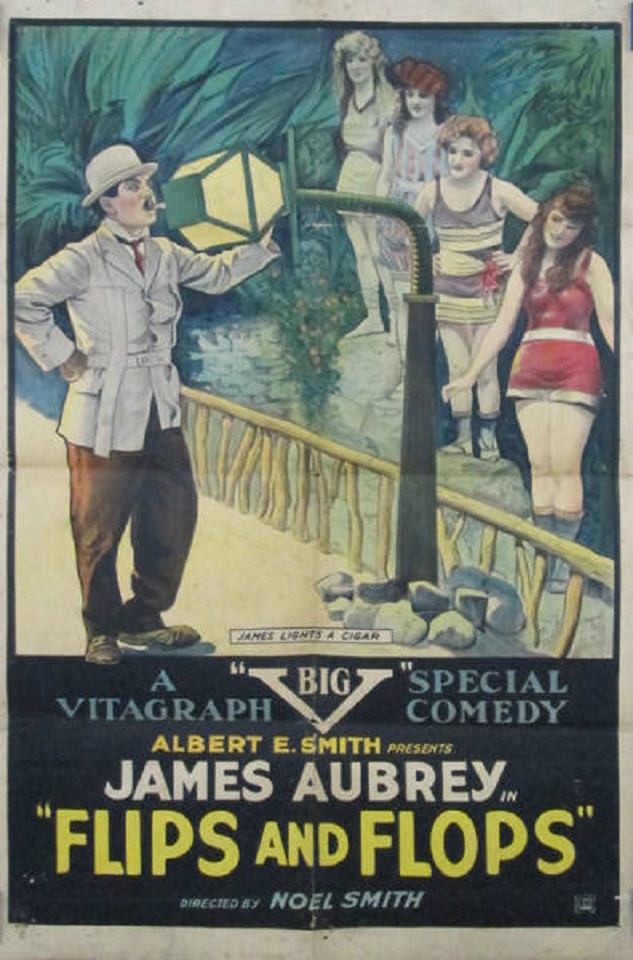
Stepping into the kinetic world of "Flips and Flops" is akin to being swept up in a joyous, anarchic tempest, a quintessential example of early 20th-century silent comedy that, despite its brevity, overflows with inventive gags and a relentless pace. Released in 1923, this film, like many of its era, serves as a vibrant snapshot of a bygone cinematic art form, where physical comedy, exaggerated expressions, and the sheer ingenuity of visual storytelling reigned supreme. It’s a testament to the enduring appeal of pure, unadulterated slapstick, delivered with a particular flair by its lead, Jimmy Aubrey, a comedian whose prolific output often saw him cast as the hapless Everyman perpetually at odds with authority and circumstance.
The narrative, ostensibly simple, quickly spirals into a delightful absurdity. We are introduced to Jimmy, a character whose romantic overtures seem to perpetually land him in hot water. His initial transgression—a rather charmingly archaic concept of "flirting without a license"—immediately establishes the film's whimsical tone, where even the most innocuous social interactions can be deemed illicit. This minor infraction sets the stage for a classic chase sequence, as a by-the-book park policeman, embodying the stern, unyielding face of law and order, gives pursuit. This initial skirmish, a foundational trope of the genre, immediately positions Jimmy as the perennial underdog, a figure of relatable misadventure.
Amidst his flight, Jimmy stumbles upon Stella Flip, a woman whose distress over her missing dog momentarily diverts his attention from his own predicament. This chance encounter, a moment of unexpected connection born from shared anxiety, introduces a fleeting touch of genuine human interaction before the film plunges headlong back into its comedic core. The subsequent search for the runaway dog, a seemingly mundane objective, leads them to a park bench, a temporary sanctuary from the chaos. It is here, in a moment of surprising tenderness, that the lost dog reappears, jumping onto the bench with an unexpected display of affection for Jimmy. This seemingly benign event acts as a narrative fulcrum, an almost mythological threshold, as Jimmy, lulled by the unexpected warmth of the canine's presence, drifts into a deep sleep, and with it, into the sprawling, phantasmagoric landscape of his subconscious.
The dream sequence, the beating heart of "Flips and Flops," is where the film truly liberates itself from the constraints of conventional logic, embracing a delightful surrealism that foreshadows later cinematic explorations of the subconscious. Within this nocturnal realm, we encounter Mr. Jipper, a hotel proprietor who, in a wonderfully cynical twist, is more adept at larceny than hospitality. His attempt to pick the pocket of Willie Hold, a salesman for the ironically named "Safety First Trans," becomes a brilliant visual gag. Jipper, in his criminal hubris, becomes ensnared by the very safety device Willie is peddling, a delicious piece of situational irony that highlights the film's cleverness in subverting expectations. This segment, though brief, showcases the meticulous gag construction that defined the best silent comedies, transforming a simple act of theft into a ballet of self-inflicted misfortune.
In this dream-world, Jimmy's narrative trajectory mirrors, yet exaggerates, his waking life's misfortunes. He once again encounters Stella, returning her dog in a bid to rekindle the romantic spark that flickered in the park. However, the proprietor, Jipper, now elevated to the role of a formidable antagonist, interferes with Jimmy's amorous endeavors, orchestrating his swift and unceremonious ejection from the hotel. This repetition of themes—the pursuit of affection, the interference of authority—underscores the dream's function as a heightened, caricatured reflection of Jimmy's everyday frustrations. The dream allows for an escalation of stakes and consequences, transforming a minor scuffle into a full-blown expulsion from a grand establishment.
Yet, Jimmy, ever the tenacious spirit, is not easily deterred. His return to the hotel, this time disguised as a bellhop, marks a shift from passive victim to active agent of chaos. This segment is a masterclass in silent film physical comedy, as Jimmy's attempts at legitimate work inevitably devolve into a series of calamitous misunderstandings and accidental destructions. The bellhop uniform, a symbol of subservience, becomes a cloak for his innate propensity for disorder, leading him deeper into the hotel's hidden machinations. His antics, far from being mere slapstick, serve as a disruptive force, inadvertently exposing the underbelly of the establishment. His journey culminates in an unexpected recruitment into Jipper's criminal gang, a development that thrusts him into an even more precarious and absurd situation, blurring the lines between innocent mischief and genuine criminal enterprise.
The film reaches a peak of surrealist humor when Jimmy, now a reluctant member of the gang, is forced to "operate on an audience" in a borrowed hotel room. This peculiar plot point, where the gang's nefarious activities intersect with a seemingly innocuous display of "latest creations and shapes," is a stroke of comedic genius. It’s an audacious premise, hinting at a meta-commentary on performance and deception, where the audience themselves become unwitting participants in a criminal spectacle. The sheer audacity of this scenario, where a fashion show becomes a front for illicit activities, speaks volumes about the creative ambition of Gilbert Pratt's writing, pushing the boundaries of what was expected in a simple silent short.
The inevitable arrival of the policeman, who has seemingly followed Jimmy into his dream-world, sets off a frantic escape sequence. Jimmy, caught in the act, seeks refuge behind the stage curtains, a classic theatrical device that here serves as a portal for his rapid transformations. His first disguise, a "nifty bathing suit," is a moment of pure visual comedy, a sudden, incongruous shift that highlights the arbitrary nature of dream logic. The sight of Jimmy, in such an unexpected ensemble, attempting to evade capture, is inherently hilarious, relying on the audience's recognition of the absurdity of the situation. This transformation is not just a gag; it's a commentary on the malleability of identity in the face of imminent threat, a character's desperate attempt to shed one skin for another.
The chase escalates further as the cop and proprietor close in, forcing Jimmy into yet another, even more outlandish transformation: Madame Peekaboo. This drag disguise, a common trope in silent comedy, is executed with a particular panache here, showcasing Aubrey's willingness to embrace physical comedy in its most flamboyant forms. The ensuing wild chase, a hallmark of the era, is a masterclass in kinetic energy, with Jimmy, in his various guises, narrowly evading his pursuers through a series of increasingly elaborate stunts and near misses. The relentless pursuit, the escalating chaos, and the sheer physical exertion involved are all captured with an infectious enthusiasm, drawing the audience into the breathless excitement of the moment. This sequence, often the climax of such films, perfectly encapsulates the genre's dedication to high-energy, visually driven humor, where the stakes, though comedic, feel genuinely urgent.
The dream, like all good dreams, eventually shatters. Jimmy awakens abruptly on the park bench, his slumber interrupted not by the gentle dawn, but by the insistent rapping of the policeman's club. The sudden transition back to reality is jarring, yet effective, grounding the fantastical journey in a tangible, albeit uncomfortable, return. The presence of the dog, faithfully by his side, serves as the sole tangible link between his elaborate dream and his waking life, a silent witness to his nocturnal adventures. Grabbing the dog, Jimmy makes a hasty escape, leaving the baffled policeman scratching his head in utter perplexity. This final image, of the confused authority figure and the fleeing, dog-clutching protagonist, perfectly encapsulates the film's spirit: a triumph of individual mischief over rigid order, a fleeting moment of freedom snatched from the jaws of consequence.
Jimmy Aubrey, the linchpin of this comedic spectacle, delivers a performance that is both physically demanding and emotionally expressive. His rubbery face, capable of conveying a spectrum of emotions from wide-eyed innocence to frantic terror, is perfectly suited for the demands of silent film. Aubrey’s style, characterized by a certain everyman quality mixed with an innate clumsiness, resonated deeply with audiences of the time. He wasn't the graceful acrobat of a Keaton, nor the sentimental tramp of a Chaplin, but rather a perpetually flustered individual whose attempts to navigate a chaotic world invariably made things worse, often to hilarious effect. His commitment to the physical demands of the role, from the frantic running to the elaborate disguises, is evident in every frame, solidifying his place as a significant, though perhaps less celebrated, figure of the era.
While Oliver Hardy's role in "Flips and Flops" is likely a supporting one, given his early career phase where he often appeared as a heavyset antagonist or comic foil before his iconic pairing with Stan Laurel, his presence adds a layer of historical intrigue. Even in these nascent roles, Hardy's physical presence and nascent comedic timing would have been discernible, hinting at the genius that would later define him. The interplay between Aubrey's frantic energy and Hardy's more grounded, often exasperated, demeanor, even in a minor capacity, would have contributed to the film's overall comedic texture. The supporting cast, including Richard Smith, also plays their parts with the broad, expressive strokes necessary for silent film, ensuring that every character, no matter how brief their appearance, contributes to the overall comedic tapestry.
Gilbert Pratt's writing, a cornerstone of many silent comedies, shines through in the intricate construction of the gags and the escalating absurdity of the plot. Pratt, a prolific writer and director during the silent era, understood the mechanics of visual humor and the power of a well-timed sight gag. His ability to weave a coherent, albeit dream-logic-driven, narrative through a series of increasingly outlandish situations is commendable. The script for "Flips and Flops" is a testament to the collaborative nature of silent filmmaking, where the writer's vision provided the blueprint for the physical comedians and directors to bring to vibrant life on screen. The ingenuity of the "Safety First Trans" trap and the "operating on an audience" concepts demonstrate a mind keenly attuned to comedic innovation beyond mere pratfalls.
The dream sequence itself is more than just a convenient narrative device; it's a brilliant structural choice that allows the film to transcend the limitations of conventional reality, offering a psychological escape for its protagonist and a playground for boundless comedic invention. This blurring of waking and dreaming states, while common in literature, was still a relatively fresh concept in early cinema, allowing for a level of surrealism that wouldn't be possible within a strictly realistic framework. The dream becomes a vehicle for exploring themes of escapism, subversion of authority, and the absurdity of societal rules, all wrapped in a package of boisterous laughter. It suggests that Jimmy’s subconscious mind is a fertile ground for rebellious fantasy, where he can defy the very constabulary that hounds him in his waking hours.
The film’s thematic undercurrents, though primarily serving the comedic purpose, subtly touch upon the universal human desire to defy constraints. Jimmy's constant clashes with the policeman and the nefarious proprietor symbolize a larger struggle against oppressive forces, whether they be societal norms or outright criminality. His resourcefulness, particularly in his various disguises and his ability to re-enter the hotel despite being kicked out, speaks to a tenacious spirit of rebellion. This is not a rebellion born of malice, but rather of a simple, almost childlike refusal to be contained or defeated. The film, in its own boisterous way, celebrates the individual's ability to create their own reality, however fleeting, in the face of an often-unforgiving world.
Comparing "Flips and Flops" to other films of its period reveals its distinct place within the silent comedy landscape. Its emphasis on a chaotic, disguise-laden chase and a central character who is constantly in motion bears resemblance to films like Lost in Transit, where characters frequently find themselves caught in a whirlwind of mistaken identities and geographical disorientations. Similarly, the use of multiple disguises and the theme of evading capture through clever impersonation echo the spirit of films such as A Spy for a Day, albeit with a far more overtly comedic and less dramatic intent. While those films might lean into more intricate plots or dramatic stakes, "Flips and Flops" maintains a lighter, more purely farcical tone, making its comparisons more about shared comedic mechanisms than deep narrative parallels.
The visual language of "Flips and Flops" is a masterclass in kinetic energy. Every frame pulses with movement, from the frantic scurrying of Jimmy to the exaggerated gestures of his pursuers. The editing is swift, propelling the narrative forward with an almost breathless urgency, a characteristic feature of silent-era shorts designed to keep audiences engaged through constant action. The sets, though perhaps simple by today's standards, are effectively utilized to create opportunities for physical gags – the park bench, the hotel lobby, the stage curtains – each serving as a dynamic backdrop for the escalating mayhem. This commitment to visual storytelling, where every action conveys meaning and evokes laughter, is what gives the film its timeless appeal, transcending the absence of spoken dialogue.
In conclusion, "Flips and Flops" remains a delightful, if often overlooked, gem of the silent comedy era. It's a film that encapsulates the vibrant energy, the inventive spirit, and the sheer comedic genius that defined the early days of cinema. From its charmingly absurd premise of "flirting without a license" to its madcap dream sequence, its clever gags, and its relentless pace, the film offers a pure, unadulterated dose of laughter. It stands as a testament to Jimmy Aubrey’s comedic prowess and Gilbert Pratt’s imaginative storytelling, proving that even a century later, the simple joy of a well-executed chase and a ridiculously elaborate disguise still holds immense entertainment value. It’s more than just a historical curiosity; it’s a vibrant, living piece of cinematic artistry that continues to charm and amuse, a reminder of the foundational brilliance upon which all subsequent comedic forms have been built.

IMDb 7.3
1936
Community
Log in to comment.