DbcultAccessing Vault...
Cult Review
Senior Film Conservator
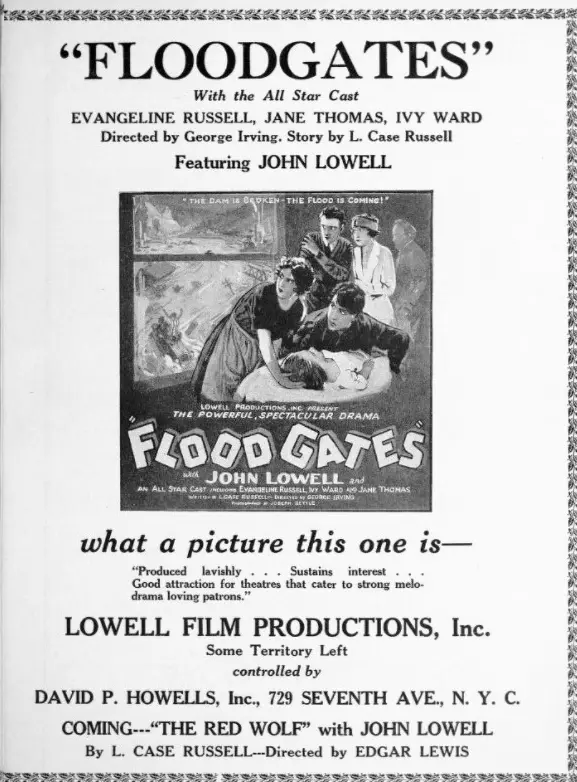
Floodgates
Floodgates is a cinematic exploration of the intricate power dynamics and ethical dilemmas that unfold in a small American town. Directed with a keen eye for detail, the film delves into the multifaceted relationship between millowner Lem Bassett and his foreman, Dave Trask, as Trask navigates the complex web of local politics and community demands.
The narrative kicks off with Lem Bassett's ambition to expand his water power capabilities by acquiring more land. Utilizing Dave Trask’s influence within the community, Bassett orchestrates a plan to obtain the necessary land for his dam project. This decision is met with resistance, as the local inhabitants are aware of the potential environmental and social repercussions of such a venture. The film’s opening scenes are a masterclass in visual storytelling, capturing the essence of the community's resilience and the stark contrast between the lush, fertile lands and the desolate industrial landscape.
One pivotal moment in the narrative is the discovery by a local man who realizes he has been misled by Bassett. This revelation serves as a catalyst for conflict, leading to a tense escalation. Trask, driven by a sense of justice and a desire to protect his community, gathers a group of men to dynamite the dam. The implications of this bold move are profound, with the potential to cause severe damage to both the environment and the lives of those in the vicinity. The film masterfully balances action and drama, with each explosive moment building towards a climactic confrontation.
The path of the dam’s floodwaters is a critical element of the plot, symbolizing the broader implications of Bassett’s actions. Within this path lies the Bassett family home, where Dave’s daughter, recuperating from a disability, is under the care of a specialist. Trask’s decision to save the child and Tom Bassett, Lem’s nephew, is a testament to his moral integrity and the complexities of personal and familial loyalties. This act of heroism serves as a turning point in the story, prompting a reconsideration of the moral and ethical implications of the dam project.
The narrative’s resolution is a poignant exploration of redemption and reconciliation. In a pivotal scene, Bassett agrees to surrender, symbolizing a broader shift in his perspective. This moment is both cathartic and thought-provoking, inviting viewers to reflect on the themes of justice, power, and the human capacity for change.
The performances in Floodgates are noteworthy, with William Cavanaugh and Frank Montgomery delivering nuanced portrayals that bring depth to their respective characters. The chemistry between the lead actors is palpable, enhancing the dramatic tension and emotional resonance of pivotal scenes. Supporting roles, including Hap Hadley and John Lowell, further enrich the narrative, adding layers of complexity to the story’s moral landscape.
The film’s director, Lillian Case Russell, displays a keen understanding of the genre, skillfully weaving elements of social commentary and personal drama. The cinematography is particularly striking, capturing the stark beauty of the landscape and the intimate dynamics within the community. The use of natural light and shadow enhances the film’s atmospheric quality, creating a sense of unease and tension that mirrors the escalating conflict.
Compared to other films of the era, Floodgates stands out for its nuanced exploration of ethical dilemmas and the complexities of community dynamics. It shares thematic similarities with films like Snobs, which also delve into the societal implications of ambition and personal gain. However, Floodgates is more focused on the interpersonal relationships and the moral choices that drive the narrative forward. The film’s focus on character development and the emotional journey of the protagonists sets it apart from more straightforward drama films of the period.
The pacing of Floodgates is deliberate, allowing ample time for the audience to understand the complexities of the characters and their motivations. The film’s runtime is balanced, with no unnecessary scenes that detract from the central narrative. The climax is particularly well-structured, building steadily to a satisfying conclusion that leaves viewers with a sense of resolution and reflection.
Technically, the film excels in its use of sound and score. The soundtrack, composed by Richard Starkey, effectively underscores the emotional highs and lows of the narrative, enhancing the overall impact of pivotal scenes. The sound design is equally impressive, utilizing natural sounds and subtle ambient noises to create a sense of immersion and tension.
Despite the film’s strengths, there are moments where the narrative could benefit from a more concise script. Some scenes feel slightly padded, particularly those focusing on the aftermath of the dam’s destruction. However, these moments are outweighed by the film’s overall coherence and the compelling performances of the cast.
In conclusion, Floodgates is a compelling drama that explores the intricate power dynamics and ethical dilemmas of a small American town. Its nuanced characters, thoughtful pacing, and effective use of visual and auditory elements make it a standout film of its era. While it may not be a groundbreaking masterpiece, it offers a thought-provoking and emotionally resonant viewing experience, making it a valuable addition to any film enthusiast’s collection.

IMDb 5.1
1926
Community
Log in to comment.