DbcultAccessing Vault...
6.9/10
Senior Film Conservator

A definitive 6.9/10 rating for a film that redefined the boundaries of cult cinema. The Hell Ship remains a cornerstone of transgressive art.
In the pantheon of silent cinema, few directors understood the symbiotic relationship between landscape and psyche as profoundly as Victor Sjöström. With The Hell Ship (1923), Sjöström—collaborating with the formidable Hjalmar Bergman—crafts a nautical nightmare that feels remarkably modern in its exploration of trauma and rebellion. Unlike the swashbuckling escapism found in Sinbad, the Sailor, this film anchors itself in the grit and grime of the merchant marine, where the horizon offers no escape, only a mirror to the crew's internal desolation.
The narrative engine is fueled by the implacable Captain Steen, portrayed with a chilling, staccato rigidity. Steen isn't merely a villain; he is the embodiment of a failing social order, a man who views his crew not as men, but as gears in a machine that he is determined to grind into dust. This isn't the melodrama of A Virgin's Sacrifice; it is a cold, calculated observation of how power corrupts the soul. The ship itself becomes a character, its narrow corridors and shadowy holds rendered with a chiaroscuro intensity that predates the heights of German Expressionism.

At the center of the storm is Dick, a sailor whose refusal to break under Steen's lash provides the film's moral compass. Dick’s journey is one of intellectualized rage. He does not simply lash out in a fit of pique; he draws up plans. There is a cerebral quality to his rebellion that distinguishes The Hell Ship from the more visceral action of Daring Danger (1922). Sjöström captures Dick’s internal state through lingering close-ups that allow the audience to track the precise moment frustration curdles into a lethal resolve.
The cast, featuring stalwarts like Matheson Lang and the director himself, delivers performances that eschew the theatrical gesticulation common in the early 1920s. There is a grounded, naturalist quality to their movements. When the crew interacts, the air is thick with the unspoken. You can almost smell the salt and the stale sweat. This level of immersion is what sets Sjöström’s work apart from contemporary efforts like The Little Girl Next Door (1923), which, while charming, lacks the existential weight found here.

The screenplay by Hjalmar Bergman elevates the material above standard genre fare. Bergman’s influence is felt in the nuanced dialogue cards and the structural integrity of the plot. There is a sense of inevitable tragedy, a clockwork progression toward a violent climax that feels both earned and terrifying. While some films of the era, such as High Play or The Royal Imposter, relied on coincidental twists, The Hell Ship builds its tension through character consistency. Steen acts as he must because of his nature; Dick reacts as he must because of his humanity.
Visually, the film is a masterclass. The way Sjöström uses the rigging and the masts to frame his characters suggests a web from which there is no extraction. The sea is rarely shown as a place of beauty; it is a grey, churning void that isolates the characters from the laws of the land. This isolation allows for a breakdown of civility that mirrors the themes found in Broken Fetters, yet the maritime setting adds a layer of physical peril that elevates the stakes.

One cannot discuss 1923 cinema without acknowledging the technical limitations that Sjöström turned into artistic triumphs. The lighting on the deck during the night scenes creates a sense of profound loneliness. The camera movement, though restricted by the technology of the time, is purposeful. Each pan feels like a heavy breath. The editing rhythm, particularly during the sequences where Dick is plotting his revenge, creates a mounting sense of dread that is almost unbearable. It lacks the frantic energy of Morgan's Raiders, opting instead for a slow, agonizing burn.
The supporting cast, including Thecla Åhlander and John Norrman, provide a rich tapestry of reactions to the central conflict. They are not merely background extras; they are the witnesses to the tragedy, their faces etched with the weariness of men and women who have seen too much. This collective suffering makes the eventual mutiny feel like a communal necessity rather than a personal vendetta. It touches upon the social anxieties of the post-war era, much like The Waiting Soul or Ruling Passions, but with a more aggressive, confrontational edge.
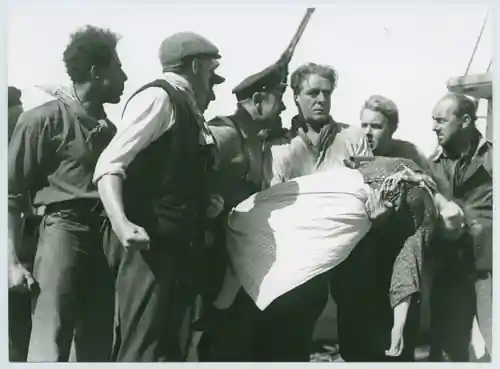
When placed alongside Richard the Brazen or The Barbarian, The Hell Ship feels like it belongs to a different species of filmmaking. While those films often lean into the heroic or the exotic, Sjöström finds the epic in the mundane misery of a sailor’s life. Even compared to the thematic complexity of Occultism, The Hell Ship stands out for its raw, unadorned honesty. It doesn't need supernatural elements or high-society intrigue to captivate; it only needs the friction between two men who cannot coexist in the same wooden world.
The film’s exploration of vengeance is particularly sophisticated. Dick’s plans are not just about physical harm; they are about dismantling Steen’s authority, about proving that the Captain’s power is an illusion sustained only by the crew’s fear. This psychological warfare is more reminiscent of Parted Curtains than a standard action film. It asks the audience to consider the cost of such vengeance—not just for the victim, but for the one who seeks it.

The Hell Ship is a testament to the power of silent cinema to convey complex human emotions without the crutch of spoken word. It is a film that demands your full attention, rewarding the viewer with a rich, albeit dark, experience. The craftsmanship involved—from the set design to the pacing—demonstrates why Sjöström was eventually lured to Hollywood to create works like The Wind. It shares a certain DNA with What Love Will Do in its focus on the transformative power of extreme circumstances, but it trades romanticism for a bleak, uncompromising realism.
In the end, the film is a haunting reminder of the fragility of order. When the final credits roll, one is left with the image of the ship—now a vessel of ghosts and broken dreams—sailing into an indifferent horizon. It is a masterpiece of maritime cinema, a psychological thriller that remains as potent today as it was a century ago. For those seeking a film that challenges the mind while bruising the heart, The Hell Ship is an essential journey into the depths of the human condition.
Review by the Cinephile’s Journal. All rights reserved. 1923 Retrospective Series.

IMDb 7.8
1917
Community
Log in to comment.