DbcultAccessing Vault...
3.6/10
Senior Film Conservator
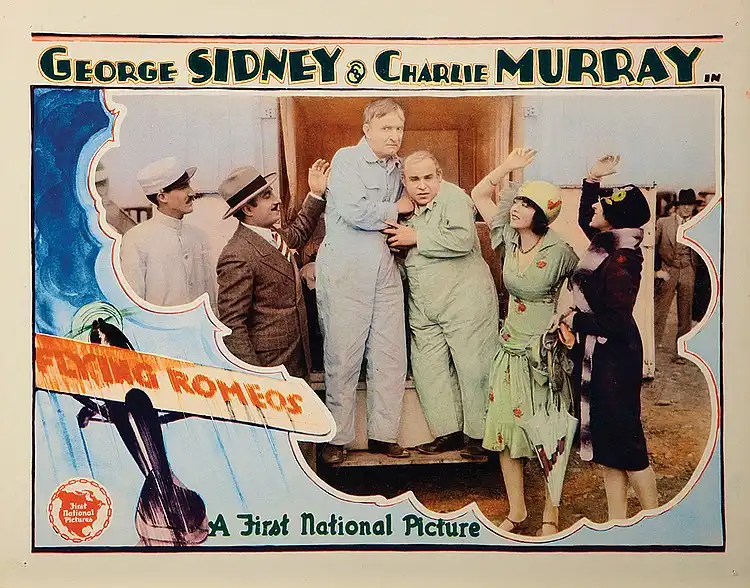
A definitive 3.6/10 rating for a film that redefined the boundaries of cult cinema. Flying Romeos remains a cornerstone of transgressive art.
If you have a low tolerance for middle-aged men shouting at each other in silence, Flying Romeos is going to be a long sixty minutes. But for those of us who have a soft spot for the weird, ethnic-rivalry comedies of the late 20s—specifically the 'Cohen and Kelly' style of humor—this is a fascinating, if occasionally grating, relic. It’s worth watching if you’re into aviation history or if you just want to see how much slapstick you can squeeze into a barber shop. If you’re looking for high-brow Buster Keaton geometry, you’ll probably want to turn it off after the first ten minutes.
The movie stars George Sidney and Charles Murray as Cohen and Cohan. They are partners in a barber shop, but 'partners' is a strong word. They mostly just exist to sabotage one another. There’s this one bit early on where they’re both trying to work on customers while staring at Minnie, the manicurist, and the way they handle their razors is genuinely nerve-wracking. You keep waiting for a background extra to lose an ear. Sidney has this way of bugging his eyes out that feels very 'vaudeville,' while Murray plays it a bit more like a disgruntled bulldog. They don't really have chemistry so much as they have a mutual agreement to be as loud as possible without making a sound.
Minnie (Fritzi Ridgeway) is the catalyst for the whole mess. She’s obsessed with pilots, which makes sense given this came out right when Lindbergh-mania was at its peak. The movie does a good job of capturing that specific 1927-1928 energy where everyone suddenly thought they could fly a plane just by putting on a leather jacket. Minnie’s costumes are actually some of the best parts of the film—her hats are architectural marvels. She spends most of her time looking vaguely bored by these two men, which is honestly the most relatable performance in the entire movie.
The transition from the barber shop to the airfield is abrupt. One minute they’re lathering faces, the next they’re at a flight school. The editing here is a little choppy; it feels like a few scenes might have been left on the floor, or maybe the director just assumed we didn’t care about the logistics. There’s a strange shot of the airfield that looks incredibly desolate, just a few shacks and a lot of dust. It doesn't look like a place where heroes are made; it looks like a place where people go to crash.
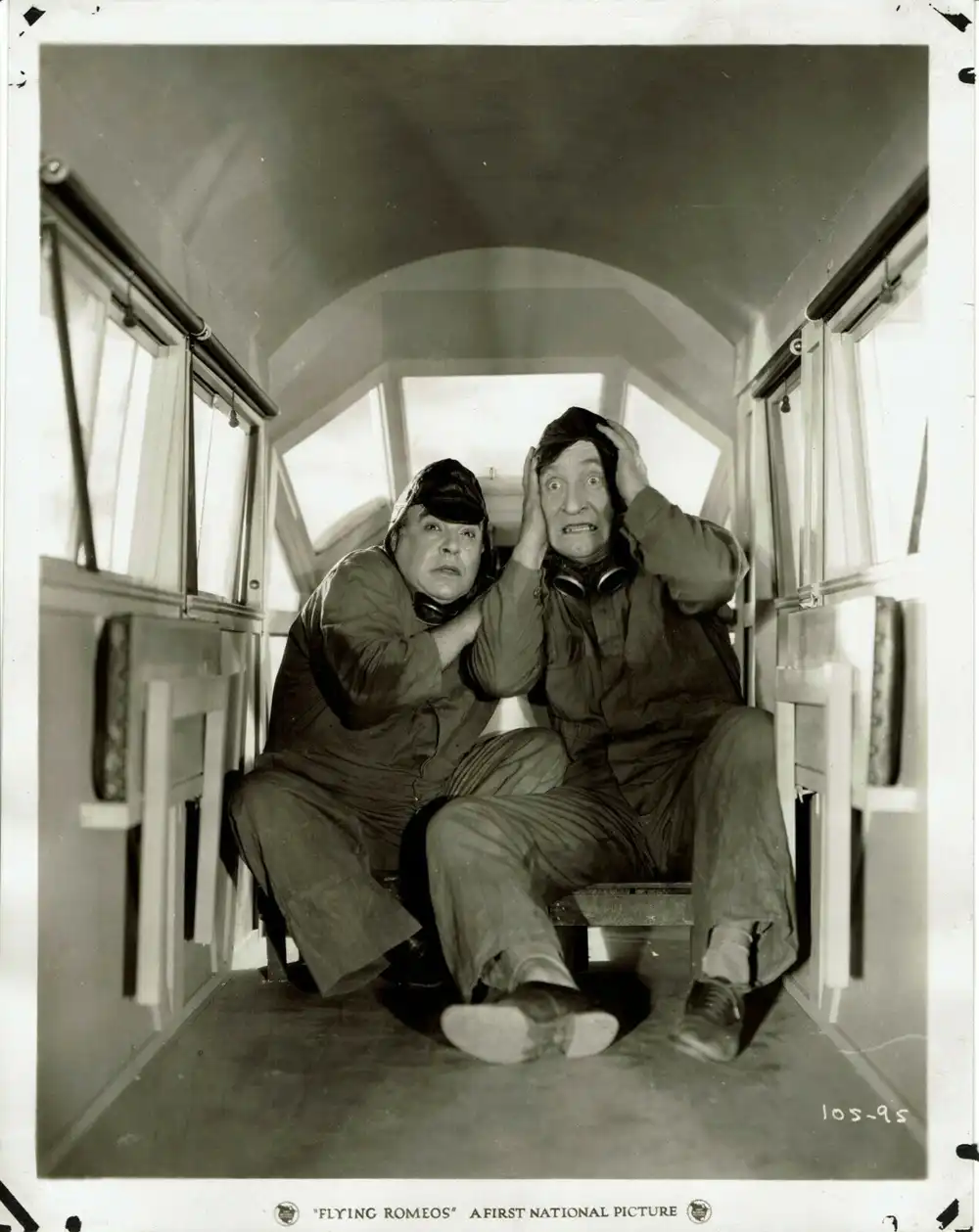
When they actually get into the air, the movie shifts gears. The 'beginner’s lesson' sequence is pure chaos. The plane they’re in looks like it’s made of balsa wood and hope. There’s a specific moment where the plane does a loop-the-loop and you can see the actors—or more likely their stunt doubles—actually being tossed around in the cockpit. It’s not the polished, green-screen stuff we see now. You can feel the wind hitting the camera. Some of the back-projection is pretty obvious, but the wide shots of the biplane wobbling over the landscape are genuinely cool. It’s that raw, dangerous feeling that early aviation films have, similar to the energy in The Speed Boy, though that was more about ground-level racing.
The mid-section drags a bit. There’s a lot of 'you do it,' 'no, you do it' gesturing in the cockpit that goes on for about three minutes too long. It’s the kind of repetitive gag that was probably a riot in a crowded theater in 1928 but feels a bit thin when you’re watching it on a monitor in the dark. You start noticing weird things, like how Murray’s mustache seems to have a life of its own when he’s nervous.
Then comes the 'Hop.' The owner of the plane sees them stumbling through stunts and decides they’re the perfect candidates to fly across the ocean. The logic is nonexistent, but the movie just barrels through it. The flight itself is surprisingly dark. They’re stuck in this tiny space, surrounded by fog (which looks like someone was just blowing smoke into the lens), and the bickering turns into a kind of manic desperation. There’s a shot of the compass spinning wildly that is actually quite effective at conveying the 'we are definitely going to die' vibe.
I won’t ruin the ending entirely, but it’s remarkably cynical for a slapstick comedy. After all that effort—the near-death experiences, the transatlantic flight, the sheer terror—the payoff is a cold shower. It reminds me a bit of the ending of Paradise for Two in how it handles the central romance, though this is much more 'pie-in-the-face' about it. The final reaction shot of Sidney and Murray is one of the few times they actually feel like a team; they both just look exhausted.
Is it a great film? No. The pacing is lumpy and the ethnic caricatures are exactly what you’d expect from the era. But there’s a grit to it. You can tell they were actually outside, in the dirt, dealing with these temperamental machines. The film is at its best when it stops trying to be funny and just lets the absurdity of two idiots in a flying lawnmower speak for itself. It’s a messy, loud, dusty little movie that captures a very specific moment in time when the world was obsessed with the sky and didn't mind a few bad jokes along the way.
IMDb 1.7
1926
Community
Log in to comment.