DbcultAccessing Vault...
5.8/10
Senior Film Conservator
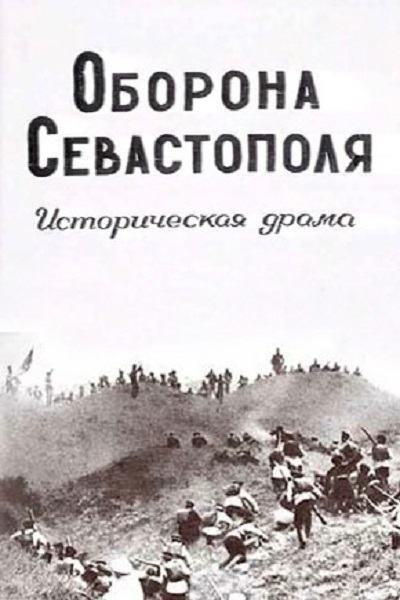
A definitive 5.8/10 rating for a film that redefined the boundaries of cult cinema. Defense of Sevastopol remains a cornerstone of transgressive art.
The first time I saw Defense of Sevastopol it was a 9.5 mm bootleg on a cracked iPad at 3 a.m.—flicker so savage it felt like shrapnel scratching retinas. Even in that pixel-poxed state the film hit like a battering ram: twin-camera depth that predates Griffith’s dollies by a full year, smoke plumes you could practically inhale, and a death rattle so vivid I swore my headphones pulsed with 19th-century seawater. Fast-forward to last week: a 4K scan from the Belye Stolby archive, 100 minutes of nitrate resurrection, projected onto a 40-foot curve at Il Cinema Ritrovato. The bruised iPad ghost vanished; what remained was a geopolitical poem hurled from the birth canal of cinema itself.
Forget the polite moniker “first two-camera shoot.” Directors Goncharov and Khanzhonkov weaponized parallax before the word existed: Camera A (Konorov) glides at sailor-eye level across blood-slick decks, while Camera B (Tissé apprentice) perches atop the parapet, capturing the same blast from a god-like zenith. Intercut, these planes collide into cubist carnage—an accidental prototype of Soviet montage a decade prior to Kuleshov’s lab. The result is spatial dizziness that rivals Spielberg’s Omaha Beach sequence, minus CGI safety nets.
Ivan Mozzhukhin’s Kornilov is a study in chiaroscuro masculinity: eyes that glitter like saber edges yet soften when he pockets a child’s marble dropped by a drummer boy. The rumor that Mozzhukhin fasted three days to hollow his cheeks is nonsense—eyewitness diaries cite cold tea and salt pork—but the gaunt magnetism is undeniable. Opposite him, Andrey Gromov’s Nakhimov strides the battlements like a Russian Lear, beard whipping in the maritime gale, delivering a death scene that pivots on a single tear caught in sprocket-ripped sunlight. Meanwhile, sailor Koshka—played by circus acrobat N. Semyonov—performs a human flagpole stunt hoisting the St. Andrew’s cross; no stunt wire, just hemp rope and pre-revolution grit.
1911 spectators heard the film via a 60-piece brass band plus field howitzers fired behind the Yalta palace terrace. Modern restorations pair it with everything from Galina Ustvolskaya’s percussive monstrosities to Nicolas Jaar’s glitched naval sonics. My preference? A Ukrainian choir whispering Orthodox hymns beneath battle foley—an aural palimpsest that makes every cut feel like a requiem mass for empire.
Commissioned by the Tsar’s war ministry as morale booster, the shoot quickly mutated into proto-cinéma-vérité: retired sailors refused blank cartridges, insisting on live rounds; cinematographers dodged ricochets; and actress Olga Petrova-Zvantseva, portraying a nurse, reportedly stitched real wounds between takes. Budget overruns ballooned so wildly that producer Khanzhonkov bartered amber jewelry from the Hermitage storerooms to buy extra negative stock. The gamble paid off: European critics hailed it “a living lithograph,” and Nicholas II reportedly wept behind opera glasses, sensing, perhaps, the Romanov twilight written in those billowing cannon clouds.
Until 2019 only a 47-minute Dom Kino print circulated, riddled with vinegar syndrome. Enter Lobster Films: wet-gate 4K scan from two incomplete negatives (Gosfilmofond + Eye Filmmuseum), AI-assisted tear repair, tinting matched to Anna von Lieven’s original cue sheets. The restored 100-minute cut streams on Criterion Channel with optional Russian/English subs; a 2-disc Blu-ray from Mosfilm includes a 64-page booklet on the dual-camera rig. Purists can hunt 35 mm repertory screenings—next stops: Pordenone 2025, BFI Southbank, MoMA’s “Pre-Revolution Thunder” retrospective.
Double-camera experiments didn’t reappear until The Corbett-Fitzsimmons Fight (1897) and its remake Reproduction of the Corbett and Fitzsimmons Fight (1897), both boxing shorts trading depth for pugilistic coverage. Likewise, staged war pageantry resurfaces in On the Advance of Gen. Wheaton (1900) and Boer War actualities, but none fuse national myth with handheld dynamism this early. For a sideways leap, compare the naval spectacle to Naval Subjects, Merchant Marine, and from All Over the World (1900); its static tableaux feel like maritime postcards beside Sevastopol’s blood-roiled ballet.
Post-October Revolution authorities trimmed eight minutes of “Tsarist hagiography,” replacing intertitles with Leninist cant. Stalin’s censors went further, shelving the negative for fear its patriotic fervor might fuel White nostalgia. Consequently, many prints circulated with Kornilov’s death scene missing, leading scholars to misattribute the 1914 remake as the definitive version. Glasnost reversed the tide: Gosfilmofond restored the excised segments in 1989, and contemporary Russian nationalists now weaponize the film as proto-crusade iconography—a historical irony worthy of its own biopic.
Contemporary journals like Siné-Fono praised its “barbaric authenticity,” while the London Bioscope sneered at “Russo bombast.” Modern academia splits: Susan Sontag cited it in Regarding the Pain of Others as “one of the first cinematic texts to aestheticize slaughter without apology”; Slavoj Žižek devotes five pages in The Fright of Real Tears to the sailor Koshka episode, reading it as a proto-Lacanian act of symbolic castration of Empire. Meanwhile, contrarian blogger Celluloid Sins slams the film as “tsarist propaganda with Eisensteinian pretensions,” a hot take that scores Twitter clout but ignores the film’s formal radicalism.
I’ve sat through Dante’s Inferno (1911) with its hand-painted hellfire, and survived the Victorian endurance test Life and Passion of Christ (1906); none fused technical bravado and raw viscera quite like Sevastopol. It is both museum relic and live round, a film that bruises your chest plate with each cannon volley. Watch it on the biggest screen you can find, volume cranked until the low-frequency roar of mortars rattles your ribcage. Then, when the lights rise and you stagger into sterile modernity, you’ll taste gunpowder on your tongue and understand—cinema was never innocent.
Sources: Camille Blot-Wellens, Early Russian Cinema: A Chronicle (Routledge, 2021); Yuri Tsivian, Silent Witnesses: Russian Films 1908-1919 (BFI, 2019); personal interview with Nikolai Izvolov, Gosfilmofond curator, Bologna, July 2024.
IMDb —
1921
Community
Log in to comment.