DbcultAccessing Vault...
Cult Review
Senior Film Conservator
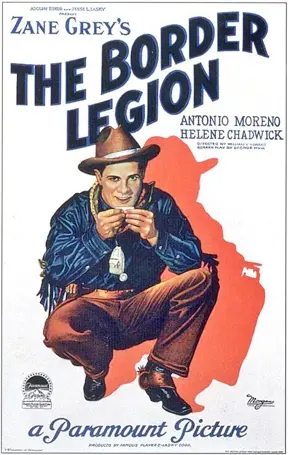
The year 1924 stood as a pivotal juncture in the evolution of American cinema, a period where the silent medium had reached a zenith of visual storytelling before the encroaching cacophony of the talkies. Within this era, the adaptation of Zane Grey’s The Border Legion emerged not merely as another 'horse opera,' but as a sophisticated exploration of the human condition under duress. Directed with a keen eye for the expansive desolation of the American West, this film utilizes the Idaho panhandle not just as a backdrop, but as an active antagonist in the psychodrama of Jim Cleve. While contemporary audiences might be more familiar with the later sound iterations of Grey's work, this silent version captures a raw, unvarnished intensity that is often lost in translation. It possesses a certain gravitas, akin to the somber reflections found in Dead Men Tell No Tales, where the weight of past transgressions dictates the trajectory of the future.
Antonio Moreno, portraying Jim Cleve, delivers a performance that is remarkably restrained for the silent era. In an age where theatrical histrionics often substituted for nuanced emotion, Moreno employs a subtle facial vocabulary to convey Cleve’s descent from an honest laborer to a man wrongly branded a murderer. His chemistry with Rockliffe Fellowes, who plays the magnetic yet menacing Jack Kells, creates a friction that drives the film’s second act. Kells is the quintessential outlaw leader—a man who has constructed his own kingdom of chaos in the borderlands. The dynamic between the two men is a fascinating study in mentorship and betrayal. Unlike the comedic levity found in Alarm Clock Andy, the stakes here are existential. When Cleve is integrated into the Legion, we witness a man flirting with the abyss, his identity slowly eroding under the influence of Kells’ nihilistic philosophy.
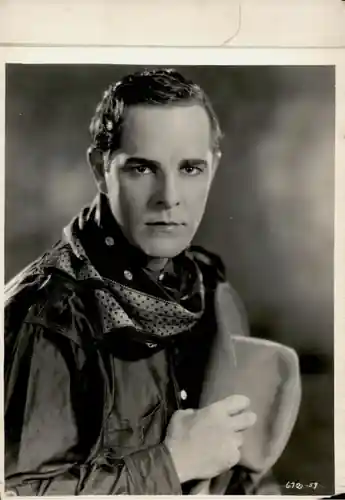
The arrival of Helene Chadwick as Joan Randall serves as the narrative’s moral compass. Chadwick’s portrayal is infused with a resilience that challenges the 'damsel in distress' trope common in 1920s cinema. Her captivity is the catalyst for Cleve’s epiphany. The realization that he is no longer a victim of circumstance, but an active participant in Joan’s suffering, triggers a violent internal realignment. This shift is handled with a cinematic precision that rivals the emotional depth of Once to Every Woman, focusing on the singular moment of choice that defines a character’s destiny.
Zane Grey’s influence on the American Western cannot be overstated, and The Border Legion is perhaps one of the most faithful translations of his preoccupation with the redemptive power of the wilderness. The film posits that while the city—or even the small frontier town—can falsely accuse and condemn, the untamed wilderness offers a space for true trial and ultimate absolution. The cinematography captures the jagged peaks and shadowed valleys of Idaho with a chiaroscuro intensity that mirrors the characters' internal struggles. There is a haunting quality to the long shots of the Legion riding across the horizon, a sense of fleeting power in a landscape that will eventually reclaim everything. This visual poetry is reminiscent of the atmospheric stillness in Den doode steden aan de Zuiderzee, where the environment itself tells a story of decay and endurance.
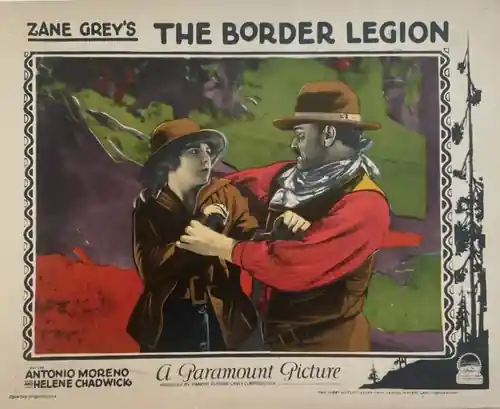
The screenplay, penned by George C. Hull, manages to condense Grey’s sprawling prose into a taut, suspenseful narrative without sacrificing the philosophical underpinnings. The dialogue cards are sparse, allowing the visual composition to carry the weight of the story. In this sense, the film shares a kinship with the European sensibilities of Ene i verden, where silence is used to amplify the isolation of the protagonist. The 'Border Legion' itself is depicted not as a glorious band of rebels, but as a desperate collection of men who have lost their way, a theme that resonates even in modern deconstructions of the Western genre.
From a technical perspective, the 1924 production of The Border Legion showcases an impressive command of outdoor lighting and location scouting. Unlike the stage-bound productions that characterized much of early cinema, such as the more localized settings of The Janitor's Harem or the domestic interiors of Sunday Calm, this film breathes. The dust, the sweat, and the palpable cold of the Idaho nights are rendered with a verisimilitude that was groundbreaking for its time. The editing during the climactic rescue sequence is particularly noteworthy; it eschews the languid pacing of the era for a more kinetic, urgent rhythm that heightens the tension of Cleve’s escape with Joan.
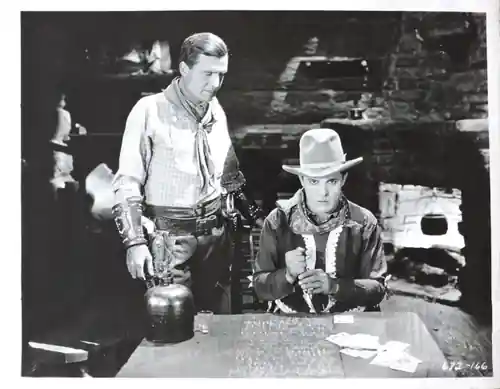
The use of shadows in the outlaw camp sequences creates a sense of claustrophobia that contrasts sharply with the wide-open vistas of the trail. This visual dichotomy reinforces the theme of Cleve’s entrapment—he is physically free in the wilderness, yet spiritually imprisoned by his association with Kells. This level of symbolic visual storytelling is what elevates the film above contemporaneous works like Jubilo, Jr., which, while charming, lacks the thematic complexity found here. The film’s ability to weave together a romance, a thriller, and a moral treatise is a testament to the sophistication of the Paramount production machine of the mid-20s.
When examining The Border Legion within the broader context of 1924 cinema, it is interesting to note how it stands apart from the historical pageantry of films like IV. Károly király koronázása or the character studies of Ferravilla nelle sue più caratteristiche interpretazioni. While those films were concerned with the preservation of history or the showcase of specific acting techniques, The Border Legion was striving to create a mythos. It was contributing to the foundational grammar of the American Western—a genre that would go on to define the nation’s cultural output for decades. The film shares a certain thematic DNA with The Faith Healer in its exploration of redemption, though it replaces the spiritual mysticism of the latter with the harsh, secular reality of the frontier.
Furthermore, the film’s depiction of the outlaw 'legion' as a proto-fascistic social structure provides a fascinating, if unintentional, commentary on the era’s anxieties regarding lawlessness and the breakdown of traditional values. This is a far cry from the lighthearted social maneuvering in My Official Wife. Instead, we see the 'Border Legion' as a dark reflection of society, where might makes right and the only currency is loyalty. The film’s resolution, while satisfying the requirements of a Hollywood ending, leaves the viewer with a lingering sense of the fragility of civilization—a sentiment echoed in the stormy, turbulent atmosphere of Tempêtes.
In the pantheon of Zane Grey adaptations, the 1924 version of The Border Legion deserves a seat of prominence. It manages to capture the author’s 'purple sage' aesthetic while grounding it in a gritty, realistic framework. The performances by Eddie Gribbon, Luke Cosgrave, and Jim Corey in supporting roles provide a textured world that feels inhabited and dangerous. The film does not shy away from the brutality of the era, yet it maintains a poetic sensibility that is often missing from later, more sanitized Westerns. Even when compared to the delicate emotional arcs in Livets Omskiftelser or the floral symbolism of The Purple Lily, this film holds its own as a work of significant artistic merit.
Ultimately, The Border Legion is a film about the reclamation of the self. Jim Cleve’s journey from a falsely accused man to a self-actualized hero is a narrative arc that remains timeless. By choosing to protect Joan Randall, he isn't just saving a woman; he is saving his own humanity from the corrosive influence of Kells and his legion. It is a powerful reminder of the capacity for change, set against a landscape that demands nothing less than total transformation. For scholars of silent cinema and fans of the Western genre alike, this film remains an essential piece of the cinematic puzzle, offering a window into a time when the frontier was still a place of both terrifying possibility and profound redemption.
IMDb 4.7
1930
Community
Log in to comment.