DbcultAccessing Vault...
Cult Review
Senior Film Conservator
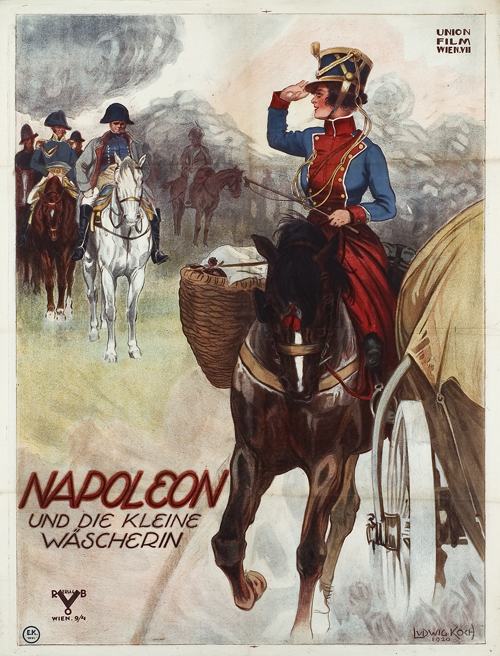
There’s something inherently fascinating about historical dramas that choose to zoom in on the periphery, to find the grand narrative reflected not in the thunderous pronouncements of emperors, but in the quiet, unassuming lives of those who merely exist within the shadow of such titanic figures. Such is the enduring allure of Napoleon und die kleine Wäscherin, a film that, despite its age and the perhaps limited reach of its original distribution, offers a remarkably nuanced and often poignant glimpse into a world where the monumental and the everyday collide. It’s a work that eschews bombast for subtlety, finding its power in the delicate interplay between opposing forces: the might of an empire and the resilience of a single, ordinary individual.
The premise itself is an intriguing one, drawing us into a narrative that feels both historically grounded and deeply humanistic. We are presented with Napoleon Bonaparte, not as the mythic conqueror, but as a man momentarily detached from the crushing weight of his imperial duties. Perhaps he’s in disguise, or merely observing his populace with an uncharacteristic anonymity, when his path crosses with that of Marie, a young laundress. Her world is one of relentless labor, of steam and suds, of the grinding daily struggle for survival in the bustling, often unforgiving streets of Paris. This serendipitous encounter, a mere ripple in the vast ocean of history, becomes the film's beating heart, a crucible where themes of class, power, and unexpected human connection are forged.
What truly elevates Napoleon und die kleine Wäscherin beyond a mere historical anecdote is its masterful portrayal of these two disparate worlds. On one hand, we have the towering figure of Napoleon, imbued with a quiet intensity by Hans Lindegg. Lindegg’s portrayal is not merely an impersonation; it’s an excavation of a man burdened by destiny, a leader whose moments of introspection are as compelling as his declarations of war. He captures the emperor’s intellect, his strategic mind, but also hints at a profound isolation, a chasm that separates him from the very people he governs. His Napoleon is not a caricature, but a complex individual, capable of both immense vision and a fleeting, almost wistful curiosity about lives so utterly different from his own.
Opposite him, Ellen Richter delivers a truly captivating performance as Marie, the titular laundress. Richter imbues Marie with an indomitable spirit, a raw honesty that cuts through the societal artifice of the era. She is not merely a symbol of the working class, but a fully realized character with her own hopes, fears, and a quiet dignity that refuses to be overshadowed by imperial grandeur. Her interactions with Napoleon are not those of fawning deference, but of a woman meeting another human being, albeit one of immense power. The subtle shifts in her expressions, the defiance in her posture, and the vulnerability in her eyes speak volumes, creating a character that resonates long after the credits roll. One might even draw parallels to the spirited independence seen in characters from films like The Water Lily, where female protagonists navigate challenging social landscapes with remarkable fortitude.
The screenplay, crafted by the collaborative talents of Victorien Sardou, Willi Wolff, and Martin Zickel, is a marvel of concise storytelling. It deftly balances the personal drama with the broader historical context, ensuring that neither overwhelms the other. Sardou's theatrical background undoubtedly contributed to the film’s sharp dialogue and well-structured scenes, while Wolff and Zickel’s cinematic sensibilities likely honed its visual narrative. They manage to create a scenario where this seemingly minor encounter holds significant thematic weight, revealing the human cost of empire and the enduring spirit of the common people. The writing avoids didacticism, instead allowing the audience to draw their own conclusions about the inherent inequalities and the surprising moments of empathy that can emerge across social divides. It’s a testament to their skill that a film about such a towering historical figure can feel so intimately focused on a single, almost incidental meeting.
Beyond the central duo, the supporting cast provides a rich tapestry of characters that further anchor the film in its historical setting. Georg John, known for his distinctive character work, likely brings a memorable presence, perhaps as a gruff official or a sympathetic townsfolk. Henri Peters-Arnolds, Rudolf Lettinger, Friedrich Wilhelm Kaiser, and Ludwig Körner, all accomplished actors of their time, contribute to the film’s authenticity, populating the Parisian backdrop with believable figures. Their collective performances create a vibrant, living world, from the bustling market scenes to the more somber interiors, ensuring that Marie’s struggles and Napoleon’s observations are set against a credible and immersive backdrop. This ensemble work, even in its smaller roles, adds layers of texture to the narrative, preventing the film from feeling like a mere two-hander and instead presenting a slice of life from a bygone era.
Visually, one can imagine Napoleon und die kleine Wäscherin to be a meticulously crafted piece of cinema for its period. The production design, even without explicit details, would have been crucial in contrasting Napoleon's opulent world with Marie's humble surroundings. The costumes, from the Emperor's military regalia to Marie's simple working attire, would have served as powerful visual markers of their respective stations. Cinematography would have played a vital role in capturing the mood – perhaps stark, chiaroscuro lighting for the darker, more introspective moments, and brighter, more naturalistic tones for the bustling street scenes. The film’s aesthetic choices, even if only inferred, speak to a deliberate artistic vision, aiming to underscore the thematic contrasts through visual storytelling. This attention to detail in creating a believable historical environment is paramount, and it’s likely a strength of this production.
The thematic depth of the film is truly impressive. It delves into the nature of power – its allure, its isolation, and its often-unseen impact on the lives of ordinary citizens. Napoleon, despite his immense authority, is shown to be capable of human curiosity, even empathy, suggesting that the man beneath the legend is still susceptible to the simple truths of human existence. Marie, on the other hand, represents the enduring spirit of the common person, whose daily struggles are just as valid and compelling as the grand geopolitical machinations of emperors. The film subtly critiques the vast disparities of class, highlighting how easily the powerful can overlook or dismiss the lives of those who sustain their empires. It’s a timeless narrative, resonating with contemporary discussions about social justice and the often-invisible labor that underpins society. In this regard, it shares a certain thematic kinship with films like The World and His Wife, which also explored societal expectations and class divisions with a critical eye.
One of the most striking aspects of Napoleon und die kleine Wäscherin is its ability to evoke a profound sense of melancholy and hope simultaneously. The encounter between Napoleon and Marie is fleeting, a transient moment that, while perhaps not altering the course of history, certainly leaves an impression on both participants. It’s a reminder that even in the most tumultuous times, human connection, no matter how brief, can offer a glimmer of understanding, a shared moment that transcends the artificial barriers of rank and privilege. This emotional resonance is a hallmark of truly great cinema, allowing the audience to connect with the characters on a deeply personal level, even if their circumstances are vastly different from our own. The film doesn't offer easy answers, but rather invites contemplation on the complexities of human nature and the societal structures that shape our lives.
The film’s historical accuracy, while important, seems to take a backseat to its broader thematic concerns. It uses the figure of Napoleon not merely as a historical subject, but as a symbolic representation of immense power, allowing the narrative to explore universal themes that transcend the specific era. This approach is often more effective in conveying deeper truths than a strict adherence to historical minutiae. It’s a testament to the writers and director that they managed to craft a story that feels both authentic to its period and eternally relevant in its exploration of human nature. This method of using historical figures to explore broader societal issues can be seen in other cinematic endeavors of the era, where historical backdrops often served as fertile ground for allegorical storytelling, much like the subtle social commentary found in Burglar by Proxy, albeit in a different genre.
For those who appreciate cinema that delves into the human condition with sensitivity and intelligence, Napoleon und die kleine Wäscherin is a compelling watch. It’s a film that asks us to look beyond the headlines and the grand pronouncements, to find the humanity in unexpected places. It celebrates the quiet strength of the ordinary individual and reminds us that even the most powerful among us are, at their core, still human, susceptible to moments of curiosity, introspection, and perhaps even a flicker of empathy. The performances, particularly from Lindegg and Richter, are stellar, carrying the emotional weight of the narrative with grace and conviction. The film's lasting impact lies in its ability to provoke thought about the intersections of power, class, and personal connection, leaving a subtle yet profound impression. It's not a film that shouts its message, but rather whispers it, inviting reflection and nuanced appreciation.
The narrative’s strength also lies in its subversion of expectations. One might anticipate a grand romance or a dramatic political intrigue, but instead, the film offers something far more intimate and philosophical. It's a character study masquerading as a historical drama, using the iconic figure of Napoleon to illuminate the often-overlooked lives of the common people. This reversal of focus is what gives the film its unique flavor and enduring appeal. It forces the audience to consider the ripple effects of history, not just on nations, but on individual souls. The subtle narrative choices and character developments recall the quiet strength of films like Her Mistake, which also focused on the inner lives and quiet struggles of its protagonists, rather than overt melodrama.
In conclusion, Napoleon und die kleine Wäscherin stands as a testament to the power of nuanced storytelling and exceptional performances. It’s a film that, despite its specific historical setting, speaks to universal truths about class, power, and the shared human experience. It’s a quiet masterpiece that deserves to be rediscovered and appreciated for its artistic integrity and its profound insights into the human heart. It reminds us that sometimes the most impactful stories are not those of epic battles or political maneuvers, but of fleeting encounters that illuminate the vast and complex tapestry of life. This film, with its delicate balance of historical grandeur and personal intimacy, offers a viewing experience that is both intellectually stimulating and emotionally resonant, a true gem in the cinematic landscape of its era. Its ability to create such a rich, evocative world from a simple premise is truly remarkable, making it a compelling watch for anyone interested in the intersection of history and humanity. Much like how The Family Skeleton explored the hidden depths of everyday lives, this film delves into the often-unseen human elements behind the grand historical facade.
IMDb —
1917
Community
Log in to comment.