DbcultAccessing Vault...
4.8/10
Senior Film Conservator
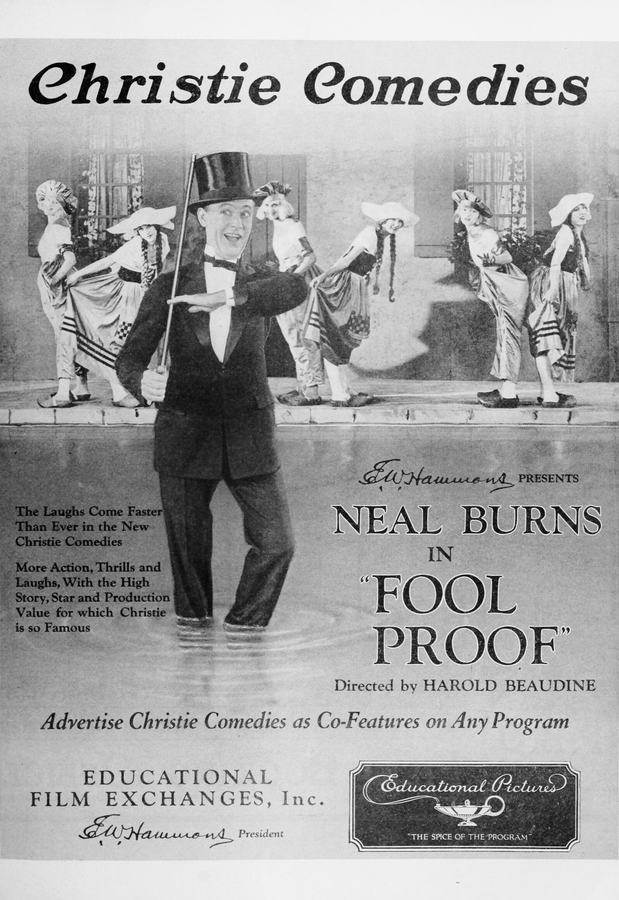
A definitive 4.8/10 rating for a film that redefined the boundaries of cult cinema. Fool Proof remains a cornerstone of transgressive art.
Stepping back into the silent era is often like unearthing a forgotten language, a cinematic dialect rich in expressive pantomime and stark emotionality. Robert Hall's Fool Proof, a 1922 drama, emerges from this bygone epoch not as a mere relic, but as a surprisingly potent psychological study, a narrative tapestry woven with threads of intense filial devotion, misdirected perception, and the perilous allure of the unknown. It’s a film that, despite its age, resonates with a timeless exploration of human bonds and the often-destructive power of well-intentioned, yet misguided, love. At its heart lies Neal, a character whose very essence is described as 'love-proof' – an intriguing descriptor that suggests either an immunity to romantic entanglements or a shield against their vulnerabilities. Yet, this emotional fortress proves permeable when his most sacred bond, that with his father, appears threatened.
The premise, deceptively simple, unfurls into a complex examination of obsession. Neal's father, played with a nuanced vulnerability by Lincoln Plumer, falls under the sway of a woman whom Neal immediately demonizes as a 'siren.' This isn't just a casual disapproval; it's a deeply ingrained conviction that she represents an existential threat, a predatory force designed to ensnare and exploit. The film doesn't explicitly confirm the woman's malevolence, leaving her portrayal, perhaps intentionally, ambiguous. Is she truly a femme fatale, a siren leading men to ruin, or merely a woman caught in the crosshairs of a son's overzealous protection? This uncertainty is where Fool Proof truly shines, inviting the audience to question Neal's perception, to dissect his motivations, and to ponder the fine line between safeguarding a loved one and suffocating them with possessive anxiety. Rosa Gore and Vera Steadman, both credited in the cast, likely lend their talents to embodying this enigmatic figure, or perhaps other crucial female roles that influence Neal’s worldview and his father’s choices. Natalie Joyce, too, contributes to the ensemble, adding further layers to the film's character dynamics.
Neal Burns, in the titular role of Neal, delivers a performance that must have been a tour de force of silent acting. His character is not merely 'love-proof' in the romantic sense, but perhaps also emotionally insulated, making his father the singular focus of his affections and anxieties. This singular devotion is what propels him to increasingly extreme measures. We can envision Burns using exaggerated gestures, wide-eyed alarm, and a perpetually furrowed brow to convey the escalating panic and conviction of a son convinced he is fighting for his father's very soul. His journey is a descent into a kind of benevolent fanaticism, where every action, no matter how drastic, is justified by the perceived purity of his intent. This psychological intensity differentiates Fool Proof from simpler melodramas of its era, pushing it into the realm of character study.
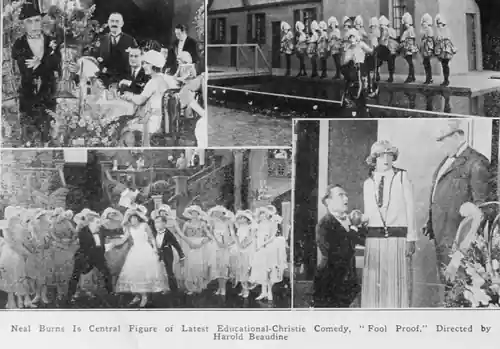
The narrative, crafted by Robert Hall, skillfully navigates the treacherous waters of moral ambiguity. It doesn't offer easy answers or clear-cut villains. Instead, it places the audience in Neal's shoes, allowing us to witness the world through his distorted lens, while simultaneously providing glimpses of an alternative reality. This duality forces a constant re-evaluation of the characters' true natures. Is the 'siren' truly manipulative, or is she merely a woman seeking companionship, her intentions misconstrued by a son's possessive gaze? The film's strength lies in its refusal to definitively answer this, allowing the drama to simmer in the space between perception and truth. This thematic complexity makes it a compelling watch, even a century later.
The 'siren' figure, whether personified by Rosa Gore or Vera Steadman, is crucial to the film's central conflict. Her allure, real or imagined, is the catalyst for Neal's escalating actions. In the silent era, such characters often relied on striking visual presence and subtle expressions to convey their power. One can imagine her entrance being framed dramatically, perhaps with soft lighting to emphasize her perceived beauty and danger, or through the reactions of others around her. Her interactions with Lincoln Plumer's father character would be key, showcasing his susceptibility and Neal’s growing alarm. This dynamic, a triangle of attraction, suspicion, and intervention, forms the backbone of the plot, creating a palpable tension that would have kept audiences riveted.
The 'extremes' Neal goes to are not merely dramatic flourishes; they are the logical, albeit desperate, manifestations of his conviction. These could range from subtle sabotage and emotional manipulation to more overt acts of interference, perhaps even kidnapping or framing, all in the name of 'saving' his father. Such actions draw parallels to other films where characters go to great lengths for love or perceived justice. For instance, the passionate, sometimes destructive, lengths to which characters go in Love's Boomerang or the intense family dynamics explored in The Marriage Bond offer interesting thematic echoes. Neal’s unwavering resolve, despite the moral ambiguities, positions him as a protagonist whose heroism is constantly under scrutiny, challenging viewers to empathize with his plight while simultaneously questioning his methods.
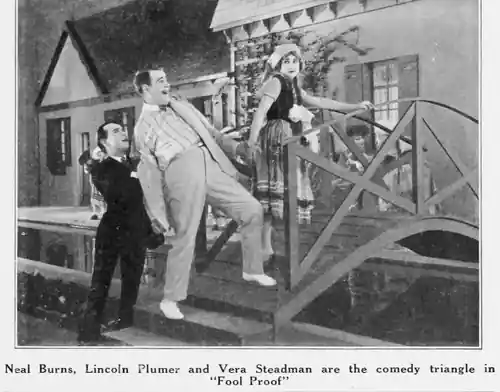
Robert Hall's direction and writing showcase a keen understanding of silent film's power to convey complex psychological states through visual storytelling. The pacing would have been critical, building suspense as Neal's plans become more elaborate and precarious. Close-ups on Neal's face, conveying his internal turmoil, or on the 'siren's' enigmatic smile, could have been used to great effect. Intertitles, the textual inserts so vital to silent narratives, would have served not just to advance the plot but also to reveal Neal's inner monologue, perhaps even his increasingly paranoid justifications. The visual metaphors, such as shadows emphasizing hidden motives or light illuminating moments of realization, would have added layers of artistic depth.
The film also touches upon broader societal anxieties regarding female independence and male vulnerability, themes that were very much in flux during the early 20th century. The 'siren' trope, while ancient, found renewed relevance in an era grappling with changing gender roles. Films like The Shadow of Her Past often explored similar anxieties around reputation and perceived moral failings. Fool Proof masterfully leverages these cultural undercurrents, using them as a backdrop for Neal's personal drama. The film suggests that true danger might not always come from external forces, but from within, from the biases and fears that shape our perceptions of others.
The ensemble cast of Lincoln Plumer, Neal Burns, Rosa Gore, Vera Steadman, and Natalie Joyce would have been instrumental in breathing life into Hall's vision. Burns’ portrayal of Neal is the lynchpin, requiring a delicate balance between earnestness and alarming intensity. His physical performance, the way he carries himself, the urgency in his movements, would be the primary vehicle for his character’s emotional arc. Lincoln Plumer, as the father, would need to convey both his affection for Neal and his susceptibility to the 'siren's' charms, making his character sympathetic rather than merely foolish. His internal conflict, torn between a son’s devotion and a new attraction, would add significant dramatic weight. The 'siren' figure, whether played by Gore or Steadman, would need to exude an ambiguous charm – captivating enough to justify the father's attraction, yet subtle enough to allow for Neal's misinterpretation. Natalie Joyce’s role, perhaps as a voice of reason or another object of Neal's protective instincts, would further enrich the human drama.
The film’s title, Fool Proof, is itself a clever double entendre. Is Neal's plan 'fool proof,' or is he, the 'love-proof' youth, himself a fool for his extreme actions? Or perhaps it refers to the siren, who is seemingly 'fool-proof' in her allure? This ambiguity is intellectually stimulating, inviting viewers to ponder the nature of wisdom, folly, and the sometimes-blinding power of love. The sheer audacity of Neal's endeavors might even draw comparisons to the determined, if sometimes reckless, protagonists of films like Brave and Bold or Fields of Honor, where characters throw themselves into extraordinary circumstances for deeply held beliefs. However, in Fool Proof, the battleground is not external, but deeply internal, a conflict of the heart and mind.
Ultimately, Fool Proof transcends its silent film origins to deliver a compelling and thought-provoking drama. It’s a testament to the power of early cinema to tackle complex psychological themes without the benefit of spoken dialogue. Robert Hall, through his astute direction and the nuanced performances of his cast, crafts a narrative that is both an intimate family drama and a broader commentary on the pitfalls of perception. It reminds us that the most dangerous deceptions are often those we construct ourselves, fueled by love, fear, and an unwavering conviction in our own righteousness. The film's legacy lies not just in its historical context but in its enduring ability to provoke discussion about the nature of love, sacrifice, and the often-unseen forces that shape our understanding of the world around us. It's a powerful reminder that even the most 'love-proof' among us are susceptible to the passionate, sometimes destructive, currents of human emotion. The meticulous attention to character motivation and the slow burn of psychological tension elevate Fool Proof beyond a simple period piece, cementing its place as a significant, if often overlooked, contribution to the rich tapestry of early cinematic storytelling.
IMDb 6
1936
Community
Log in to comment.