DbcultAccessing Vault...
7/10
Senior Film Conservator
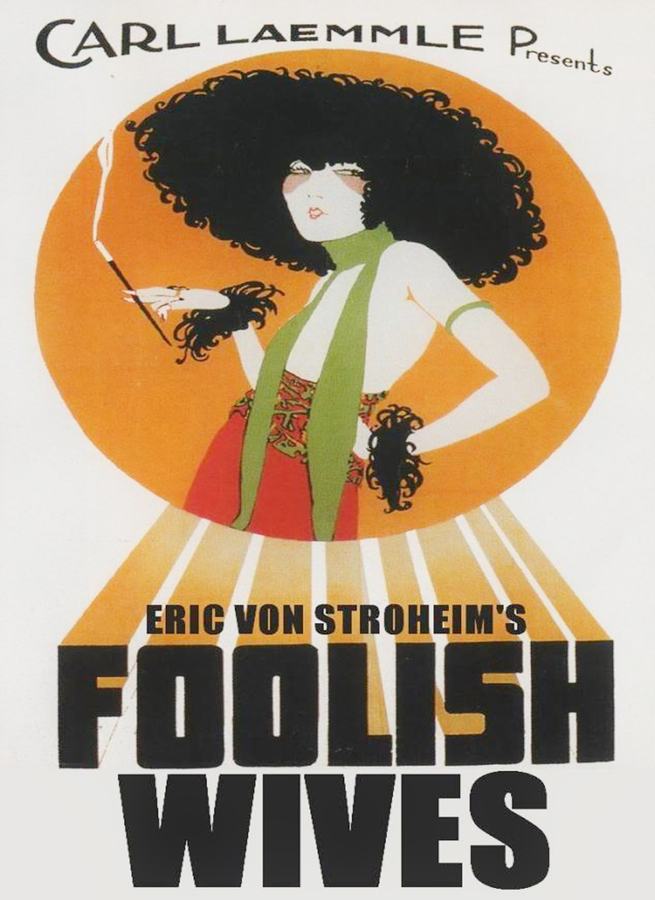
A definitive 7/10 rating for a film that redefined the boundaries of cult cinema. Foolish Wives remains a cornerstone of transgressive art.
The first time you taste Foolish Wives, the celluloid seems dusted with arsenic. Erich von Stroheim—part auteur, part Mountebank—doesn’t merely direct; he installs hidden needles beneath opulence, ensuring every gilded frame draws blood. Ninety years on, the film still hisses like a freshly cracked bottle of ether.
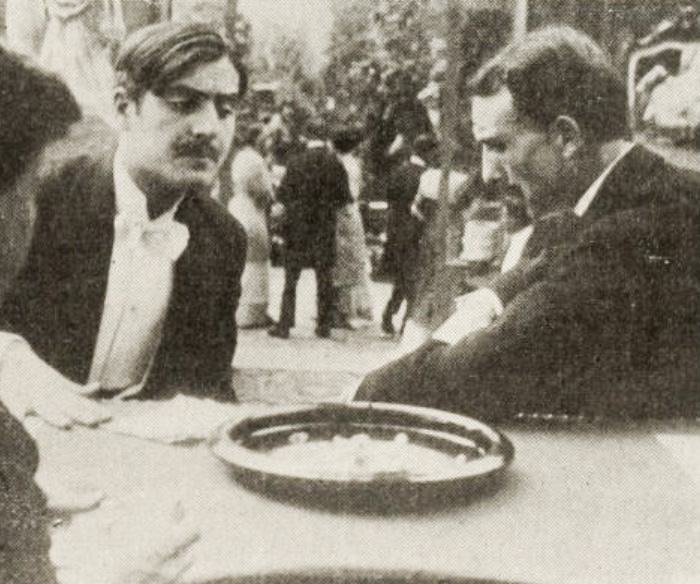
Monte Carlo, 1921: a playground where titles sprout like weeds on a compost heap. Enter Sergei Karamzin—self-proclaimed cousin to the Tsar, wearer of gardenia boutonnieres, voice like velvet soaked in absinthe. His real pedigree? A Warsaw basement brothel and a gift for forgery that would make Lucifer blush. Around his manicured talons orbit two ‘cousins’—Princesses Olga and Vera—actually erstwhile laundresses whose diction still drips with Lower East Side brine. Together they weave a tapestry of scams: counterfeit stock tips, rigged baccarat shoes, marriages of convenience sealed in boudoirs that smell of lilacs and larceny.
Von Stroheim’s camera prowls these salons with the languor of a cat stalking canaries. Observe the prolonged dinner sequence: chandeliers shower prismatic halos, champagne spurts like arterial spray, and the Count’s fingers—those pianissimo predators—trace Helen Hughes’s wrist as though calibrating carats on a future ransom. The American diplomat, Andrew J. Hughes, seated opposite, discusses war reparations, blind to the erotic embezzlement transpiring beneath damask. Every cutaway—lace curtains billowing, croupiers stacking mille-franc plaques—serves as a conspiratorial whisper: notice how innocence is bartered for the price of a roulette chip.
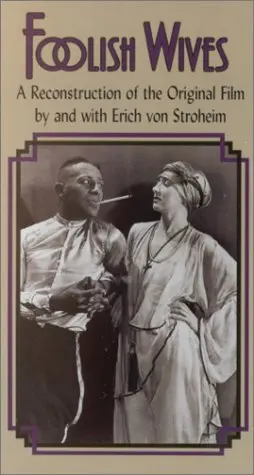
What intoxicates is von Stroheim’s fetish for texture. Stockings possess the shimmer of oil slicks; velvet jackets swallow candlelight like black holes; the Count’s cigarette case—encrusted with the Imperial double-headed eagle—snaps open with the finality of a guillotine. This obsession is not ornamental; it is the narrative. The more sumptuous the fabric, the fouler the moral mildew beneath. When Karamzin coaxes Helen into his phony library—rows of unread Marquis de Sade and hollowed-out book spines hiding French postcards—he’s not seducing a woman; he’s seducing the idea of aristocracy itself, proving that pedigree is purchasable by the yard on Rue de Rivoli.
Compare this with Jagd nach dem Glück, where hunger for social ascent is played as jauna cabaret. Von Stroheim refuses levity; his waltz is funereal. The camera lingers on Helen’s dilating pupils—an iris shot contracting like a debtor’s fist—until complicity becomes indistinguishable from coercion.
Women in Foolish Wives circulate like banknotes—creased, forged, occasionally recalled. Helen’s purity is a promissory note backed by American moral gold; Karamzin’s cousins are inflated bonds bound to crash. The lone self-aware female is Marietta, the half-blind cockney maid who blackmails the Count with evidence of his forged checks. In close-up, her cloudy eye glimmers with predatory mirth—an ocular storm that forecasts ruin. When she demands hush money, von Stroheim cuts to a church bell tolling, equating extortion with liturgy. Moral takeaway: in a universe of forged titles, even the powerless mint their own coin.
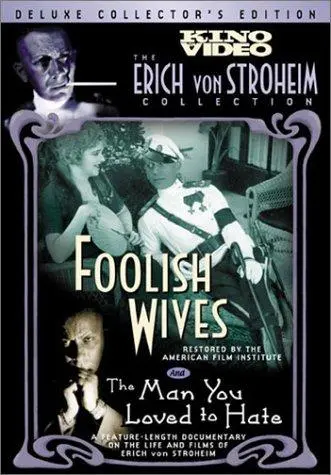
This gendered economy contrasts sharply with The Woman in His House, where the home itself becomes matriarchal collateral. Von Stroheim refuses domestic sanctity; he razes it, replacing hearth with casino, cradle with roulette cradle.
Production designer/arch-villain Erich (he credited himself as both) constructed a full-scale château on the Universal backlot—imported marble, working elevators, subterranean wine cellars reeking of genuine Bordeaux. Rumor claims he insisted on silk undergarments for day-players just in case a camera caught a chemise hem. Such mania seeps into mise-en-scène: corridors elongate like Addams Family staircases; doorways yawn with cavernous shadows ready to swallow virtue whole. When the third-act tempest smashes windows, seawater gushes through salons, dissolving stucco like virtue under venality. The flood becomes baptismal—civilization’s gilt façade sluiced away to reveal rusted rebar and rats scurrying over bearer bonds.
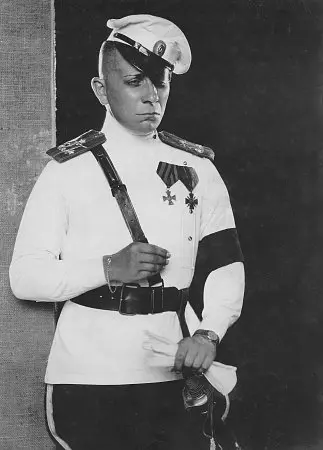
As Karamzin, von Stroheim choreographs every micro-gesture—eyelid half-mast in repose, cane tapping Morse code for doom. The performance isn’t acted; it’s inlaid. Miss DuPont’s Helen quivers between porcelain doll and nascent femme fatale, her stillness more unnerving than hysterics. Mae Busch, one of the faux-princesses, delivers caustic asides with Brooklyn vowels unpolished, reminding us that cosmopolitan veneer is but a ferry ride from Ellis Island.
Observe the breakfast scene: Helen lifts a demitasse; the camera cuts to Karamzin’s pupils reflecting her gloved fingers—two serpents devouring a lily. No intertitle intervenes; psychology flickers through ocular mirage.
Von Stroheim’s original cut allegedly surpassed six hours; Universal hacked it to 140 minutes. Paradoxically, the excisions sharpen the fangs. Jumping from a close-up of Karamzin’s gloved hand slipping a forged love letter into Helen’s reticule to a wide shot of fireworks over the harbor creates dialectic shock: intimacy detonates into public spectacle, private sin mapped onto civic celebration. The missing footage haunts the surviving print like phantom intestines—one senses narrative bowel-trails snipped, leaving gangrenous ellipses.
A recurring visual leitmotif: candles guttering before Madonna icons, wax pooling like congealed guilt. Karamzin, feigning piety, lights a taper while mentally undressing Helen. Von Stroheim cross-cuts to a close-up of the Virgin’s painted eyes, which under chiaroscuro appear to narrow in accusation. Faith becomes accessory—rosaries repurposed as garrotes. Compare this sacrilege with Sposa nella morte! where nuptials and necrophilia entwine under a church’s ossuary; von Stroheim’s heresy is subtler, thereby crueler.
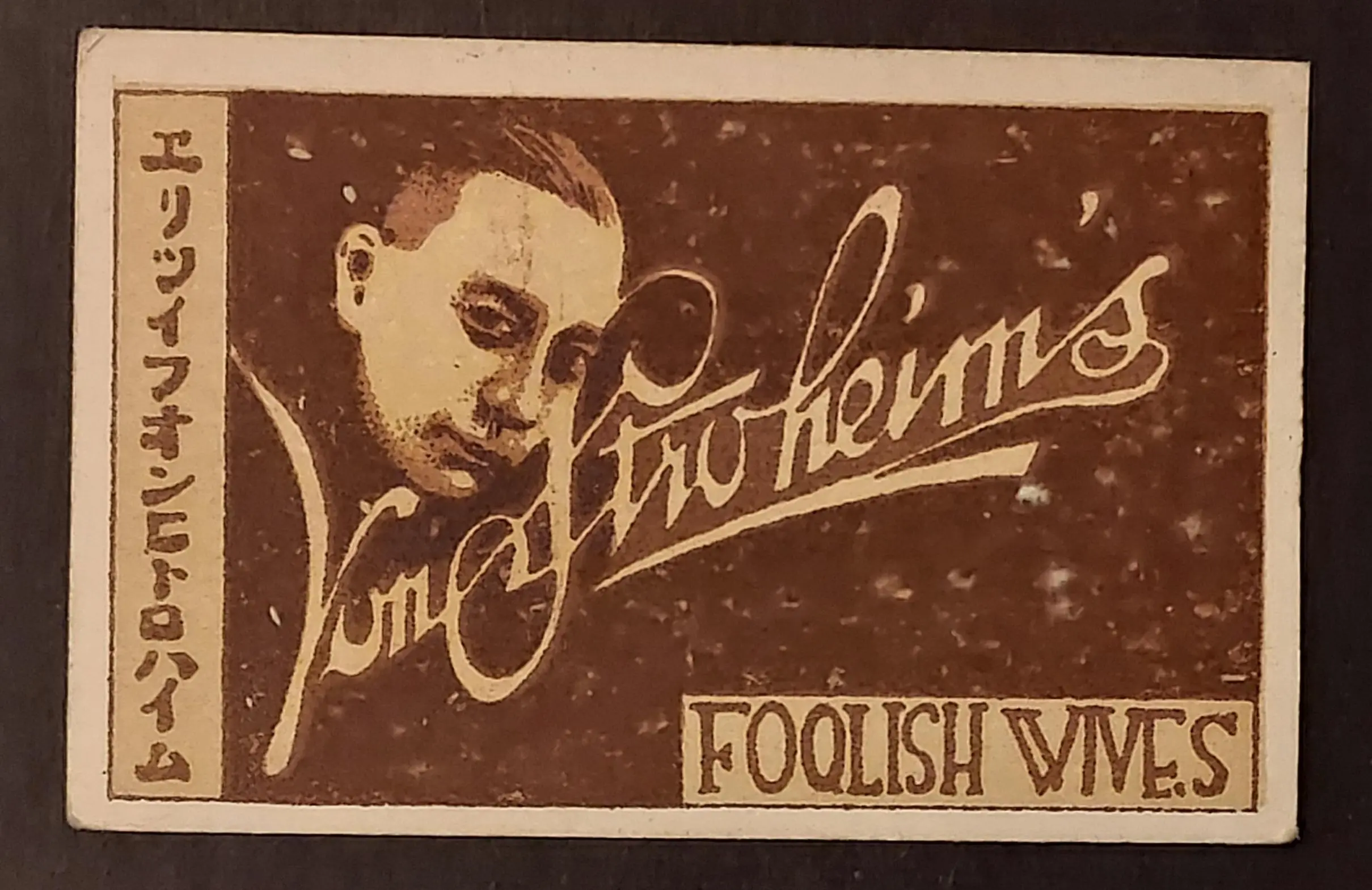
Andrew J. Hughes embodies Manifest Destiny in a three-piece suit—naïve, courteous, certain that passports shield virtue. Karamzin’s predation capitalizes on American hubris: assume the Old World is decrepit, its sins exportable souvenirs. The diplomat’s final humiliation—signing a check to cover his wife’s ‘kidnapping’—mirrors U.S. reparations policy: throw money at chaos, declare morality salvaged. Von Stroheim skewers both predator and prey, revealing imperialism’s mirror economy.
Though silent, the film demands audio hallucination. Listen between intertitles: roulette ball clacking like distant artillery; silk stockings whisking together, a susurration of adders; the Count’s cane thudding—thump, thump—like a tribunal gavel. Modern scores (Timothy Brock’s reconstruction is revelatory) interpolate Tschaikowsky fragments warped via atonality, converting familiarity into rot.
Upon release, censors excised ‘immoral’ scenes—Karamzin’s tongue brushing Helen’s earlobe, a urinating dog in the background implying street-level realism. Yet the trimmed version titillated more; absence became aphrodisiac. Critics of 1922 derided the film as ‘kultur-bolshevik’ pornography. By the ’50s, Cahiers du Cinéma crowned von Stroheim auteur-martyr. Today, restorations splice stills and production photographs into surviving reels, creating a Frankenstein beauty—half-alive, half-ghost, wholly hypnotic.
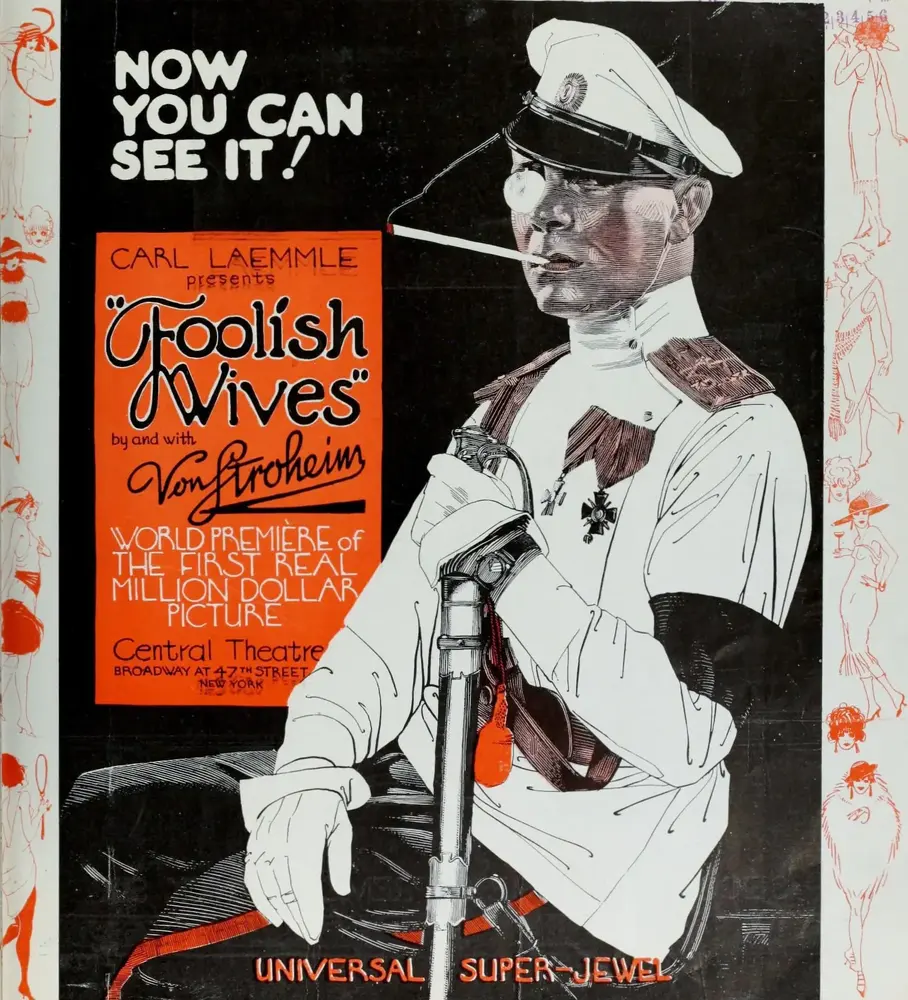
The DNA of Foolish Wives slithers through Wet Gold’s aquatic greed, through You Know What I Mean’s urbane swindles. Even The Barker borrows the carnival veneer, though it swaps nihilism for hokum. Yet none match von Stroheim’s pessimistic rigor; he anticipated our Instagram dukes, trust-fund aristocrats renting yachts to flex counterfeit pedigree.
Because the world is still lousy with Karamzins—crypto-nobility flaunting NFT crowns, wellness gurus promising transcendence via subscription. Von Stroheim’s 1922 poison retains its potency: it warns that when surface becomes scripture, the soul is counterfeited out of existence. Gorge on its splendor, but keep an antidote nearby; the hangover is existential.
Stream it on criterion-channel, project it on a wall, let the sepia shadows crawl across your living-room wainscoting. Invite friends, serve absinthe, and when the flood engulfs the Count’s lair, listen for the faint clink of your own illusions sinking to the seabed.
IMDb 5.3
1913
Community
Log in to comment.