Summary
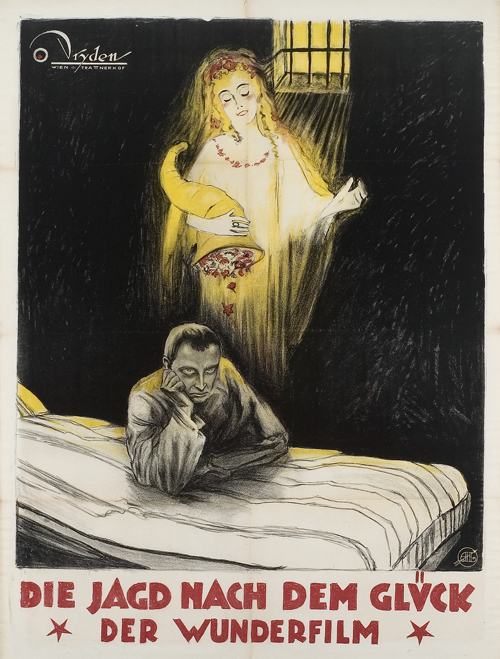
Vienna, 1920s: neon gaslights drip over cobblestones, brass-band waltzes leak from taverns, and a penniless violin prodigy named Marek—played with spectral ardor by Paul Richter—believes happiness is a pawnshop ticket he can redeem before sunrise. Enter Liesel, a carnival sharpshooter embodied by Gretl Ruth, her gaze as sharp as the split bullets she fires at playing cards. Their collision is less meet-cute than ricochet: he needs a suit to audition for the conservatory; she needs a duet partner to con high-society gamblers. Together they forge a pact—three nights to swindle enough cash to flee the city’s rotting grandeur. Alphons Fryland’s decadent Count von Waldau, powdered, monocled, and reeking of lilac and morphine, becomes their mark, wagering an emerald said to contain a trapped sigh of the last Habsburg princess. Elga Beck’s ethereal war-widow, Frau Kornfeld, drifts through scenes like smoke from a forgotten battlefield, offering Marek shelter in exchange for ghost-written love letters to her dead husband. Hugo Werner-Kahle’s Inspector Rott, a pragmatist who polishes his pistol while quoting Schopenhauer, stalks the couple through beer-cellars and cemetery masquerades, convinced the emerald is financing anarchist cells. Diana Thompson’s cabaret sphinx, Delphine, belts out a torch song whose chorus—»Glück ist nur ein Vogel, der nie landet«—becomes the film’s heartbeat. Robert Rastelberger’s one-armed puppeteer, Frieda Walden’s consumptive flower-girl, and a chorus of starving porters, flappers, and dowagers swirl into a danse macabre that culminates on the Prater Ferris wheel at dawn: Marek and Liesel gamble their last stolen hour, betting the emerald against the sunrise itself. When the carriage stops at the apex, the city below is a shattered chandelier; the gem slips through Marek’s fingers, plummeting like a green comet into the Danube. Liesel laughs—half triumph, half despair—because the con was never the jewel; it was the vertigo of believing happiness could be grasped at all. The final shot freezes her smile in a cracked windowpane, superimposed over the wheel’s slow rotation, a perpetual hunt for a mirage that keeps receding the closer you sprint toward it.
Review Excerpt
"
The first time I watched Jagd nach dem Glück I emerged at 3 a.m. with ash on my tongue and the sensation that someone had pick-pocketed my optimism. Fritz Freisler’s screenplay isn’t a narrative so much as a fever chart: every scene spikes higher, hotter, until the mercury bursts and you’re left guessing whether the patient—Vienna herself—survives.
Paul Richter’s Marek carries the hollow cheeks of a man who has traded meals for metronomes. When he tightens the frayed bow, the violin seems to ..."