DbcultAccessing Vault...
Cult Review
Senior Film Conservator
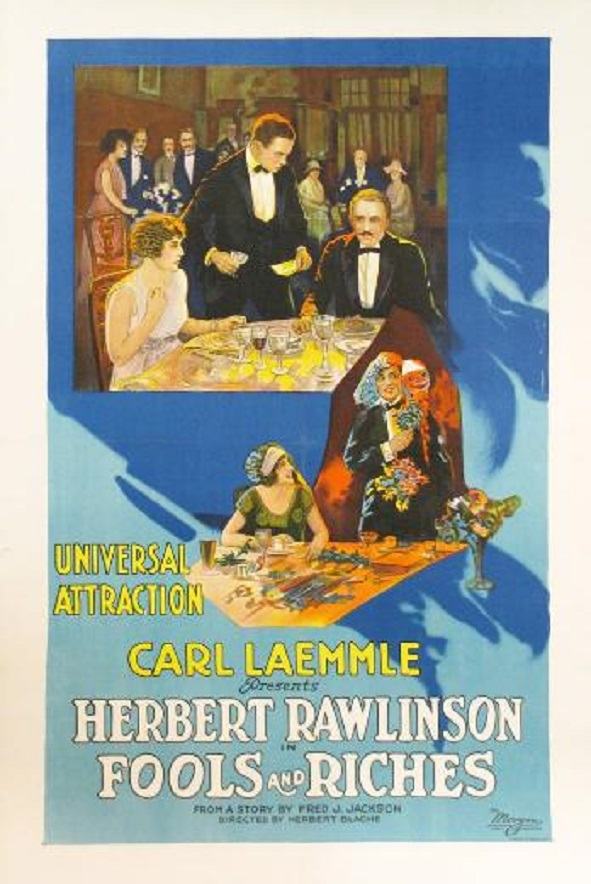
Step into the enchanting realm of early 20th-century cinema, a period where narratives unfolded with a silent eloquence, relying on the sheer power of visual storytelling and the dramatic weight of human expression. In this vibrant landscape, 'Fools and Riches' emerges not merely as a relic of its time, but as a surprisingly resonant parable, a cinematic treatise on the perils of inherited wealth and the profound journey towards self-made success. It’s a film that, despite its vintage, speaks volumes about timeless human foibles and virtues, wrapped in a deceptively simple plot that unfurls with compelling emotional depth.
The narrative pivot of 'Fools and Riches' is an ingenious one: a father's ultimate, posthumous attempt to instill wisdom in his wayward son. John Dorgan, a man of foresight and perhaps a touch of exasperation, watches his son, Jimmy, squander potential and privilege with equal measure. His solution is not a simple disinheritance, which might merely foster resentment, but a meticulously crafted test. Dorgan’s will, a document of profound paternal love and strategic cunning, bequeaths to Jimmy only a fraction of his vast fortune, with the tantalizing hint of a greater treasure concealed, accessible only to a soul truly deserving. This isn't just about money; it’s about character, about earning one's keep, about understanding the true value of both wealth and integrity. It's a narrative device that immediately elevates the film beyond a mere rags-to-riches tale, transforming it into a psychological journey of moral awakening.
Predictably, Jimmy, portrayed with a charming yet exasperating naivete by Herbert Rawlinson, initially plunges headfirst into the abyss of his own making. The initial inheritance, rather than a foundation for prudent living, becomes fuel for his unchecked hedonism. His 'friends,' a revolving door of opportunistic hangers-on, exemplify the superficiality of wealth-driven relationships. They are the cinematic equivalent of vultures, circling, waiting for the inevitable moment when the well runs dry. This depiction of fleeting camaraderie, contingent solely on financial largesse, serves as a stark, if unspoken, critique of societal values that prioritize material gain over genuine connection. Jimmy's descent into penury is swift and brutal, a necessary rite of passage designed by his father's foresight.
Yet, amidst this financial and social wreckage, a beacon of unwavering loyalty emerges in the form of Nellie Blye, played with understated grace and resolute strength by Doris Pawn. Nellie is not merely a romantic interest; she is Jimmy's moral compass, his steadfast ally in adversity. Her encouragement isn't born of pity but of a belief in his latent potential. She doesn't enable his extravagance; she challenges his sloth and inspires him towards self-sufficiency. This dynamic is crucial, for it underscores the film's message that true support lies not in cushioning falls, but in empowering one to stand tall. Her character is a testament to the power of quiet resilience, a stark contrast to the fleeting loyalties of Jimmy's former acquaintances. One might draw a parallel to the steadfastness seen in characters navigating moral quandaries in films like The Lure, where personal integrity becomes the ultimate refuge against societal temptations and pitfalls.
Jimmy’s journey from pampered heir to humble waiter is the heart of his transformation. This period of honest labor, a stark departure from his previous life, is where he begins to truly understand the value of a dollar and the dignity of work. It is here, in the unassuming setting of a bustling restaurant, that fate intervenes in a manner that feels both cinematic and remarkably earned. Overhearing a clandestine conversation about a nefarious plot to take over a railroad, Jimmy’s innate intelligence, previously dulled by idleness, sharpens. His quick thinking and decisive action not only thwart the corporate machinations but also earn him a position within the very company he helped protect. This isn't merely luck; it's the culmination of his maturation, a demonstration that he has cultivated the acumen and responsibility his father so desperately wished for him to possess. This narrative arc, where a seemingly insignificant individual uncovers a grand conspiracy and rises through the ranks, holds a certain charm that echoes the clever, if sometimes convoluted, schemes found in films like The Very Idea, albeit with a more grounded sense of personal growth and consequence.
At its core, 'Fools and Riches' is a profound meditation on the nature of wealth and the true meaning of inheritance. It subtly argues that a fortune, unearned, can be a curse, fostering indolence and attracting avarice. Conversely, the struggle, the toil, and the lessons learned through hardship are the real treasures. John Dorgan’s elaborate will is not punitive but pedagogical, a final act of love designed to forge character rather than merely transfer assets. The film deftly navigates the transition from a society grappling with the burgeoning industrial age and inherited fortunes to one that increasingly valued self-made success and the American dream of upward mobility through effort.
The portrayal of Jimmy's transformation is particularly compelling. Herbert Rawlinson manages to convey both the initial carefree arrogance and the subsequent humility and earnestness of a man learning from his mistakes. His performance, reliant on subtle gestures and expressive eyes typical of the silent era, brings a tangible authenticity to Jimmy’s arc. Doris Pawn’s Nellie, on the other hand, is the quiet force, the moral bedrock. Her character is a powerful representation of the strength and wisdom often found in the women of that era, who, despite societal constraints, exerted significant influence through their steadfastness and encouragement. Her steadfastness is reminiscent of the guiding female figures in other silent dramas, whose emotional intelligence often serves as the fulcrum for the male protagonist's journey.
Even without dialogue, the filmmaking craft in 'Fools and Riches' is remarkably sophisticated. The pacing is deliberate, allowing the audience to absorb the emotional nuances of each scene. The use of intertitles is judicious, providing necessary exposition without bogging down the visual flow. Cinematography, while perhaps not groundbreaking by today's standards, effectively uses composition and lighting to convey mood and character status. The stark contrast between the opulence of Jimmy's early life and the spartan reality of his working-class existence is visually striking. The film’s ability to communicate complex themes and character development through purely visual means is a testament to the artistry of silent cinema, an art form that demanded a particular kind of ingenuity from its creators.
One could argue that the film's exploration of responsibility, particularly concerning an inherited legacy, aligns with the deeper human struggles depicted in stories where individuals are thrust into unexpected roles of care or obligation. While The Bachelor Daddy might explore parental responsibility, 'Fools and Riches' delves into the fiscal and moral responsibility of managing one's own destiny and wealth. The connection here lies in the unexpected burdens and lessons that come with a change in life circumstances, forcing characters to mature and adapt.
With his newfound position and a matured sense of purpose, Jimmy is finally ready to decipher his father's cryptic instructions. The discovery of the hidden inheritance isn't just a retrieval of money; it's a symbolic culmination of his journey. He has proven himself worthy, not just of wealth, but of the trust and love his father had always harbored. The marriage to Nellie, then, is not merely a happy ending but a profound affirmation of their bond, forged in the fires of adversity and cemented by mutual respect and enduring affection. It signifies that true riches lie not in gold, but in character, integrity, and genuine human connection.
The film's resolution avoids a saccharine simplicity. Jimmy’s triumph feels earned because the audience has witnessed his struggles, his moments of despair, and his gradual ascent. The narrative, penned by George C. Hull, Charles Kenyon, and Frederick J. Jackson, is tight and purposeful, each plot point serving to propel Jimmy’s character development forward. The supporting cast, including Roy Laidlaw, John Cossar (as the wise John Dorgan), Tully Marshall, Arthur Stuart Hull, and Nick De Ruiz, contribute to the film's rich tapestry, each performance, however brief, adding texture and authenticity to the world of the story.
In an era saturated with immediate gratification and the allure of unearned success, 'Fools and Riches' offers a refreshing counter-narrative. It's a reminder that true prosperity is often cultivated through perseverance, hard work, and the wisdom gained from life's inevitable setbacks. The film's message about fiscal responsibility, the fleeting nature of superficial friendships, and the enduring power of genuine love remains as pertinent today as it was a century ago. It champions the idea that character is built, not bestowed, and that the most valuable inheritance is not what you receive, but what you become.
For aficionados of classic cinema, 'Fools and Riches' is a delightful discovery, a testament to the storytelling prowess of the silent era. For those new to the genre, it serves as an accessible and engaging entry point, demonstrating how universal themes can transcend the limitations of time and technology. It’s a film that quietly, yet powerfully, asserts that while money can buy many things, it cannot purchase the invaluable lessons of life, the steadfastness of true love, or the deep satisfaction of earning one's own way. It’s a compelling piece of cinematic history that continues to resonate, offering both entertainment and profound wisdom.
IMDb 5.2
1929
Community
Log in to comment.