DbcultAccessing Vault...
Cult Review
Senior Film Conservator
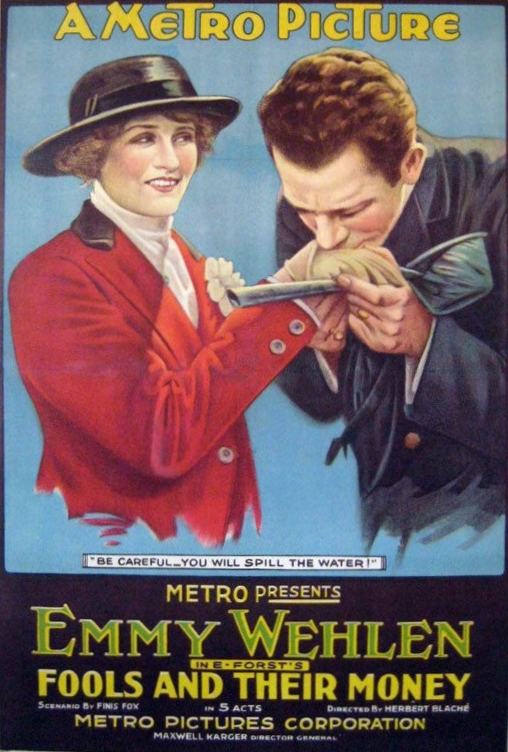
The year 1919 was a transformative period for the American psyche, a moment suspended between the trauma of the Great War and the impending hedonism of the Roaring Twenties. In the midst of this cultural shift, Fools and Their Money emerged as a poignant, if ostensibly lighthearted, critique of the 'nouveau riche' phenomenon. Directed with a keen eye for social friction, the film dissects the absurdity of the American caste system with a surgical precision that remains surprisingly relevant in our modern era of influencer culture and overnight tech billionaires.
At the heart of the narrative lies the Tompkins family, a unit that serves as a microcosm for the sudden economic shifts of the late 1910s. Their wealth isn't derived from generations of land ownership or intellectual pursuits, but from the industrial machinery of war. This 'munitions money' carries a subtle, unspoken stigma—a scent of cordite and opportunism that the matriarch, played with a frantic, social-climbing energy by Mollie McConnell, is desperate to wash away. Unlike the gritty industrial realism found in The Iron Woman, which treats the manufacturing world with a somber gravity, Fools and Their Money treats wealth as a costume that the Tompkins family doesn't quite know how to wear.
The tension between the husband's desire for modesty and the wife's aspirational vanity creates a domestic battlefield. It’s a classic trope, yet executed here with a nuanced understanding of the psychological toll of upward mobility. When they move to the exclusive country neighborhood, they aren't just changing zip codes; they are attempting to rewrite their DNA. This theme of self-reinvention is a recurring motif in the era's cinema, often mirrored in works like A Yankee from the West, where the geographical shift facilitates a moral or social transformation.
The film truly finds its rhythm when it enters the realm of the comedy of errors. The inciting incident—Mrs. Tompkins mistaking the aristocratic Louise Allenby (the luminous Emmy Wehlen) for a maid—is a masterclass in silent film irony. It highlights the central thesis of the movie: that 'class' is often a performative act rather than an inherent quality. If a blue-blooded heiress can be mistaken for a servant simply because of her attire or the context of the meeting, then the entire structure of social stratification is revealed to be a fragile illusion.
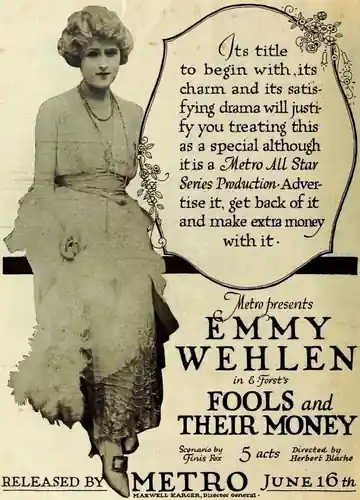
Louise’s decision to play along as a social secretary is not merely a prank; it is a subversive act of class tourism. She wants to see the world through the eyes of those her family usually looks down upon. When Dick Tompkins (the charismatic Jack Mulhall) enters the fray, the film adds another layer of deception. His decision to become a groom for the Allenbys is a retaliatory strike against the perceived mockery of his family. This 'double masquerade' creates a fascinating dynamic where both lovers are interacting through false identities, yet finding a 'truth' in their connection that their social labels would have otherwise prohibited. It reminds one of the romantic entanglements in The Test of Womanhood, where character is forged in the fires of deception and trial.
Every great social satire needs a catalyst for conflict that transcends mere misunderstanding, and Bertram Grassby’s portrayal of Cholly Van Dusen provides exactly that. Cholly is the dark underbelly of the aristocracy—the degenerate 'insider' who uses his status as a shield for criminality. His theft of the Allenby jewels and the subsequent framing of Louise (in her secretary persona) injects a sudden, sharp tension into the proceedings. This shift from light comedy to high-stakes melodrama is a hallmark of the period’s storytelling, similar to the narrative pivots seen in The Closed Road.
The arrest of Louise is a pivotal moment. It tests the loyalty of Dick and the integrity of the Tompkins family. In this moment, the film asks: will the 'fools' use their 'money' to buy justice, or will they rely on their innate sense of right and wrong? The resolution, involving the capture of Cholly and the revelation of the lovers' true identities, is perhaps a bit tidy by modern standards, but in 1919, it provided a cathartic validation of the American ideal that love and honesty can bridge any social chasm. It’s a 'square deal' in the truest sense, echoing the moral clarity of The Square Deal.
Visually, Fools and Their Money is a testament to the burgeoning sophistication of the silent medium. The set design, contrasting the garish, over-decorated mansion of the Tompkins family with the understated, timeless elegance of the Allenby estate, tells a story of its own. The use of lighting to emphasize the isolation of Louise during her arrest, compared to the bright, flat lighting of the party scenes, demonstrates a director in full command of the emotional palette. While it may not possess the exotic grandeur of Ali Baba and the Forty Thieves or the raw intensity of Fighting Mad, its strength lies in its domestic intimacy and character-driven beats.
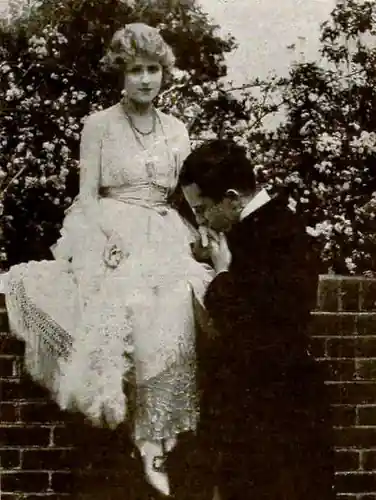
The performances are universally strong. Emmy Wehlen, often remembered for her musical comedy roots, brings a sparkling wit to Louise that prevents the character from feeling like a static debutante. Jack Mulhall, who would go on to have a prolific career, displays the easy-going athleticism and charm that made him a favorite of the era. Their chemistry is the engine that drives the film's second half, making the somewhat improbable plot points feel grounded in genuine affection. This human element is what separates the film from more didactic social commentaries like Rolling Stone.
Ultimately, the film concludes with the Tompkinses being 'accepted socially.' This might seem like a surrender to the very elitism the film mocks, but it’s a pragmatic ending. The 'fools' have learned that their 'money' is only a tool, not a definition of self. By the end, the Tompkins family has shed their pretension, and the Allenbys have shed their exclusivity. It’s a synthesis of old and new, a vision of an American society where merit and character eventually outweigh the origins of one's bank account.
In comparing this work to others of its time, such as Daughter of Mine or the whimsical Wanted: A Brother, one finds that Fools and Their Money occupies a unique middle ground. It is neither purely a slapstick comedy nor a heavy-handed drama. It is a sophisticated 'social comedy' that predates the screwball genre of the 1930s. It captures a world in flux, where the old guards are falling and a new, messy, vibrant middle class is rising to take its place. Even the subplot of the jewel thief, a trope also explored in The Midnight Burglar, is handled here with a specific focus on how crime intersects with social reputation.
For the modern viewer, watching Fools and Their Money is an exercise in historical empathy. We see the anxieties of a generation grappling with sudden wealth and the fear of being 'found out' as imposters. We see the timeless dance of courtship, unhindered by the technology that complicates our own romances. And we see a cinema that was just beginning to realize its power to hold a mirror up to society and laugh at the reflection. It is a film that rewards the patient observer with a wealth of detail—not just in its plot, but in its soul. It reminds us that while money may come and go, the folly of human pride is an eternal, and endlessly entertaining, resource.
Whether you are a scholar of the silent era or a casual fan of vintage storytelling, this film offers a rich tapestry of early 20th-century life. It stands alongside contemporaries like Hearts and Let Us and The High Hand as a vital piece of the cinematic puzzle, proving that even a century later, we are all still just fools trying to figure out what our money is really worth.
IMDb —
1921
Community
Log in to comment.