DbcultAccessing Vault...
6.3/10
Senior Film Conservator
A definitive 6.3/10 rating for a film that redefined the boundaries of cult cinema. The Passion Play remains a cornerstone of transgressive art.
In the annals of early cinema, few subjects commanded the sweeping reverence and dramatic potential quite like the life of Jesus Christ. Yet, The Passion Play distinguishes itself not by attempting an exhaustive chronicle, but by zeroing in on the most cataclysmic and emotionally charged segments: the betrayal, the trial, and the inexorable march towards crucifixion. This is not merely a historical recreation; it is a profound meditation on faith, human fallibility, and the nature of sacrifice, rendered with a sincerity that transcends its nascent cinematic techniques.
The film's narrative architecture is meticulously constructed around the pivotal events leading to Christ's condemnation. It eschews the earlier miracles and teachings, instead plunging directly into the volatile atmosphere of Jerusalem during Passover. This choice immediately imbues the narrative with an urgency and a sense of impending doom. We witness the insidious machinations of Judas Iscariot, portrayed with a conflicted avarice that, while perhaps simplistic by modern standards, effectively conveys the devastating weight of his actions. The film doesn't just show the betrayal; it attempts to convey the profound rupture it causes, a spiritual wound that reverberates through every subsequent scene.
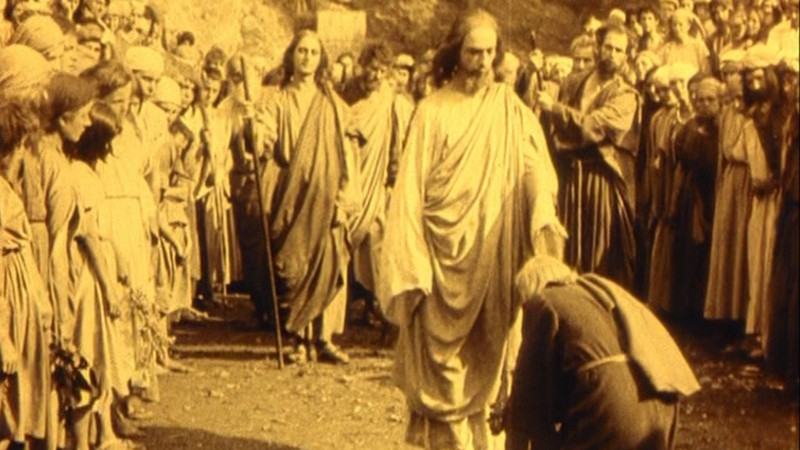
The subsequent trial sequences are where The Passion Play truly finds its dramatic footing. The Sanhedrin's proceedings are depicted as a chaotic, politically charged spectacle rather than a search for justice. The clamor of the crowd, the fervent accusations, and the palpable fear of the Roman authorities are masterfully conveyed through the expressive, often exaggerated, acting styles prevalent in early silent films. Ernst Hardt, as Jesus, brings a quiet dignity to a role that could easily devolve into mere suffering. His stoicism in the face of relentless hostility is perhaps the most compelling aspect of his performance, a testament to the power of understated emotion even in an era of overt theatricality.
The ensemble cast, though operating within the stylistic confines of early 20th-century cinema, delivers performances that are remarkably impactful. Ernst Hardt's portrayal of Jesus is central, a figure of serene resolve amidst the maelstrom. He conveys a sense of inner peace and profound understanding, even as the world around him conspires for his downfall. This quiet strength is crucial to the film's emotional resonance, providing a focal point for the audience's empathy. Eva Gühne, likely in a role such as Mary Magdalene or the Virgin Mary, would have infused her character with a poignant sorrow, a silent witness to the unfolding tragedy. Her expressive gestures and facial nuances would have communicated the depth of her grief and unwavering devotion.
Heinrich Spennrath, Georg Faßnacht, Ludwig Stiehl, Adolf Faßnacht, and Elsa Dietler, though their specific roles might be less prominent in historical records, collectively contribute to the vibrant, often tumultuous, atmosphere of the film. Spennrath, perhaps as a high priest or a Roman official, would have embodied authority or malevolence. The collective portrayal of the Sanhedrin members and the agitated populace by Faßnacht, Stiehl, and others, is vital in establishing the overwhelming odds against Jesus. Elsa Dietler's performance, potentially as another female figure of compassion or despair, would have added another layer of emotional depth to the narrative tapestry. Their combined efforts create a convincing, albeit theatrical, portrayal of a society in tumult, grappling with immense spiritual and political forces. The very essence of mob mentality and institutionalized power is vividly brought to life through their collective presence.
For a film of its era, The Passion Play demonstrates an impressive command of visual storytelling. While sophisticated camera movements were still in their infancy, the framing and composition are often deliberate, drawing the viewer's eye to key emotional beats. The use of close-ups, though sparse, is impactful, highlighting moments of intense suffering or profound contemplation. The sets, though undoubtedly studio-bound, evoke a sense of biblical antiquity, creating an immersive environment that transports the audience to ancient Judea. The stark contrasts between light and shadow are employed to great effect, particularly in scenes of clandestine meetings or the somber contemplation in Gethsemane, adding a layer of dramatic intensity that transcends mere documentary-style recounting.
The pacing, a crucial element in silent cinema, is carefully modulated, building from the tense quietude of the Last Supper to the frenetic energy of the trial. This ebb and flow keeps the audience engaged, even without spoken dialogue. The intertitles, rather than merely advancing the plot, often serve as lyrical bridges, offering scriptural passages or poetic commentary that deepen the film's spiritual resonance. This combination of visual spectacle and textual guidance creates a multi-layered experience, inviting both emotional engagement and theological reflection. The sheer ambition to tackle such a monumental subject with the nascent tools of cinema is commendable, showcasing an early understanding of film's potential beyond mere novelty.
Beyond its historical and artistic merits, The Passion Play explores themes that remain eternally relevant. It delves into the nature of power, both secular and religious, and its capacity for both justice and profound injustice. The film unflinchingly portrays the consequences of fear, mob mentality, and the tragic susceptibility of individuals to external pressures. It asks profound questions about faith, sacrifice, and redemption, allowing the audience to witness these universal struggles through the lens of one of history's most pivotal narratives.
Comparing its scope, for instance, to other early epic productions like Samson (1915), one can discern a shared ambition to bring grand, biblical narratives to the screen. However, where Samson might revel in physical prowess and spectacle, The Passion Play delves into the spiritual and psychological torment, offering a different kind of grandeur – one of internal struggle and moral fortitude. This distinction highlights the varied approaches early filmmakers took to monumental source material, showcasing a nascent understanding of genre and thematic focus within a still-developing art form.
The film's quiet, unwavering portrayal of Christ's suffering, particularly through Ernst Hardt's measured performance, stands in stark contrast to the often frenzied energy of the surrounding characters. This dynamic tension is where its true power lies, allowing moments of profound quietude to resonate deeply amidst the cacophony of human judgment. It is a cinematic experience that invites introspection, compelling viewers to reflect on the timeless themes of betrayal, conviction, and ultimate sacrifice. The raw emotionality, conveyed through the language of gesture and expression, proves remarkably potent, even a century after its creation.
Its influence on subsequent biblical epics, even those decades later, cannot be overstated. It laid foundational groundwork for how such weighty subjects could be approached cinematically, influencing directorial choices in pacing, character emphasis, and the use of visual allegory. The film is a crucial artifact, not only for its religious subject matter but for its place in the evolution of cinematic language itself. It demonstrates how early filmmakers, despite technological limitations, could craft narratives of immense emotional and spiritual weight, capable of captivating and moving audiences on a profound level.
Viewing The Passion Play today is more than a historical exercise; it is an encounter with a profound piece of early cinematic artistry. It reminds us that the power of film to evoke deep emotion and explore complex themes existed long before sound, color, or sophisticated special effects. The film's enduring appeal lies in its unwavering commitment to its subject matter, its respectful yet dramatic portrayal of the central figures, and its ability to communicate universal truths through the nascent visual vocabulary of a new medium.
While films like The Master Passion or A Million Bid might have explored the dramatic intricacies of human relationships and societal pressures, The Passion Play elevates its drama to a cosmic scale, dealing with the ultimate stakes of human existence and divine purpose. This distinction underscores the film's unique position, not merely as a historical curiosity, but as a potent example of cinema's capacity for spiritual and philosophical inquiry. The careful delineation of characters, from the resolute Christ to the conflicted Pilate and the volatile crowds, creates a tableau of human nature at its most exposed.
The film's impact wasn't just in its narrative, but in its very presence as a major cinematic event. In an era where cinema was still finding its voice, The Passion Play demonstrated the medium's capacity for grand storytelling and moral instruction. It served as a cultural touchstone, drawing immense audiences and sparking fervent discussions. Its success paved the way for future biblical epics and contributed significantly to the legitimization of film as a serious art form capable of tackling profound subjects. It is a compelling argument for the enduring power of silent cinema, proving that a lack of dialogue does not equate to a lack of voice or emotional resonance. The film speaks volumes through its imagery, its performances, and the profound silence that allows its weighty themes to truly settle within the viewer's consciousness.
In conclusion, The Passion Play remains a monumental achievement, a film that transcends its temporal origins to deliver a powerful and affecting rendition of a story that has captivated humanity for millennia. Its focus on the treason and trial provides a dramatic core that is both historically significant and emotionally devastating. The performances, particularly that of Ernst Hardt, lend an authenticity to the suffering and dignity depicted. For any serious student of cinema or anyone interested in the profound capabilities of early filmmaking, this is an indispensable viewing experience. It stands as a testament to the vision of its creators and the timeless power of its narrative, a truly singular piece in the mosaic of cinematic history. The film, even with its century-old stylistic conventions, still possesses an undeniable gravitas, a spiritual weight that continues to resonate with contemporary audiences willing to engage with its silent, yet eloquent, testimony. Its legacy is not just in its subject, but in its bold assertion of cinema's capacity for profound artistic expression.

IMDb —
1931
Community
Log in to comment.