DbcultAccessing Vault...
Cult Review
Senior Film Conservator
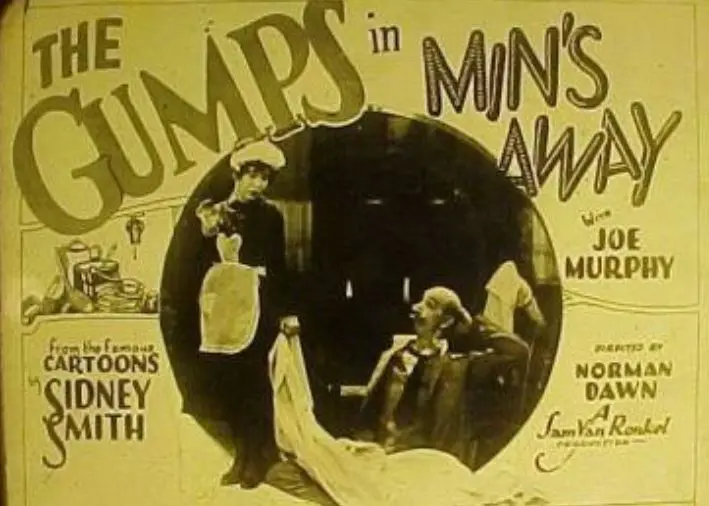
Is this film worth watching today? Short answer: only if you are a dedicated student of silent slapstick or a fan of 1920s newspaper comics, as the frantic energy often outpaces the actual humor. This film is specifically for those who enjoy the 'comedy of errors' trope taken to its most illogical extreme, but it is certainly NOT for viewers who require narrative logic or high-brow wit.
This film works because it captures the unhinged, surrealist spirit of early 20th-century comic strips, translating the rubbery physics of the page into live-action chaos. This film fails because the second half loses its way in a repetitive Turkish bath sequence that feels more like a series of disconnected gags than a cohesive story. You should watch it if you want to see how early cinema handled the challenge of adapting a massive intellectual property like 'The Gumps' with limited technology but unlimited audacity.
Joe Murphy, as Andy Gump, is a fascinating study in physical commitment. Unlike the more graceful legends of the era, Murphy plays Gump with a certain jaggedness that mirrors the character's comic strip origins. In the opening scenes, his attempt to 'polish up' is a masterclass in the vanity of the unremarkable man. We see a man who truly believes he is the protagonist of a romance, while the camera treats him as the victim of a tragedy. It is a subtle distinction, but it makes the subsequent violence of the pushball game feel earned rather than mean-spirited.
The pushball sequence itself is the highlight of the first act. When the giant ball begins to pursue Andy down the hill, the cinematography—though primitive—manages to convey a genuine sense of panic. This isn't the calculated stunt work of a Buster Keaton film like The Speeding Venus; it feels more like a playground fight that escalated into a documentary. Every time the ball thumps into Murphy, you feel the weight of it. It is aggressive. It is loud even in its silence.
One of the more unsettling and memorable moments involves Andy mistaking hair restorer for shaving lotion. To a modern audience, the rapid growth of a thick, coarse beard across Andy’s face leans closer to Cronenbergian body horror than traditional comedy. It is a grotesque transformation. This specific choice by writer Sidney Smith highlights the era's obsession with 'scientific' tonics and the fear of social embarrassment. The beard becomes a physical manifestation of Andy's lies and his inability to maintain his 'sporting' persona.
Compare this to the more grounded humor found in The Dawn of a Tomorrow, and you see the divide in 1924 cinema. Min's Away isn't interested in the human condition; it is interested in how much a human body can be stretched and distorted. When Andy tries to shave the beard off in the Turkish bath, the desperation is palpable. It works. But it’s flawed. The pacing during the bathhouse scenes drags, as the film relies too heavily on the 'man in a woman's space' trope which was already becoming a cliché even a century ago.
Does Min's Away hold up for a modern audience?
No, not as a standalone piece of entertainment. While the physical comedy is impressive, the narrative relies on cultural shorthand from a 100-year-old comic strip. Most viewers will find the ending abrupt and the gender-based humor dated. However, it remains a vital watch for those interested in the history of cross-media adaptations.
The second half of the film moves the action to a ladies' Turkish bath, a setting that allows for a different kind of physical comedy: the struggle against machinery. Andy’s entrapment in the steam cabinet is a classic bit of slapstick engineering. The way he fumbles with the controls, disappearing and reappearing through clouds of steam, is a precursor to the industrial satire we would later see in Chaplin’s 'Modern Times.' However, unlike Chaplin, Murphy’s Andy Gump remains a purely reactive character. He doesn't triumph over the machine; he merely survives it.
The film also takes a surprisingly dark turn with the 'grilling treatments' Andy receives from the female attendant. There is a palpable sense of claustrophobia here. The bathhouse, intended to be a place of relaxation, becomes a gauntlet of torture for our protagonist. This shift in tone from the wide-open spaces of the park to the cramped, steamy interiors of the bathhouse is the film's most sophisticated directorial choice. It mirrors Andy’s own narrowing options as his lies catch up to him.
Pros:
Cons:
Min's Away is a relic of a time when cinema was still figuring out how to translate the language of the 'funny pages' to the silver screen. It lacks the emotional depth of The Branded Woman or the sheer technical wizardry of Trapped by the Camera, but it possesses a raw, unpolished charm. The film’s greatest strength is its refusal to slow down. It moves from one catastrophe to the next with a nihilistic glee that is almost refreshing.
One of the most debatable aspects of the film is its ending. Andy Gump doesn't learn a lesson. He doesn't reconcile with Min. He is simply beaten up by a policewoman's partner and 'put to rout.' This lack of a moral center is what separates these early comic adaptations from the more 'preachy' dramas of the time, such as The Flower of Faith. In the world of Min's Away, the universe is just a giant pushball, and Andy Gump is the man standing in its way.
"Min's Away is a frantic, sweaty, and occasionally bizarre piece of silent history that proves slapstick was never about the jokes—it was about the survival of the most resilient idiot."
While it won't change your life, Min's Away is a fascinating 15-minute window into the chaotic heart of 1920s humor. It is loud, messy, and occasionally mean. It is the cinematic equivalent of a loud sneeze in a quiet library. Watch it for the pushball; stay for the sheer confusion of the hair restorer. It’s not a masterpiece, but it’s certainly not boring.
IMDb 6.1
1930
Community
Log in to comment.