DbcultAccessing Vault...
Cult Review
Senior Film Conservator
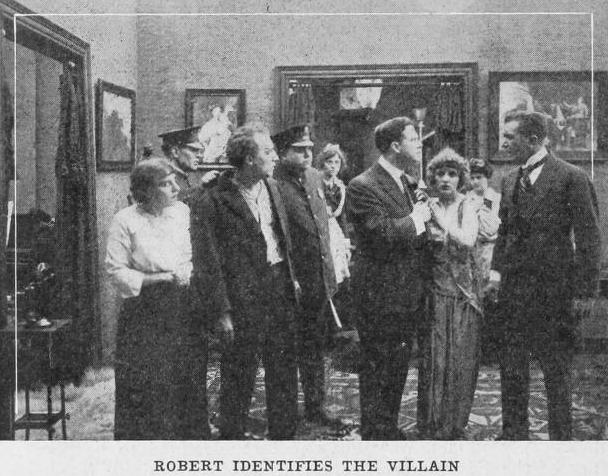
The early 1910s represented a feverish crucible for the cinematic arts, a period where the syntax of visual storytelling was being forged in the fires of theatrical melodrama and nascent industrial technology. For $5,000 a Year stands as a fascinating, if somewhat obscured, testament to this volatile transition. While the title suggests a mundane ledger of middle-class aspirations, the film itself is a high-octane collision of moral certitude and mechanical mayhem. It operates within a genre that sought to externalize the internal rot of the soul through grand gestures and physical spectacle, a tradition we see echoed in other period pieces like The Country Boy.
The narrative skeletal structure is deceptively simple: a villainous machination against a virtuous heroine, thwarted by a gallant youth. Yet, beneath this familiar veneer lies a sophisticated study of loyalty and perception. The character of Merritt, portrayed with a gravitas that suggests the weight of patriarchal duty, serves as the emotional anchor. However, the true friction of the film generates from the volatile relationship between Tom and Paul. Paul is not your caricatured mustache-twirler; he represents a more insidious form of treachery—the betrayal of the intimate circle. His plot against the heroine is not merely an act of villainy but a calculated disruption of the social order.
When Tom finally 'sees through' Paul’s treachery, the film shifts from a domestic drama into a proto-thriller. This moment of clarity is handled with a lack of subtlety that is charming to modern eyes but was revolutionary in its clarity for contemporary audiences. It mirrors the thematic clarity found in The Red Circle, where the revelation of truth serves as the primary catalyst for the third-act resolution. The tension between these two men is palpable, leading to a physical confrontation that transcends the stage-bound histrionics of the era.
One cannot discuss For $5,000 a Year without addressing its technical centerpiece: the involvement of two motor cars in a 'smash-up.' In 1915, the automobile was still a symbol of terrifying modernity and elite status. To use these machines as instruments of narrative destruction was a bold move that signaled the industry's move toward bigger budgets and higher stakes. This isn't the controlled, CGI-enhanced chaos of the 21st century; this was a visceral, dangerous practical effect that likely left the audience breathless. It shares a certain DNA with the daring physical stunts seen in Over Niagara Falls, where the environment itself becomes a character in the drama.
The car crash serves as the ultimate punctuation mark to Paul’s treachery. It is as if the moral friction between the characters could no longer be contained by dialogue or fistfights and had to manifest as a literal explosion of metal and glass. This penchant for mechanical disaster as a narrative climax would become a staple of American cinema, but here, it feels raw and experimental. It lacks the polish of later works like The Ghost Breaker, yet it possesses a grit that is undeniably authentic.
The ensemble gathered for this production represents the backbone of the silent era's working class of actors. Louise Huff, who would later find significant fame, provides a glimpse of the burgeoning 'star power' that would soon dominate the industry. Her presence, alongside veterans like Edwin B. Tilton (who also penned the screenplay), ensures that the film maintains a professional sheen despite its melodramatic roots. Tilton’s writing avoids the meandering pace of contemporaries like The Prodigal Son, opting instead for a lean, propulsive narrative that focuses on the inevitable collision of its characters.
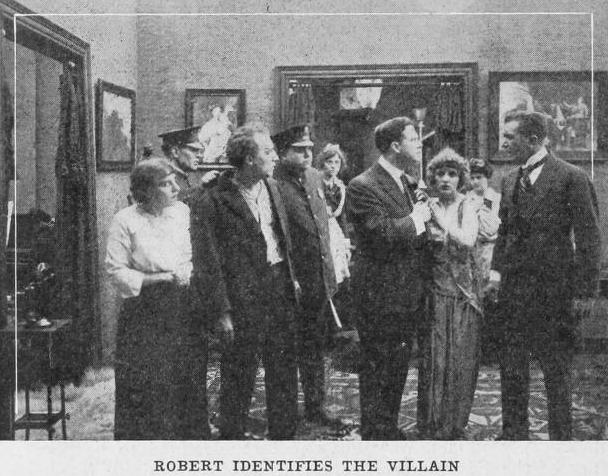
To understand the impact of For $5,000 a Year, one must look at it through the lens of its peers. While films like Cardinal Richelieu's Ward focused on historical pageantry and political intrigue, this film is firmly rooted in the contemporary anxieties of the 20th century. It deals with the fear of the 'outsider'—the Paul figure—who enters the domestic sphere only to poison it. This theme is explored with equal fervor in The Primrose Path, though that film leans more toward the moral decay of the individual rather than the external threat of a villain's plot.
Furthermore, the film’s pacing is surprisingly modern. Unlike the often-stately progression of European imports like Das Geheimnis von Chateau Richmond or the grand historical scale of King Charles, this production prioritizes the 'thrill.' It understands that the audience's attention is a commodity, and it pays for that attention with the currency of action and betrayal. Even when compared to the exoticism of The Pretty Sister of Jose, this film feels more immediate and relatable to the urban audiences of its time.
Edwin B. Tilton’s dual role as writer and actor cannot be overstated. His screenplay exhibits a structural economy that was ahead of its time. He avoids the discursive subplots that plague films like From Gutter to Footlights, focusing instead on the escalating stakes of the $5,000 figure—a sum that represented both a dream and a curse. The dialogue (conveyed through title cards) is sharp, avoiding the flowery prose that often bogged down adaptations like Michael Strogoff.
"The film is a masterclass in the economy of motion. Every frame serves the eventual destruction of the status quo, leading us toward that fateful motor car collision with the inevitability of a Greek tragedy, yet with the frantic energy of a pulp novel."
In the grand tapestry of film history, where we often focus on the gargantuan achievements like those discussed in The Colosseum in Films, it is easy to overlook the small-scale triumphs. For $5,000 a Year is one such triumph. It captures a specific American anxiety about the price of success and the fragility of the home. It predates the cynical noir sensibilities of The Ring and the Man but shares its skepticism of the 'self-made' villain.
The film also serves as a fascinating precursor to the 'chase' films that would define the next decade. By introducing the motor car as a tool of both escape and destruction, it paved the way for the high-speed logic of the silent comedy and the later action epic. Even the lighter fare like The Blue Mouse owes a debt to the kinetic experiments conducted here. The 'smash-up' was not just a stunt; it was a declaration of cinema's independence from the theater. On stage, a car crash is a suggestion; on film, it is an indelible reality.
Ultimately, revisiting this work is an exercise in cinematic archaeology. We find a medium that is exuberant, slightly unhinged, and desperately trying to find its voice. The performances are earnest, the writing is tight, and the spectacle is genuinely thrilling. It is a reminder that even in the infancy of the art form, filmmakers understood the fundamental truth of the box office: people will pay to see the world broken apart, provided there is a hero there to pick up the pieces. For the price of five thousand dollars—or the price of a nickelodeon ticket—audiences were treated to a vision of the future where the machine and the man were locked in a dance of death and redemption.
IMDb 6.3
1936
Community
Log in to comment.