DbcultAccessing Vault...
Cult Review
Senior Film Conservator
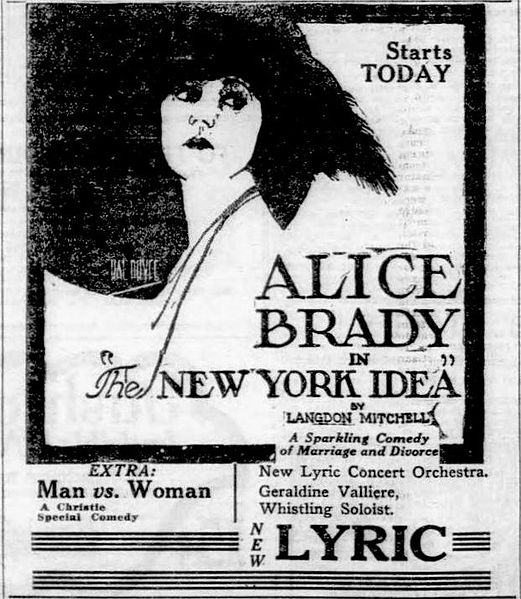
The 1920 cinematic rendition of The New York Idea stands as a fascinating artifact of early American satire, a period piece that captures the exact moment when the rigid Victorian moral code began to fracture under the weight of Jazz Age cynicism. Directed with a keen eye for social hierarchy, the film serves as a scathing indictment of the 'marriage-go-round' culture that permeated the upper echelons of Manhattan’s elite. Unlike the more somber explorations of domestic strife found in The Bishop's Emeralds, this production leans into the absurd, treating the dissolution of a marriage not as a tragedy, but as a tedious administrative hurdle for the bored and the beautiful.
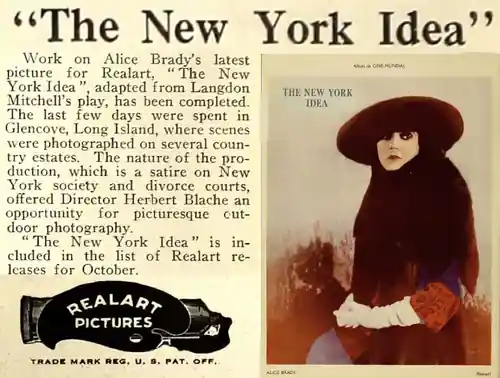
At the epicenter of this swirling vortex of vanity is Alice Brady, whose portrayal of Cynthia Karslake is nothing short of revelatory. Brady possesses a unique ability to convey a sense of 'frivolous depth'—a paradox that is essential to the film's success. Her Cynthia is not merely a petulant socialite; she is a woman trapped in a cycle of reactive pride. Every twitch of her brow and every grand gesture of defiance masks a deep-seated terror of emotional vulnerability. When compared to the more grounded performances in Let Katie Do It, Brady’s work here feels almost avant-garde in its theatricality. She understands that in the world of the New York elite, life is a stage, and she plays her part with a ferocious, albeit misguided, commitment.
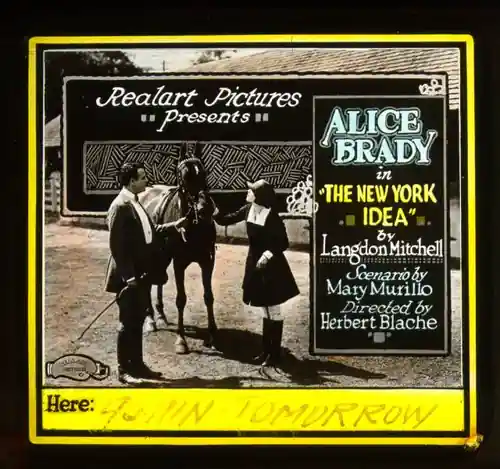
The chemistry between Brady and Lowell Sherman (playing John Karslake) is the propellant that drives the narrative. Sherman, with his trademark debonair detachment, provides the perfect foil for Brady’s mercurial energy. Their quarrels are not the result of incompatibility, but rather a surfeit of passion that neither knows how to channel constructively. In one particularly poignant scene at the racetrack—a sequence that rivals the visual splendor of The Peace of Roaring River—the silent medium captures the silent screams of a dying marriage through nothing more than lingering glances and the sharp, jagged movements of a crowd that serves as a collective Greek chorus to their private demise.
The screenplay by Mary Murillo, adapted from Langdon Mitchell's 1906 play, is a masterclass in translating stage wit into visual storytelling. Murillo, who had a penchant for exploring the complexities of female agency as seen in her work on The Galley Slave, manages to preserve the biting dialogue of the original play through evocative intertitles that never feel intrusive. The 'New York Idea' itself—the notion that marriage is a temporary arrangement based on whim rather than worth—is dissected with surgical precision. The film doesn't just mock its characters; it mocks the very institutions they represent.
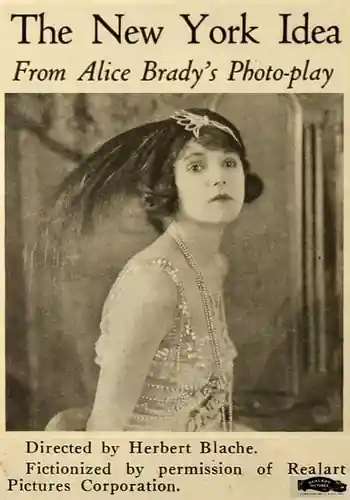
The courtroom scene, where Judge Phillimore (played with a delightful, stiff-necked irony by George Howell) presides over the Karslake divorce, is perhaps the film's most potent satirical moment. It highlights the absurdity of a legal system that facilitates the whims of the wealthy while maintaining a facade of solemnity. The Judge’s subsequent proposal to Cynthia is the ultimate punchline—a transaction disguised as a romance, a theme that echoes the social maneuvering found in Nine-Tenths of the Law.
Visually, the film is a feast of high-society opulence. The costume design, particularly for the women, reflects the shifting tides of 1920s fashion—moving away from the restrictive corsetry of the previous decade toward something more fluid and, by extension, more dangerous. The set design emphasizes the cavernous, cold nature of the Karslake and Phillimore residences. These are not homes; they are museums of prestige where intimacy goes to die. The cinematography captures the shimmering surfaces of silver, silk, and crystal, creating an atmosphere of brittle beauty that mirrors the characters' own fragile egos.
One must also acknowledge the supporting cast, particularly Hedda Hopper as Vida Phillimore. Long before she became the queen of Hollywood gossip, Hopper was an actress of considerable feline grace. Her Vida is the catalyst for the entire drama, a woman who treats men like accessories and social standing like a blood sport. Her performance provides a necessary contrast to Cynthia’s more emotional, if erratic, nature. While Cynthia is a creature of impulse, Vida is a creature of strategy, much like the manipulative forces seen in The Sable Blessing.
What makes The New York Idea endure, while many other silent comedies of the era like After the Bawl or Jinx have faded into obscurity, is its refusal to offer easy moralizations. The reconciliation of Cynthia and John in the final act is not presented as a return to traditional values, but as a personal triumph over a bankrupt social system. They return to each other not because it is 'right,' but because they are the only two people who truly understand the depth of their own shared dysfunction. It is a proto-screwball comedy, laying the groundwork for the fast-talking, high-stakes romantic battles of the 1930s.
The film’s exploration of jealousy is particularly sophisticated. It isn't the primal jealousy of a jilted lover, but the existential jealousy of seeing someone else play your role better than you do. When Cynthia sees Vida flirting with John, she isn't just hurt; she is insulted. Her response—divorce—is the ultimate 'New York' reaction: if you can't win the game, change the rules. This psychological complexity elevates the film above mere slapstick or melodrama, placing it in the same conversation as the nuanced character studies in Far from the Madding Crowd.
While the director's name might not carry the same historical weight as a Griffith or a Murnau, the craft on display here is undeniable. The pacing is brisk, avoiding the turgid lulls that often plague silent features. The use of close-ups is judicious and effective, focusing on the expressive eyes of Alice Brady to bridge the gap between the audience and the character's internal turmoil. The film manages to balance the broad humor of social embarrassment with the genuine pathos of two people who are too smart for their own good and too proud for their own happiness.
In the broader context of 1920 cinema, The New York Idea serves as a bridge. It bridges the gap between the moralistic dramas of the 1910s and the liberated comedies of the mid-20s. It shares some DNA with the European sensibilities of Der Lumpenbaron or Der Seelenverkäufer in its willingness to look at the darker, more transactional side of human relationships, yet it remains distinctly American in its optimism and its obsession with the 'new'.
Ultimately, the film is a testament to the power of the 'Idea'—the notion that we can reinvent ourselves, our marriages, and our social circles at will. But as Cynthia and John eventually discover, the one thing we cannot reinvent is the history of our own hearts. It is a sparkling, witty, and surprisingly modern piece of cinema that deserves its place in the pantheon of great American satires.
For those interested in the evolution of the domestic comedy, comparing this to A Dumbwaiter Scandal reveals just how much more sophisticated Murillo and Mitchell were willing to be with their subject matter. While other films were content with situational gags, The New York Idea was interested in the architecture of the soul—even if that soul happened to be wearing a very expensive hat.

IMDb 6.3
1931
Community
Log in to comment.