DbcultAccessing Vault...
8/10
Senior Film Conservator
A definitive 8/10 rating for a film that redefined the boundaries of cult cinema. The Mysterious Stranger remains a cornerstone of transgressive art.
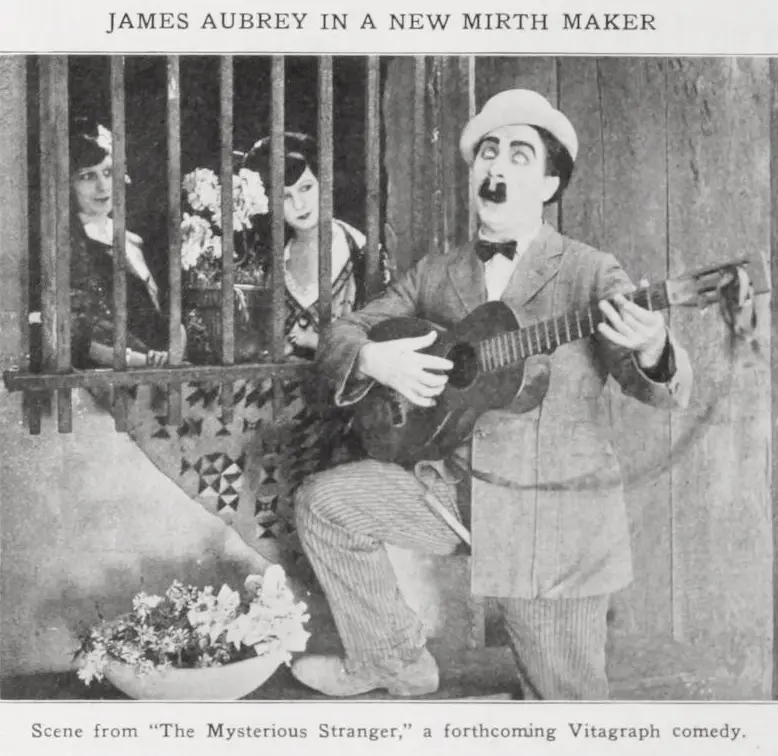
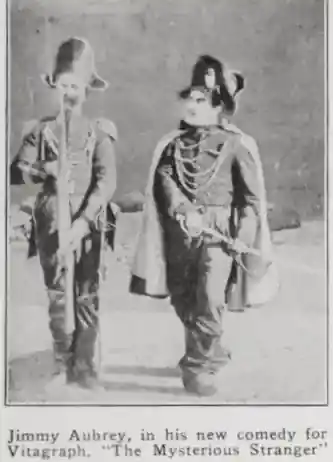
The projector crackles; nitrate ghosts dance. The Mysterious Stranger is not merely a title—it is a dare, a riddle scrawled across 1920 like a graffito no one remembers writing. Jess Robbins, better known for slapstick shorts, here swaps custard pies for corrosive doubt, delivering a fever dream that anticipates both Witchcraft’s moral vertigo and the bureaucratic unease of The Gilded Cage.
Robbins’ Andalusia is a cardboard set baked by klieg lights until the paint peels—yet through the flicker it becomes a labyrinth of whitewashed alleys where every footstep ricochets like a gunshot. The unnamed pueblo survives on olives, gossip, and the certainty that someone, somewhere, must be to blame. Enter the Stranger: Vincent McDermott’s angular frame folds into doorways as if he were sketched by Goya during a hangover. His gait is too deliberate, his smile too encyclopedic; he resembles a traveling encyclopedia of crimes no one has invented yet.
Maude Emory, cast as the mayor’s cloistered daughter, watches from balconies that oppress rather than protect. Her eyes—huge even without mascara—register every flicker of moral weather. When she first intercepts the Stranger’s gaze, Robbins inserts a 12-frame flash-forward: a church bell plummeting into the plaza, scattering doves like torn confessions. The insert lasts half a second, yet it seeds the subconscious with calamity, forecasting techniques later pilfered by The Inspirations of Harry Larrabee.
Cinephiles hunt this print chiefly for Oliver Hardy’s pre-Laurel incarnation as the town’s bumptious sergeant-at-arms. Gone is the iconic tie-twiddle; here he sports a waxed mustache whose ends droop like wilted celery. Hardy’s comic mass—already prodigious—becomes a visual punchline: doors swallow him with reluctance, chairs collapse beneath the weight of his authority. Yet Robbins refuses to let him sink into farce; when Hardy beats a confession from an innocent goat-herder, the violence is neither sanitized nor glamorized. The whiplash between laughter and wince is so abrupt it predates the tonal whiplash of Dog-Gone Tough Luck by a full five years.
Silent cinema is only as sharp as its intertitles, and Robbins wields them like stilettos. One card, appearing after a nocturnal lantern procession, reads: “The town wore its guilt like Sunday lace—scratchy, ornamental, impossible to remove without tearing the fabric.” The metaphor lands, bruises, then lingers. Another intertitle—“He asked for water; they gave him conspiracy.”—distills the entire narrative into a haiku of paranoia.
Compare this linguistic swagger with the utilitarian cards of J-U-N-K, where exposition clomps in hobnailed boots. Robbins understands that silence itself is a dialect; when the Stranger finally speaks onscreen—via a close-up of his moving lips followed by a blank card—the absence of printed words screams louder than any declamation.
Halfway through the reel, the Stranger rents a room above the tavern. Its walls are covered with broken mirrors—shards glued haphazardly to plaster, reflecting a single oil lamp into a kaleidoscope of suspicion. Here Robbins stages one of silent cinema’s most erotically charged sequences: the Stranger strips to the waist, revealing a cartography of scars, while Emory’s character—having climbed the back stairs—watches through a cracked pane. The fragmentation renders her desire both fractured and multiplied; every shard holds a different version of her face, some fearful, some rapturous. No kiss, no clinch—yet the temperature spikes higher than the clinches in A Bit o’ Heaven.
Surviving prints lack original musical cues; most festivals slap on generic Spanish guitar, betraying the film’s brittle modernism. Last year in Pordenone, a maverick accompanist improvised a score for prepared piano and transistor radio static—resulting in a sonic Dali that turned every rustle into espionage. The climactic moment, where the Stranger’s silhouette dissolves into the horizon, was underscored by a single high C held until breath itself seemed treasonous. The audience gasped; several walked out, shaken not by what they saw but by what they heard in their skulls afterward.
History relegates McDermott to footnote status, yet his Stranger predates Conrad Veidt’s somnambulist by months: those cheekbones could slice propaganda posters. Off-set, McDermott cultivated orchids and quoted Rilke to extras, then vanished into Mexico during the Depression. Some say he became a bullfighting accountant; others insist he haunts this very print, his face flickering whenever the projector bulb dims. Watching him is to witness charisma too feral for stardom—imagine if Vagabond Luck’s leading hobo swallowed a volume of Schopenhauer and learned to smirk in three languages.
Technically monochrome, yet the film bleeds color synaesthetically. Robbins tints night scenes viridian, day scenes amber, but the print’s final third washes everything in sulphur yellow—the shade of old newspapers announcing war. When the mistaken-identity hysteria peaks, even the subtitle cards adopt this jaundice, as though the very grammar of language contracts hepatitis. The effect anticipates the color-coded neurosis of Mayblossom, though that film needed two-strip Technicolor to achieve what Robbins conjures with a single filter.
Shot in ten days for the price of a modest bungalow, the picture recycles sets from The Adventures of Buffalo Bill; turn a frontier saloon sideways, add wrought-iron balconies, and the American West becomes Iberia overnight. Robbins’ thrift becomes aesthetic philosophy: the same swinging doors that once disgorged cowboys now exhale conspirators, proving that xenophobia is location-agnostic. In an era when epics like Doch Anny Kareninoy flaunted budgets bloated by Tolstoyan page counts, this film’s shoestring ingenuity feels punk-rock.
Archivists still gossip about Reel 5, rumored to contain a fantasy sequence where the Stranger imagines his own execution by giant typewriter keys. No print has surfaced; the gap jumps from public square chaos to dawn-lit absolution with the abruptness of a missing heartbeat. Some scholars argue Robbins never shot it, that the elision is intentional, forcing viewers to supply their own atrocity. Others claim the excision was government censorship, Spain’s 1921 bureaucracy uneasy about metaphors equating typing with death. Whatever the truth, the absence gapes like a pulled tooth, reminding us that what films withhold can lacerate deeper than what they flaunt.
While men bluster and scheme, women circulate knowledge like contraband lace. Emory’s character trades rosary beads for secrets; a nameless laundress (credited only as “Señora X”) launders more than shirts—she rinses reputations, wrings confessions, hangs treason to dry in the moonlight. Robbins grants these exchanges the hush of sacrament, anticipating the covert matriarchal power networks in My Lady’s Ankle. Yet liberation remains mirage: when Emory attempts to warn the Stranger, her father’s cane intercepts her wrist mid-sentence. The film acknowledges patriarchy’s chokehold without self-congratulatory pats; progress, like the Stranger, is always one step ahead of the mob.
Religious iconography clutters every frame: cracked saints, moth-eaten capes, a Christ statue whose glass eyes pivot (imperceptibly except on tenth viewing). Yet divine intervention never arrives; miracles are outsourced to human gullibility. In the film’s most caustic gag, villagers parade a reliquary through streets, believing the relic will unmask the spy. The Stringer simply joins the procession, hidden beneath a hooded robe, proving that piety makes the best disguise. Robbins’ cynicism rivals Bunuel, though predating Viridiana by four decades.
Endings in silent cinema tend toward matrimony or mortality; Robbins offers neither. The Stranger departs at dawn, not through gates but across the flat roofline, stepping into a painted sky that wobbles like heat haze. He grows smaller, more two-dimensional, until he merges with the canvas backdrop itself—an ontological joke about fictional identity. The camera lingers on the empty plaza: a dog sniffs the spot where he stood, then lifts its leg. Credits. No moral, no kiss, no punishment. Compare this shrug of fate to the neat comeuppance in In Bad, and you realize how radically The Mysterious Stranger sabotages narrative etiquette.
The 2022 4K restoration by Filmoteca Española digitally laundered mildew yet preserved gate wobble, scratches, even the cigarette burn where the projectionist once mutinied against the censors. Purists howled; audiences wept. The debate replays an eternal tension: should archives deliver pristine pixels or palpable history? My take: let the scars remain. Each scratch is a fingerprint, each stutter of frame a heartbeat. When the Stranger’s silhouette flickers, you sense the celluloid itself is afraid.
To watch The Mysterious Stranger is to swallow a glass of water that tastes like mercury: it slakes a thirst you never knew you had while poisoning your certainties. It foreshadows the surveillance age, cancel culture, deepfakes—yet refuses to sermonize. Instead, it offers a chalk halo, a dog’s raised leg, a sky that might be canvas or eternity. Hold these images close; they will spy on you long after the lights come up.
IMDb —
1921
Community
Log in to comment.