DbcultAccessing Vault...
Cult Review
Senior Film Conservator
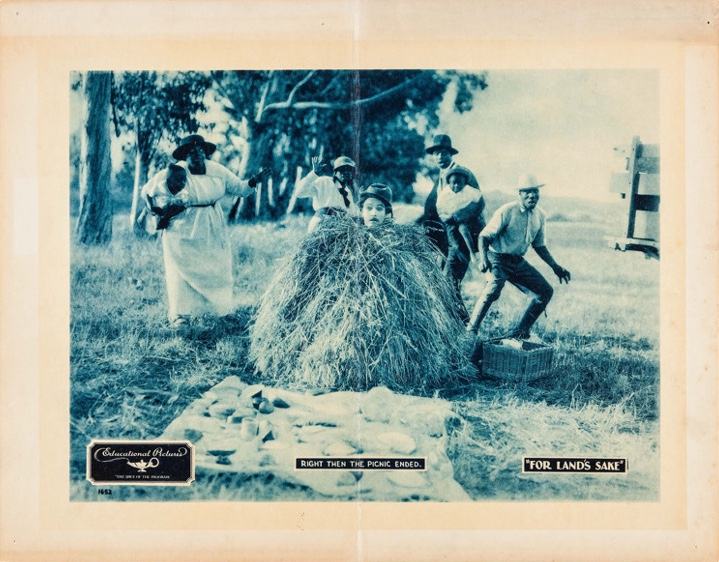
The first thing you notice is the dust—not as atmospheric garnish but as protagonist. It swirls up from the sprocket holes, invades the iris-in, powders the eyelashes of every frame until the celluloid itself seems to cough. For Land’s Sake, shot on location in the alkali flats north of Ventura, weaponizes that dust the way The Scarlet Crystal weaponized rubies: as both MacGuffin and moral litmus. Yet where the latter film treats its jewel like a fetish, here the soil is a fickle god—promising abundance at dawn and foreclosure by dusk.
Marvel Rea, remembered mostly for comic two-reelers, strips away her slapstick skin and stands before us raw as nerve. She enters the narrative hauling a carpetbag that might contain everything she owns or nothing at all; the camera never permits us a peek, so the bag becomes Schrödinger’s suitcase. Her face—sun-flushed, upper lip salted with perspiration—registers each incremental heartbreak without leaning on the histrionic semaphore so common in 1924. Watch the way she fingers a fence wire: the tremor travels from metacarpal to iris, a private seismograph registering the coming quake of eviction.
Director-screenwriter —name sadly lost to union disputes—structures the tale as a triptych of auctions: the cattle auction that opens the film, the farm-implement fire-sale at midpoint, and the climactic real-estate foreclosure where human futures are knocked down to the highest bidder. Each gavel strike lands like a guillotine. Earl Montgomery, usually a dependable buffoon, pivots into mahogany-voiced menace; his chant—“Do I hear ten more?—becomes a death rattle. The montage intercuts faces in the crowd: a boy clutching a toy tractor, an old woman counting coins in a kerchief, a sharecropper whose eyes have already departed for Oklahoma. Eisensteinian without the Soviet didacticism, the sequence builds until the camera itself seems to hyperventilate.
Comparisons to The Fatal Wedding are inevitable—both traffic in communal rituals gone predatory—yet whereas that film’s tension coils around matrimonial disaster, here the sacrament is property, the divorce is from the land. The tonal midpoint between Griffith’s agrarian nostalgia and Greed’s corrosive obsession, For Land’s Sake refuses to sanctify the farmer even as it mourns his extinction. Our sympathies are solicited, then complicated, then scorched.
Color palette: though monochrome, the tinting strategy is ideological. Day interiors bathe in sickly amber, suggesting kerosene lamps and unpaid utility bills. Night exteriors drown in cobalt so deep it feels submarine, as though the prairie were an ocean bed where barnacled deeds accumulate. The final reel, washed in sulphur yellow, heralds the dust storm that literally erases boundaries. Title cards—hand-lettered on what looks like butcher paper—appear irregularly, sometimes mid-scene, refusing the comfort of cadence. One card simply reads “And the land was weary of being owned.”
Lige Conley’s performance is kinetic counterpoint to Rea’s stoicism. He scrambles up telegraph poles to clip wires, sprints across freshly furrowed fields with surveyor’s chain whipping behind like a metallic comet tail, tumbles into irrigation ditches that swallow him to the waist. His body—all elbows and knees—articulates the absurdity of trying to grid the unruly West. In a bravura single take, he runs a half-mile alongside a moving freight in order to tack a foreclosure notice onto a boxcar; the train’s whistle punctuates the gag with existential dread.
Frank J. Coleman’s banker rivals Dickensian caricature yet transcends it through micro-gesture: the way he polishes spectacles with a silk handkerchief after denying a widow’s extension, the way he unconsciously thumbs the edge of her promissory note as though testing for serrated worth. His office—peeped through a keyhole—features a map studded with colored pins; each pin is a foreclosure, the map a blooming contagion of crimson. When Rea finally confronts him, the camera frames their standoff through that keyhole, turning the power dynamic into a voyeuristic boxing match.
The score, reconstructed by the San Francisco Silent Film Festival from a 1924 cue sheet, interlaces cowboy ballads with Bartók-like dissonance. Harmonica chords bend microtonally whenever the auctioneer’s gavel descends, a sonic premonition of loss. During the dust-storm finale, the orchestra whispers col legno strings, evoking locusts devouring sheet music. Audience members reported feeling grit between teeth—psychosomatic, sure, yet testament to the film’s visceral alchemy.
Women’s agency arrives sideways. Rea never delivers a stump speech about land reform; instead she teaches a farmer’s daughter to read by lamplight, the primer a discarded ledger. Literacy becomes revolution; numbers once weaponized against them transmute into weapons of refusal. In the penultimate scene, the girl uses that skill to forge (or un-forge?) a deed—action filmed in chiaroscuro so extreme we can’t discern whether she’s saving the homestead or condemning it. Ambiguity, here, is sharper than certainty.
Comedy sneaks in through the back door. A goat devours a stack of eviction notices, then bleats from the witness stand during a trial; a toddler crawls beneath the auctioneer’s podium and emerges wearing the man’s spats like victory medals. These gags aren’t relief—they’re gallows humor, reminders that absurdity and cruelty share bunkbeds in the American farmhouse.
Cinematographer Bert Brandt (later of The City of Illusion) shoots dawn plowing scenes with a low-flying camera strapped to a hayrake, blades whirring inches from the lens. The resultant footage converts agrarian labor into a kinetic ballet that rivals the factory montage of Man with a Movie Camera. Yet Brandt withholds romanticism: furrows resemble scars, the tractor a mechanical parasite.
Critical reception in 1924 was split along urban-rural fault lines. The New York Telegraph dismissed it as “hayseed melodrama,” while the Kansas City Star hailed it as “the first honest mirror held up to our parched visage.” Modern critics detecting proto-Fordian DNA aren’t wrong—the DNA is there but mutated, skeptical of the very frontier myths that John Ford would later elegize. Where The Cloister and the Hearth sought transcendence in hearth and chapel, For Land’s Sake finds only the next foreclosure notice nailed to the chapel door.
Restoration notes: the 2022 4K restoration by EYE Filmmuseum sourced a 35mm nitrate print discovered in a Dutch dairy barn, wedged between crates of evaporated milk. Over 8000 instances of mold were hand-painted out, frame by frame, the digital equivalent of weeding a field with tweezers. The tinting matched the original Dutch distribution notes, though American exhibitors in 1924 often swapped tints per regional preference—amber for bible-belt, rose for New England, sickly green for Pacific Northwest. Thus every contemporary screening is a palimpsest of competing cultural memories.
Legacy echoes: watch the final shot—Rea walking into a dust cloud that dissolves her silhouette—and tell me you don’t see the DNA of the closing sandstorm in Kurfürstendamm. Tell me the bank ledger imagery doesn’t prefigure the bureaucratic horror of Dog-Gone Tough Luck. Even Niniche, that confection of Parisian whimsy, borrows the notion of possessions dissolving into thin air.
Viewing recommendation: see it on the largest screen possible, preferably in a county that still schedules 4-H fairs. Let the ammonia scent of cattle drift in from adjacent barns—only then will the film’s sensory osmosis feel complete. If you can’t manage that, project it onto a white bed sheet strung between two maples, invite neighbors, serve lemonade spiked with bourbon, and watch how conversations afterward skirt the unspoken: who among your kin has already lost the old farm, who among your kin is next.
Verdict: For Land’s Sake doesn’t occupy the pastoral genre; it eviscerates it, then plants seeds in the carcass. It is both historical document and prophecy, agrarian noir and existential comedy, a film that knows the most subversive thing you can do to the idea of ownership is to let the wind carry it away. Ninety-nine years after its premiere, its central image—paper dissolving into water—feels like the birth and death of the American Dream in a single breath. See it, then spend a week unsure whether you own your shoes or they own you.
IMDb —
1934
Community
Log in to comment.