DbcultAccessing Vault...
4.4/10
Senior Film Conservator
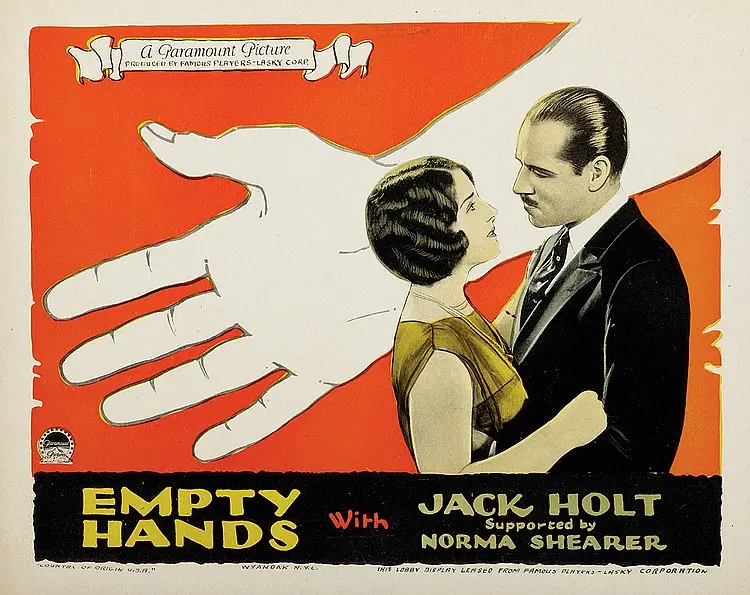
A definitive 4.4/10 rating for a film that redefined the boundaries of cult cinema. Empty Hands remains a cornerstone of transgressive art.
Cinema in the mid-1920s was often preoccupied with the friction between the lingering Victorian moralities and the burgeoning hedonism of the flapper era. Empty Hands, directed by Victor Fleming and adapted by Carey Wilson from Arthur Stringer’s prose, stands as a fascinating, almost anthropological study of this generational collision. While many films of the era, such as Gimme, focused on the fiscal and social anxieties of modern marriage, Empty Hands takes a more radical approach by stripping its protagonists of their material comforts and casting them into a wilderness that demands a fundamental reconfiguration of the self.
The narrative begins not in the wild, but in the claustrophobic luxury of the Endicott estate. Robert Endicott, played with a simmering, paternalistic anxiety by Charles Clary, is a man out of time. He views his daughter Mavis (Gertrude Olmstead) through a lens of terror, seeing her flirtatious behavior not as youthful exuberance but as a symptom of moral decay. This domestic prologue is essential; it establishes the 'full hands' of the characters—the wealth, the social standing, and the superficiality that the rest of the film seeks to dismantle. The contrast here is stark when compared to the historical grandeur of Marc'Antonio e Cleopatra, where the stakes are imperial rather than psychological.
When the action shifts to the Canadian Northwest, the cinematography undergoes a palpable transformation. The frame opens up, trading the ornate interiors for the jagged, indifferent beauty of the wilderness. It is here that we meet Grimshaw, portrayed by the ruggedly charismatic Jack Holt. Holt, an actor whose screen presence often embodied a specific brand of American stoicism, is the perfect foil for Olmstead’s initially flighty Mavis. Grimshaw is a man of utility, an engineer who understands the mechanics of the world, making him the ideal guide for a journey that quickly devolves from a recreational fishing trip into a harrowing struggle for survival.
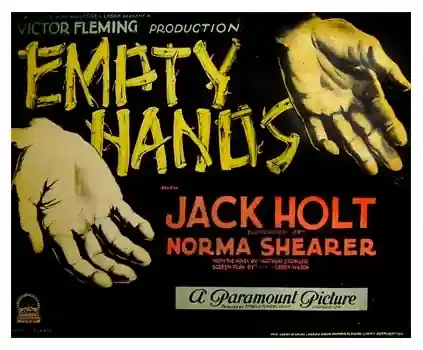
The sequence involving the rapids is a masterclass in silent era tension. Without the benefit of modern CGI, the visceral reality of the water—the churning, white-capped malevolence of the river—creates a sense of genuine peril. This isn't the choreographed action of The Fourth Musketeer; it is a raw confrontation with nature. When Mavis is swept away and Grimshaw follows, the film transitions into its second act: the Robinsonade. This trope, while common in literature, is handled here with a specific focus on the psychological erosion of class distinctions.
The basin in which Grimshaw and Mavis find themselves is a liminal space. It is inaccessible to the outside world, effectively a vacuum where the rules of 1924 society no longer apply. The title, Empty Hands, refers to their lack of tools, clothing, and resources. They are forced to return to an atavistic state, a theme that resonates with the darker undercurrents of The Greatest Question. However, where that film leans into spiritual and moral inquiries, Empty Hands is more concerned with the physical and the romantic.
The development of the romance between Grimshaw and Mavis is handled with a surprising amount of nuance. It is not a sudden, inexplicable attraction, but one forged in the heat of necessity. As they craft tools and shelter, they also craft a new understanding of one another. Mavis’s transformation from a pampered debutante to a capable survivor is the film’s most rewarding arc. Gertrude Olmstead navigates this transition with a performance that balances vulnerability with a burgeoning, grit-infused strength. It’s a far cry from the comedic lightness of Beaches and Peaches, offering instead a grounded portrayal of human adaptability.
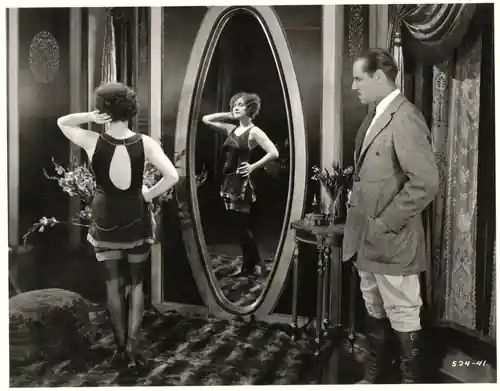
The screenplay by Carey Wilson, working from Arthur Stringer’s original story, is remarkably efficient. In an era where intertitles could often become overly florid, the dialogue here is sparse, allowing the visual storytelling to carry the emotional weight. The pacing is deliberate, allowing the audience to feel the passage of time in the basin. This isn't the rapid-fire storytelling of Casey at the Bat; it is a slow-burn narrative that respects the gravity of the characters' situation.
The supporting cast, while secondary to the central duo, provides necessary context. Charles Stevens and Ward Crane offer glimpses into the world the protagonists left behind, while the brief appearance of a young Norma Shearer serves as a reminder of the burgeoning star power within the studio system of the time. Shearer, much like the leads in Johanna Enlists, possessed a screen presence that could elevate even the most minor roles.
When comparing Empty Hands to other works of the period, its unique flavor becomes even more apparent. While The Tents of Allah utilized exotic locales for melodrama, Empty Hands uses the Canadian wilderness as a psychological crucible. It shares some DNA with Smiling Jim in its depiction of the rugged outdoorsman, but it lacks the simplistic morality of the Western genre. Instead, it offers a more complex view of how environment shapes character.
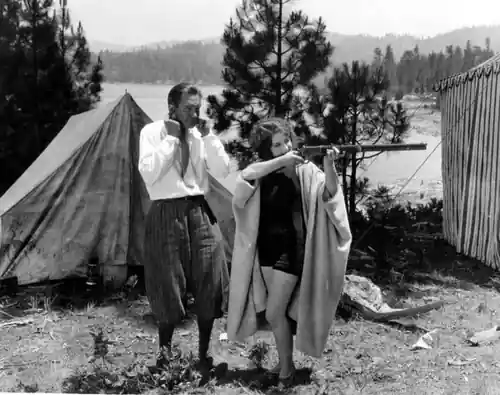
The film also touches upon themes of labor and utility, perhaps inadvertently echoing the industrial focus found in Britain's Bulwarks, No. 1: Women Munitioners of England. Grimshaw’s engineering background isn't just a character trait; it is the very thing that ensures their survival. In the basin, the ability to build and create is the highest form of currency—a stark contrast to the inherited wealth of the Endicott family. This subversion of class value is a recurring motif that gives the film its lasting intellectual weight.
The eventual rescue of the pair is almost a tragedy in itself. The return to 'civilization' means the return to the masks and social expectations they had so successfully shed. The resolution of the romance, while satisfying, is tinged with the knowledge that the purity of their connection was perhaps only possible in the vacuum of the basin. This thematic depth is what separates Empty Hands from more straightforward adventure films like $1,000 Reward.
Visually, the film is a feast of natural light and shadow. The way the camera captures the spray of the water and the dappled sunlight through the trees creates a texture that is both beautiful and menacing. The location shooting provides a sense of authenticity that studio-bound productions of the time, such as Gypsy Love or Os Fidalgos da Casa Mourisca, often lacked. There is a tactile quality to the survival scenes—the way the characters interact with the mud, the wood, and the stone—that grounds the romance in a physical reality.
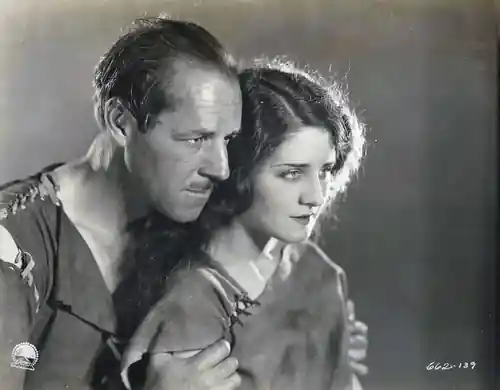
The editing, too, deserves praise. The transition from the frantic energy of the rapids to the eerie stillness of the basin is handled with a rhythmic precision that mirrors the characters' own shock and exhaustion. It is this attention to the sensory experience of the protagonists that makes Empty Hands more than just a survival story; it is an immersive psychological journey. Even when compared to international epics like Ashoka, the intimacy of Empty Hands offers a different, but equally compelling, kind of cinematic power.
In the broader context of silent cinema, Empty Hands remains a poignant reminder of the medium's ability to explore complex human dynamics through visual metaphor. The image of the two leads, standing in the wilderness with nothing but their own ingenuity, is a powerful statement on the human condition. They are stripped of the 'full hands' of society, yet they find themselves far more fulfilled in their emptiness. It is a film that challenges the viewer to consider what truly matters when the trappings of modern life are stripped away.
As we look back at the career of Jack Holt and the early work of Gertrude Olmstead, Empty Hands stands as a highlight—a film that pushed the boundaries of the 'wilderness adventure' and offered a sophisticated, if slightly cynical, look at the values of the 1920s. It is a work that deserves to be remembered not just for its technical achievements in filming the Canadian Northwest, but for its enduring insight into the fragile nature of social identity. For those interested in the evolution of the survival genre, or for those who simply enjoy a well-crafted silent drama, Empty Hands is an essential piece of cinematic history, offering a journey that is as intellectually stimulating as it is visually arresting. It invites us to follow the path of Mavis and Grimshaw, to leave behind the noise of the parlor, and to find what remains when we are left with nothing but ourselves. Much like the characters in Follow Me, we are led into a world that is both dangerous and transformative, emerging on the other side with a perspective that is irrevocably changed.
IMDb —
1921
Community
Log in to comment.