DbcultAccessing Vault...
5.6/10
Senior Film Conservator
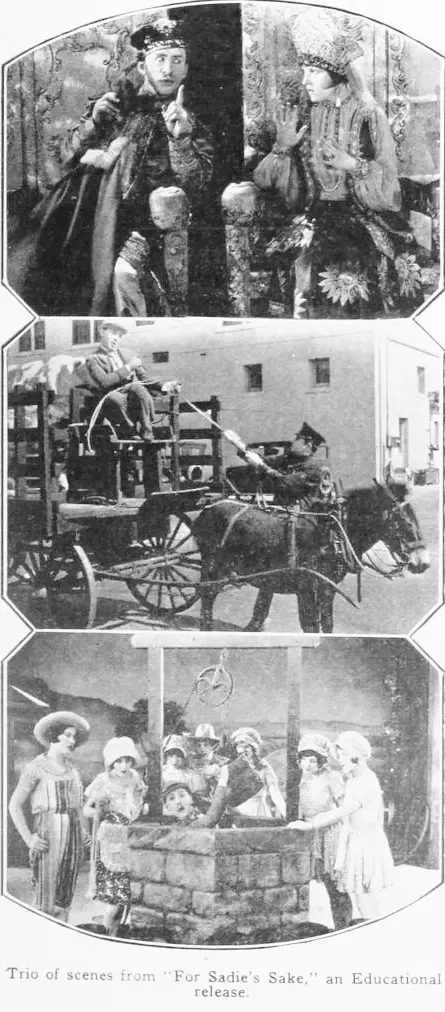
A definitive 5.6/10 rating for a film that redefined the boundaries of cult cinema. For Sadie's Sake remains a cornerstone of transgressive art.
Is 'For Sadie's Sake' worth watching today? Short answer: yes, but with significant caveats that speak to the vast gulf between early cinematic sensibilities and modern audience expectations. This 1917 silent comedy short, starring Jimmie Adams and Molly Malone, offers a fascinating, often uproarious glimpse into the nascent art of physical humor and theatrical farce, making it a delightful watch for silent film enthusiasts and students of early cinema, but likely a challenging, perhaps even bewildering, experience for those accustomed to contemporary pacing and narrative depth.
This film works because of its unbridled commitment to slapstick and the earnest, almost naive charm of its protagonist. It fails because its narrative is thin, its humor occasionally dated, and its technical execution, while competent for its era, cannot compete with later, more polished productions. You should watch it if you appreciate the historical context of cinema, enjoy broad physical comedy, or are curious about the foundations of the romantic comedy genre.
Frank Roland Conklin’s 'For Sadie's Sake' isn't just a series of events; it's a testament to the chaotic energy that defined early silent shorts. The narrative, penned by Conklin himself, feels less like a meticulously crafted story and more like a framework for a series of escalating gags. We are introduced to Wilbur, a farmer whose simplicity is almost a superpower, a man whose primary concern seems to be the well-being of his livestock, and, subsequently, the moral fortitude of a stage actress.
His journey from the pastoral serenity of the farm to the bewildering artifice of the opera house is the film’s central conceit. The immediate loss of his animals, save for the steadfast mule Sadie, isn't merely a plot device; it's a comedic statement on the unpredictable nature of life and the inherent absurdity of Wilbur’s world. This initial setback sets the tone: expect the unexpected, and prepare for a protagonist who is perpetually out of his depth yet consistently lands on his feet, or at least, on someone else's stage.
The heart of the film, however, beats within the confines of the opera house. Here, Wilbur’s simple morality clashes spectacularly with the more complex, and frankly, predatory, dynamics of the theatrical world. His impulsive defense of Sadie, the leading lady, against the advances of the manager, is a classic trope: the innocent outsider disrupting the established order. This act of chivalry isn't subtle; it's a blunt force trauma delivered with the full weight of Wilbur’s rural indignation. The subsequent escapades, involving stolen costumes, mistaken identities, and a very confused mule, are less about intricate plotting and more about maximizing the comedic potential of physical comedy and theatrical chaos.
The narrative, while straightforward, manages to layer absurdity upon absurdity. Wilbur as the Czar, then as a cow, then as himself, all in rapid succession, speaks to a direct, almost vaudevillian approach to storytelling. It’s a film that doesn't waste time on exposition; it throws its protagonist into the deep end and lets the gags unfold. The ending, with Wilbur and Sadie driving off in a sleigh drawn by the mule, is a wonderfully quaint resolution, a return to a simpler, more authentic world, leaving the theatrical pandemonium behind. It's an ending that cements the film's gentle, if boisterous, spirit.
Frank Roland Conklin, as both writer and director, demonstrates a clear understanding of the silent comedy short format. The pacing of 'For Sadie's Sake' is relentless, a rapid-fire succession of events designed to elicit laughs through visual gags rather than verbal wit. There's little room for lingering shots or character introspection; the film moves with an almost frantic energy, mirroring the chaotic journey of its protagonist.
Consider the sequence where Wilbur first enters the Opera House. The immediate transition from the outdoor world to the bustling backstage environment is handled with brisk efficiency. Conklin doesn't dwell on the logistics; he plunges Wilbur into the thick of it, allowing the audience to experience the disorientation alongside him. This directorial choice keeps the energy high, crucial for maintaining engagement in a film without spoken dialogue.
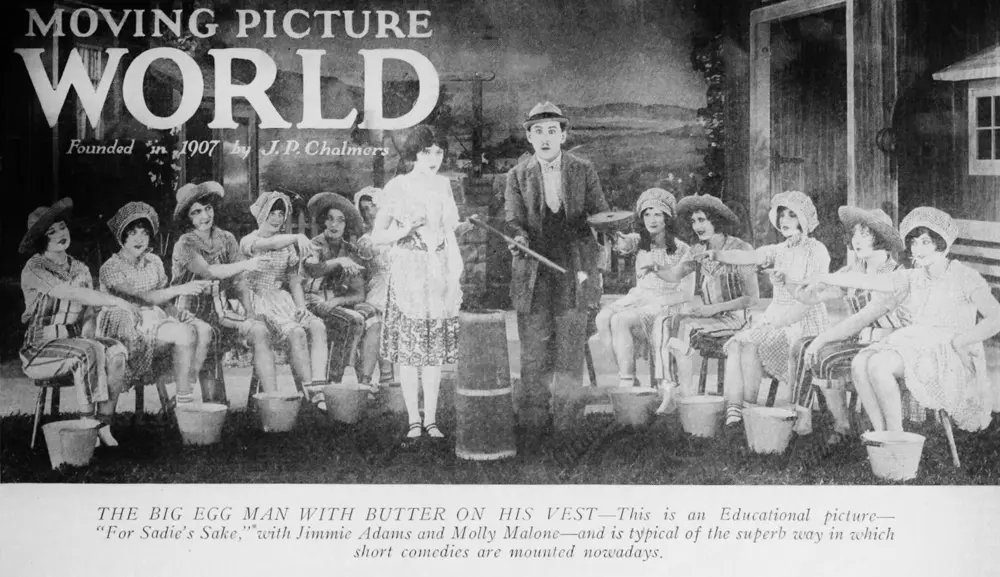
The theatrical setting provides a rich canvas for Conklin's direction. The stage itself becomes a character, a place of grand illusions and even grander blunders. Wilbur's repeated attempts to blend in, first as the Czar and then as a bovine, are expertly choreographed. The sight gags are simple but effective, relying on the audience's immediate recognition of the absurdity. For instance, the image of Wilbur, a farmer, suddenly embodying the regal Czar, complete with an oversized beard, is inherently humorous and is played for maximum comedic effect, highlighting the stark contrast between his true identity and his adopted persona.
Conklin's direction also utilizes the full potential of physical comedy. Jimmie Adams, as Wilbur, is constantly in motion, whether he's knocking down the manager, scurrying through backstage corridors, or struggling in a cowhide costume. The camera often frames these actions in a way that emphasizes the physicality, ensuring that every stumble, every chase, every disguise is clearly communicated. The film is a masterclass in visual storytelling, where every gesture, every expression, and every prop serves a comedic purpose.
The performances in 'For Sadie's Sake' are a testament to the unique demands of silent cinema. Actors had to convey entire emotional arcs and comedic beats through exaggerated facial expressions, precise body language, and often, frenetic movement. Jimmie Adams, as Wilbur, is the undeniable comedic engine of the film, embodying the archetype of the earnest, slightly bewildered everyman thrown into extraordinary circumstances.
Adams’s portrayal of Wilbur is a study in committed physical comedy. He’s not just reacting; he’s actively engaging with the chaos around him. His initial confrontation with the manager, for example, isn't a subtle push; it's a full-bodied, almost theatrical shove, clearly communicating his indignation. Later, his attempts to stay in character as the Czar, despite the obvious impostor status, are genuinely funny, relying on his wide-eyed innocence and clumsy attempts at regal bearing. His comedic timing, even without sound, is evident in the way he pauses for a beat before an action or reacts with a delayed, bewildered expression.
Molly Malone, as Sadie, the leading lady, provides a charming counterpoint to Adams's antics. Her role is largely that of the damsel in distress, but she carries it with a grace and a subtle expressiveness that prevents her from becoming a mere prop. When Wilbur first defends her, her reaction isn't just fear; it's a blend of surprise, gratitude, and perhaps a flicker of amusement at her unlikely rescuer. She’s not just beautiful; she projects a warmth that makes her a believable object of Wilbur's chivalry.
And then there's Sadie the Mulie. While not an actor in the traditional sense, her presence is crucial. The mule acts as a grounding force, a constant reminder of Wilbur’s rural origins amidst the theatrical frenzy. Her transformation into a 'cow' is one of the film's most inventive gags, and the mule's stoic, almost indifferent demeanor throughout the ordeal adds another layer of deadpan humor. It’s an unconventional observation, but the true star isn't Adams or Malone, but the sheer, unadulterated chaos, personified by Sadie the Mulie's unwavering presence.
The technical aspects of 'For Sadie's Sake' offer a valuable window into the filmmaking practices of the late 1910s. The cinematography, while basic by today's standards, is functional and clear. The camera is largely static, capturing the action in wide shots that allow the physical comedy to unfold without interruption. Close-ups are rare, used sparingly to emphasize a particular expression or a key prop, such as the Czar's beard.
The lighting is straightforward, typically flat and bright, ensuring all elements within the frame are visible. There's little in the way of atmospheric lighting or complex camera movements, which is entirely consistent with the technology and aesthetic conventions of the period. The focus is squarely on the performances and the gags, rather than on visual artistry for its own sake.
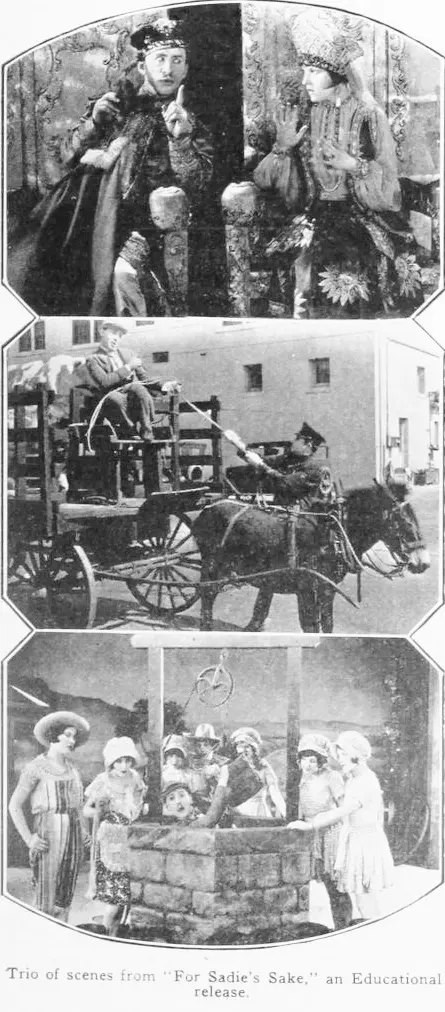
Production design, particularly within the opera house, speaks to the theatrical roots of cinema. The sets are functional, designed to facilitate the action rather than create immersive worlds. The backstage areas feel authentic, with props and costumes scattered about, contributing to the sense of a working theater. The stage sets for the Russian scene and the country scene, while simple, are effective in establishing the context for Wilbur's various disguises. The Russian costumes, in particular, are elaborate enough to be believable within the theatrical context, making Wilbur's appropriation of the Czar's attire all the more humorous.
The external shots, particularly the opening farm scene and the final sleigh ride, provide a charming contrast to the interior chaos. These moments, brief as they are, ground the film in a sense of reality, even if that reality is quickly subverted by the ensuing theatrical madness. They remind us of Wilbur's simple origins and his eventual return to them, completing the journey from farm to stage and back again.
'For Sadie's Sake', beneath its layers of slapstick, touches upon some surprisingly resonant themes. At its core, it's a story of naive chivalry, a timeless ideal that sees the pure-hearted hero defending the vulnerable. Wilbur, the farmer, represents a simpler, perhaps purer, moral code, one that is affronted by the manager's boorish behavior. His intervention is not calculated; it's an instinctive response to injustice, a theme that continues to resonate in storytelling across genres.
The film also subtly explores the clash between different social strata and environments. The farm, with its animals and open spaces, represents an untainted world. The opera house, by contrast, is a place of artifice, performance, and hidden machinations. Wilbur’s repeated expulsions from this world symbolize his inability to truly integrate, his inherent 'otherness'. He is too genuine, too straightforward, for the duplicity of the stage. Yet, it is this very 'otherness' that makes him endearing and ultimately successful in winning Sadie’s affection.
There's a strong, debatable opinion to be made here: the film, perhaps inadvertently, critiques the superficiality of the urban theatrical world through Wilbur's eyes. The elaborate costumes, the dramatic performances, and the backstage politics are all contrasted with Wilbur's straightforward actions and the simple, honest companionship of his mule. The humor, while broad, possesses a certain timeless charm that often eludes more 'sophisticated' comedies, because it’s rooted in universal human reactions to absurdity and injustice.
Absolutely, but with a clear understanding of its historical context. 'For Sadie's Sake' is a delightful, if brief, excursion into early 20th-century slapstick. It offers a valuable glimpse into the foundational techniques of comedic filmmaking and the charming, often exaggerated, performances of the silent era. It works. But it’s flawed. For those who appreciate the evolution of cinema or simply enjoy a good, old-fashioned physical comedy, it's an enriching experience.
However, if you're seeking intricate plots, character development, or modern comedic sensibilities, this short might feel rudimentary. Its charm lies in its simplicity and its energetic commitment to its gags. It's a relic. But a charming one. It's a film that demands a certain patience and a willingness to meet it on its own terms, but rewards that effort with genuine laughs and a nostalgic warmth.
'For Sadie's Sake' is a vibrant, if unsophisticated, piece of early silent comedy that offers more than just historical curiosity. It's a spirited romp that showcases the raw energy of nascent cinema and the enduring appeal of a simple man doing his best in a bewildering world. While it won't resonate with every contemporary viewer, its unpretentious charm and committed performances, particularly from Jimmie Adams, secure its place as a delightful, if minor, entry in the annals of comedic film. It's a delightful example of how early filmmakers learned to make audiences laugh with little more than a camera, some actors, and a very versatile mule. If you're looking for a lighthearted journey back in time, and don't mind a bit of theatrical chaos, this short film, much like Wilbur himself, might just win you over with its earnest spirit. Consider pairing it with other early shorts like A Hickory Hick for a broader understanding of the era's comedic landscape.
IMDb 6.6
1923
Community
Log in to comment.