DbcultAccessing Vault...
5.8/10
Senior Film Conservator
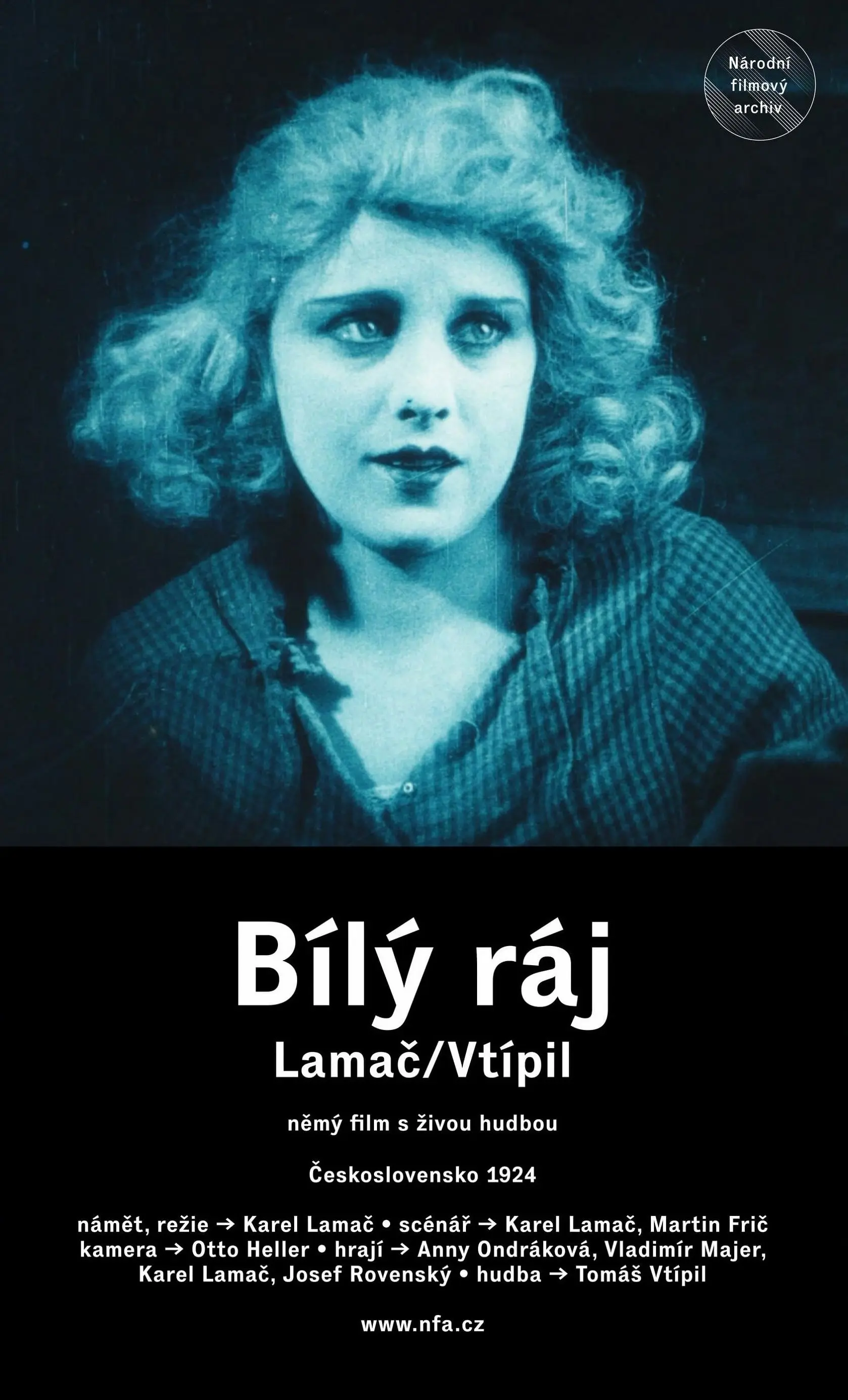
A definitive 5.8/10 rating for a film that redefined the boundaries of cult cinema. White Paradise remains a cornerstone of transgressive art.
Stepping back into the cinematic tapestry of 1924, one encounters a fascinating intersection of burgeoning artistry and profound storytelling. Among the gems unearthed from this fertile period is Karel Lamac and Martin Frič’s White Paradise (Bílý ráj), a Czech silent film that, despite its age, resonates with an emotional clarity and narrative urgency that transcends its era. It’s a work that demands more than a cursory glance; it invites an immersive journey into a world where innocence is fragile, justice is a labyrinth, and love, in its purest form, becomes an act of defiant heroism. This isn't just a film; it's a testament to the power of visual narrative in an age before synchronized sound, a delicate yet potent exploration of human resilience.
The film’s central conceit, a young man unjustly accused and the brave woman who endeavors to clear his name, is a classic trope, yet Lamac and Frič imbue it with a remarkable freshness. Gustav Machatý, later to achieve international renown as a director, here portrays the beleaguered protagonist with a quiet dignity, his expressive eyes conveying a poignant blend of bewilderment and despair. His arrest for a crime he didn’t commit is not merely a plot device; it’s a searing indictment of hasty judgment and the chilling ease with which a life can be derailed by circumstantial evidence and societal prejudice. The narrative unfolds with a gripping intensity, drawing the viewer into the protagonist's plight, creating an immediate, visceral connection to his suffering. It's a testament to the silent era's ability to communicate complex emotions through gesture, expression, and the careful framing of the human face.
At the heart of White Paradise, however, beats the vibrant spirit of Anny Ondra. As the daughter of the local tavern owners, she embodies a captivating blend of youthful exuberance and steely determination. Ondra, already a rising star in Czech and German cinema, delivers a performance that is nothing short of electrifying. Her screen presence is magnetic, a whirlwind of emotion conveyed through every nuanced glance, every frantic gesture, every tear that glistens in the unforgiving black and white. She doesn't just act; she radiates, pulling the audience into her character’s desperate quest with an almost palpable force. It's a masterclass in silent film acting, showcasing her incredible ability to articulate complex inner turmoil without uttering a single word. Her portrayal is a vivid reminder of why she captivated audiences across Europe, a luminous figure capable of commanding the screen with sheer charisma and emotive power.
Ondra's character is not a passive damsel in distress, but an active agent of change, a testament to female agency even in an era often depicted as restrictive. Her decision to embark on the perilous journey to prove her beloved's innocence is fraught with danger and social ostracism, yet she faces it with an unwavering resolve. This portrayal stands in fascinating contrast to some of the more conventional female roles of the time, aligning her more with the spirited protagonists found in films like Comin' Thro' the Rye (1923), where women often defied societal expectations for love or justice. Ondra's performance elevates the film beyond a simple melodrama, imbuing it with a sense of urgent, relatable human struggle. Her expressive face becomes a canvas for hope, fear, and relentless dedication, drawing the audience into her emotional vortex.
Karel Lamac and Martin Frič, two giants of early Czech cinema, demonstrate a remarkable synergy in their co-direction. Their collaboration results in a film that is both technically proficient and emotionally resonant. The pacing is judiciously handled, building tension incrementally, allowing moments of quiet reflection to punctuate the escalating drama. They employ a visual language that is both poetic and pragmatic, utilizing close-ups to emphasize emotional states and wider shots to establish the oppressive atmosphere of the provincial setting. The cinematography, though characteristic of its time, showcases a keen understanding of light and shadow, using chiaroscuro effects to heighten the dramatic impact of key scenes. The directors deftly navigate the complexities of their narrative, ensuring that every visual cue, every intertitle, contributes to the overarching story of injustice and fervent hope.
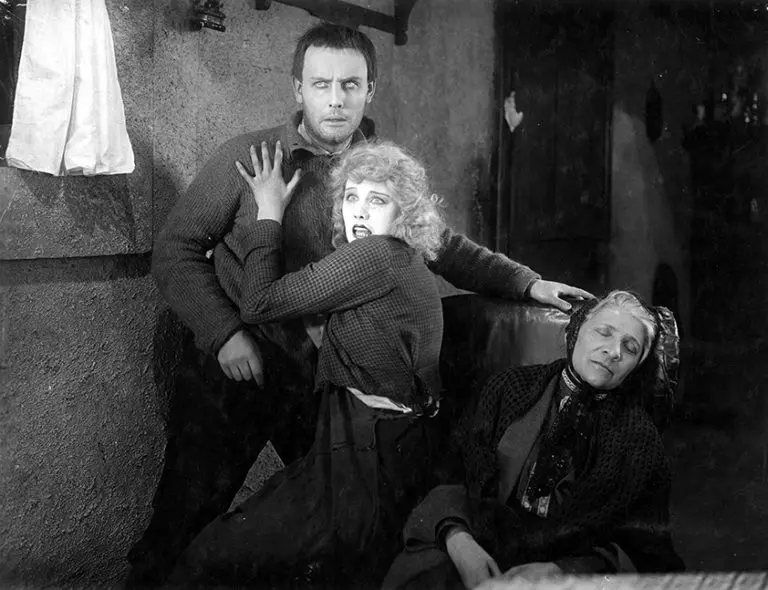
The world they construct feels tangible, from the bustling tavern scenes, bustling with character actors like Karel Schleichert and Marie Veselá, to the stark, unforgiving legal environments. The supporting cast, including Jan W. Speerger and Vladimír Majer, contribute to the film’s rich tapestry, each performance adding another layer of authenticity to the provincial drama. Even in smaller roles, the directors manage to extract performances that feel genuine and impactful, populating their world with believable figures whose reactions to the central crisis further amplify its stakes. This attention to detail and ensemble work ensures that the film is not merely a vehicle for its stars but a fully realized cinematic experience.
Beyond the captivating performances and expert direction, White Paradise delves into themes that remain acutely relevant. The fragility of justice, the power of community (both for good and ill), and the unyielding strength of love are explored with a sincerity that avoids sentimentality. The film’s portrayal of a flawed legal system brings to mind other silent era dramas focused on judicial error, such as Der Eid des Stephan Huller, which similarly scrutinizes the devastating impact of wrongful accusations. The struggle for truth against overwhelming odds is a universal narrative, and White Paradise articulates it with a particular grace and urgency.
The romantic thread, while central, is not presented as a saccharine fantasy but as a driving force for heroic action. The daughter's love is not passive; it is an engine for audacious bravery, propelling her into a dangerous world to save her beloved. This active, empowered depiction of love finds echoes in films like The Right to Be Happy, where personal happiness is fought for, not merely received. The film's emotional landscape is rich and varied, shifting from moments of intense despair to exhilarating hope, always anchored by the compelling performances of its leads. It's a narrative that understands the human heart's capacity for both profound suffering and extraordinary resilience.
The aesthetic of White Paradise is a fascinating blend of realism and expressionistic touches, reflecting the broader currents in European cinema of the 1920s. While not as overtly stylized as some German Expressionist works, there are moments where the visual composition and the use of shadow create an atmosphere of psychological tension that hints at deeper emotional states. The film’s ability to convey complex feelings and narrative twists without spoken dialogue is a powerful reminder of the silent era’s unique strengths. It forces the audience to engage more deeply with visual cues, with the subtle shifts in an actor’s gaze, and with the evocative power of the musical accompaniment (which, though absent in a modern viewing unless specifically restored, was an integral part of its original presentation).
In an age saturated with sound and dialogue, returning to a film like White Paradise is a refreshing and enriching experience. It challenges contemporary viewers to appreciate cinema on a different plane, to connect with characters and narratives through a purely visual and emotional language. It’s a powerful demonstration of how fundamental cinematic principles – framing, editing, performance – can communicate universal truths with timeless efficacy. The film stands as a vibrant testament to the ingenuity and artistic ambition of early Czech filmmakers, solidifying its place not just as a historical artifact, but as a compelling piece of enduring cinema. It invites us to reflect on our own perceptions of justice and the lengths to which individuals will go for those they love, proving that some stories, told with enough heart, truly are eternal.
The film's exploration of societal pressures and individual defiance also brings to mind the social commentary often woven into silent films like The Social Code or The Burning Question, where characters frequently contend with moral dilemmas imposed by their environment. However, White Paradise manages to distill these grand themes into a deeply personal struggle, making the stakes feel intimately human. The journey of the tavern keeper's daughter is not just a fight for justice, but a fight for the very soul of her community's moral compass. It's a film that quietly champions the underdog, the individual who dares to challenge the prevailing narrative, and in doing so, reminds us of the profound impact one person can have. It is a cinematic experience that, despite its century-old vintage, feels remarkably fresh and relevant, a true 'white paradise' of silent film artistry.
IMDb 5.9
1932
Community
Log in to comment.