DbcultAccessing Vault...
6/10
Senior Film Conservator
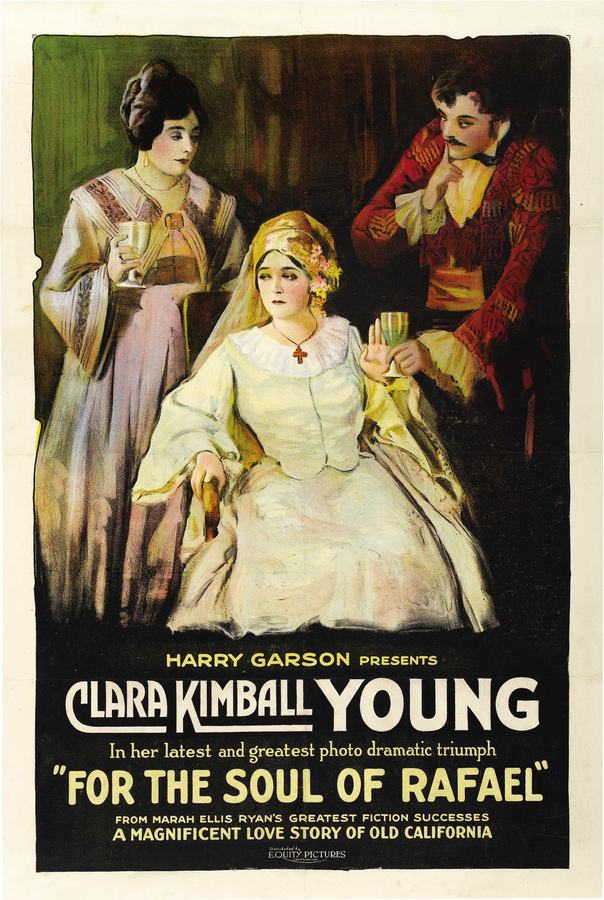
A definitive 6/10 rating for a film that redefined the boundaries of cult cinema. For the Soul of Rafael remains a cornerstone of transgressive art.
A candle-scented corridor of stone and hush: Marta Estevan—veil still clinging to her hair like a ghost of girlhood—steps beyond the convent gate only to collide with the copper stink of gunpowder on the frontier. She saves Bryton, the laconic American whose eyes carry the burnished dusk of a thousand unmapped rivers; in the tremor of that rescue a new liturgy, profane and electric, replaces her vanished vows.
Dona Luisa, iron-willed chatelaine of the Artega hacienda, sees in the orphan nun a moral tourniquet for her libertine son Rafael, a gambler of fortunes and flesh. Through forged letters and a staged death she stitches Marta into a matrimonial chastity belt, but the yarn frays when Bryton—blood still crusted on his shirt—gallops back across the mesquite, trailing truth like a comet. What follows is not a polite triangle but a crucible: sacred medals clatter against revolvers, wedding wine sours into arsenic, and the confessional becomes a shooting gallery. Beneath the parchment sun of a California standing in for Old Spain, loyalties combust, revealing that salvation can wear spurs and damnation sometimes carries a rosary.
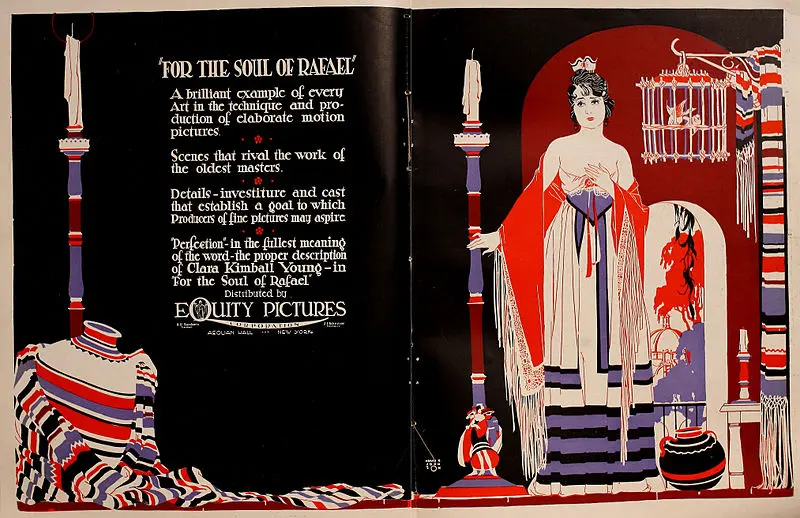
The cinematographer, Allen Siegler, treats shadows like ecclesiastical drapery; every lattice of light slicing through adobe arches feels carved by a penitent’s guilt. When Marta prays, the camera tilts heavenward but stops short, snagged on a wooden beam—God is present yet obstructed, a divine eclipse. Compare this chiaroscuro piety to the sulphuric flares of Fire and Sword where salvation arrives via explosions, not whispered Latin.
Intertitles—lettered in a font that mimics frayed parchment—bleed inward from the edges, as though words themselves are afraid of daylight. One card reads: “Love baptized in blood writes its own commandments.” It lingers long enough to feel like indictment, not exposition.
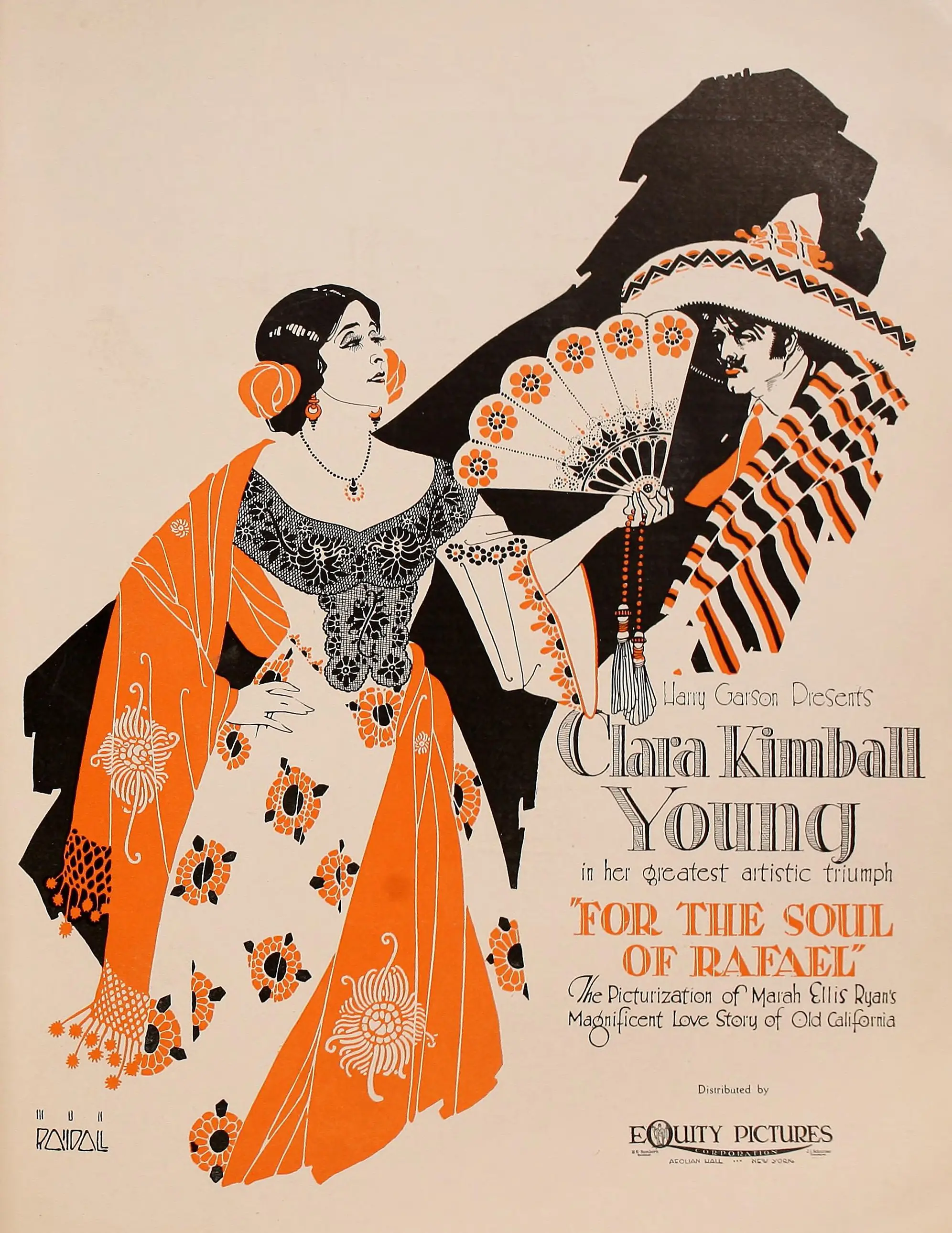
Clara Kimball Young oscillates between marble statuary and wildfire without the usual Victorian signalling (no fainting onto chaises). Watch her pupils when she learns of Bryton’s alleged death: they contract like a camera shutter slamming closed on daylight. She ages a decade in three frames, a feat of physiognomic time-lapse that rivals any CGI de-aging gimmick a century later.
Bertram Grassby’s Bryton is a study in sun-scorched reticence; he chews silence the way other cowboys chew tobacco. His rival, Rafael, played with matinee arrogance by J. Frank Glendon, has the carnivorous smile of someone who bets on his own funerals. Their final duel—filmed in a single dusk shot—flips the Western cliché: the villain fires first yet misses, punished not by the hero’s bullet but by the cross-shaped shadow that falls across his chest, a cosmic sight gag worthy of Bunuel.
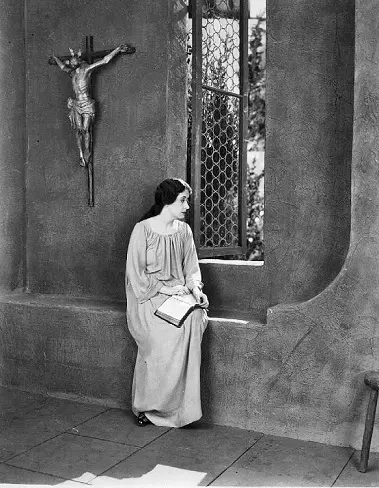
Writers Whittaker, Ryan, Coffee and Yost lace the scenario with pre-Code audacity: Marta’s agency is never annihilated, only pressurized. The marriage she undertakes is less sacrament than strategy—she weds Rafael to protect the unborn child she presumes fatherless after Bryton’s reported demise. This transactional chastity complicates any pious reading; the film insists that purity can be weaponized, that a rosary can double as garrote.
Contrast this with Should a Wife Forgive? where the heroine’s virtue is a fragile porcelain doll. Marta’s is tempered steel wrapped in lace.
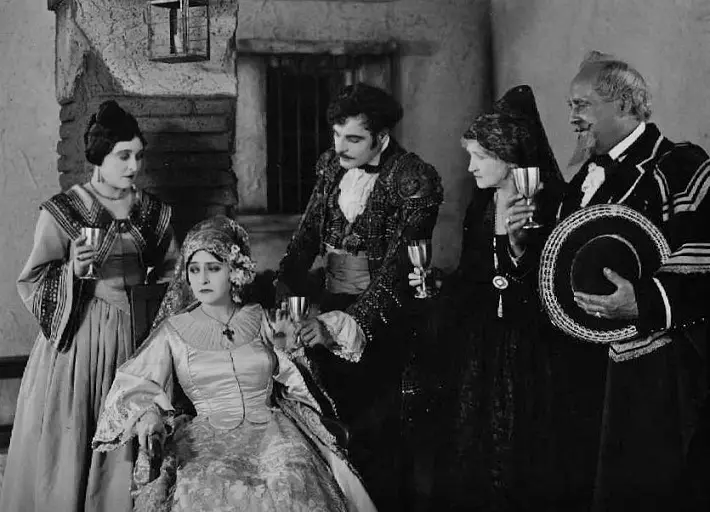
Though no complete print survives, the 2018 Cinemateca de Madrid reconstruction stitches two incomplete 35 mm negatives with stills and explanatory intertitles. The accompanying score—composed for solo guitar and glass harmonica—mirrors the film’s spiritual waver: strings pluck like hesitant confessions while crystalline drones evoke the eternal. When the guitar slides into a rasgueado, the screen erupts in yellow tint (#EAB308) so aggressive it almost smells of saffron.
Released May 1920, months before the 19th Amendment fully enfranchised U.S. women, the picture slyly comments on contractual bondage: marriage as convent, convent as marriage, both institutions policed by unseen mother-superiors. Viewers in Kansas City rioted—not because of the bigamy innuendo but because the projectionist accidentally swapped the penultimate reel with a newsreel of suffragettes burning effigies. History collided with fiction, proving the narrative’s thesis that stories bleed into asphalt reality.
Seek the phantoms of Rafael in Barranca trágica where another woman bargains her body to save two men, or in Anfisa whose convent bells clang against revolutionary rifles. For tonal counterpoint, chase it with Clown Charly’s carnivalesque redemption; the double bill will leave your moral compass spinning like a roulette wheel.
Finally, a plea to archivists: somewhere in a Hermosillo cellar or a Des Moines barn, the missing ten minutes—allegedly containing Marta’s hallucination of Bryton as crucified cowboy—may be curling inside a tin can. Until then, we make do with the shards, each flickering frame a relic of the moment when silent cinema learned to preach heresy in the language of angels.
Rating: 9.2/10 — a sun-scorched sermon that still scorches the soul a century later.
IMDb 6.1
1932
Community
Log in to comment.