DbcultAccessing Vault...
Cult Review
Senior Film Conservator

Ah, the silent era! A time when narratives unfurled with a grand, almost theatrical sweep, relying on the sheer power of visual storytelling and the dramatic prowess of its performers. And in this rich tapestry, a film like "His Mother's Boy" emerges, not just as a relic of a bygone cinematic age, but as a surprisingly potent exploration of identity, courage, and the often-unforeseen catalysts for personal transformation. Forget your modern blockbusters for a moment and settle in, because we're about to delve into a tale that, despite its vintage, speaks volumes about the journey from sheltered innocence to hard-won heroism. It's a journey many of us, in our own ways, navigate, making Matthew Denton's saga remarkably resonant.
Our story commences in the hushed, almost somnolent tranquility of a New England village, a place where tradition clings to every cobblestone and reputations are meticulously maintained. Here we meet Matthew Denton, a young man whose very existence seems to be an extension of his widowed mother's boundless, yet ultimately stifling, affection. His father, a figure of considerable local stature, had, in his later years, championed the Centipede Company, urging his fellow townsfolk to invest their hard-earned savings in its promising Texas oil ventures. A man of repute, certainly, but perhaps a touch too optimistic. Matthew, meanwhile, is ensconced in a gilded cage of maternal overprotection. His mother, a woman whose love knew no bounds but also no limits to its possessiveness, effectively insulated him from the rough-and-tumble of youthful camaraderie. He was, to put it mildly, kept on a very short leash. The inevitable consequence? A young man of profound timidity, a stranger to the robust independence that defines burgeoning masculinity, and thus, burdened with the ignominious moniker, "his mother's boy."
This initial setup is crucial. It paints a vivid portrait of a character defined by external forces, a blank canvas awaiting the transformative brushstrokes of experience. It highlights the insidious nature of well-intentioned but ultimately debilitating care, a theme that echoes in other narratives of the era. Compare, for instance, the sheltered upbringing of the protagonist in Children of the Stage; or, When Love Speaks, where artistic aspirations clash with familial expectations, or even the initial vulnerability seen in The Lad and the Lion, though Matthew’s confinement is more psychological than physical. The village, in its genteel judgment, had already cast Matthew in a role he seemed destined never to escape.
The fragile peace of their New England existence is spectacularly shattered by a rather common, yet utterly devastating, occurrence: financial ruin. News arrives that the Centipede stock, once a beacon of prosperity, is now teetering on the precipice of worthlessness, its wells having mysteriously lost their productive vigor. No dividends, only despair. The townsfolk, their investments evaporated, descend upon Matthew's widowed mother, a delegation of anger and betrayal, their voices rising in a cacophony of denunciation against her late husband. It's a scene fraught with raw emotion, a public shaming that cuts to the very core of their family's honor.

It is in this crucible of familial disgrace that a flicker of the man Matthew might become ignites. Overhearing the tirade, witnessing his mother's profound humiliation, something within him stirs. He steps forward, not yet a hero, but a son fiercely protective of his lineage. His declaration is bold, perhaps even naive: no one shall lose a penny. He, Matthew Denton, "his mother's boy," will journey to Texas, brave the unforgiving oil fields, and personally recoup every lost investment. This isn't just a promise; it's a gauntlet thrown down, a desperate bid for redemption not just for his family name, but for his own nascent sense of self. It's a moment of profound courage, a stark contrast to his earlier depiction, reminiscent of the youthful idealism seen in films like A Boy and the Law, where a young protagonist confronts societal injustice, albeit in a different context. The journey south isn't merely geographical; it's a pilgrimage towards an unknown, yet utterly necessary, self-discovery.
The narrative then executes a dramatic, exhilarating shift, transporting us from the prim confines of New England to the raw, untamed dynamism of a Texas oil town. This isn't just a change of scenery; it's a seismic shift in atmosphere, a plunge into a world utterly alien to Matthew's sheltered upbringing. Imagine the cacophony: the ceaseless thrum of machinery, the boisterous chatter of roughneck workers, the omnipresent scent of crude oil mingling with sweat and ambition. The town itself is a testament to expediency, a hastily constructed collage of rudely fashioned hotels, bustling bars—the epicenters of social life—and a transient population drawn by the siren call of black gold. This is the melting pot where fortunes are made and lost, where character is forged in the fires of hard labor and harder living. It's a stark contrast to the quiet New England village, a world where the laws of polite society yield to the urgent, often brutal, demands of the frontier.
Matthew, shedding his tailored suits for rough work clothes, begins his arduous career as a workman in the oil wells, his hands, once accustomed to leisure, now calloused by the relentless toil. He finds lodging at Mrs. Glenny's boardinghouse, a hub of activity and a microcosm of the town itself. And it is here, amidst the communal meals and the constant coming and going of workers, that he encounters Mabel Glenny, the spirited daughter of the house. Mabel represents everything Matthew has never known: independence, resilience, and a certain earthy charm born of her environment. Their burgeoning connection is a testament to the universal human need for companionship and love, even amidst the most challenging circumstances. This new environment, with its inherent dangers and opportunities, is designed to test Matthew, to strip away his old identity and force him to confront the man he is destined to become.
However, this burgeoning romance and Matthew's honest toil are not without their shadows. The very reason for his presence in Texas—the Centipede Company's woes—is revealed to be no accident of fortune, but a deliberate act of sabotage. Tom Glenny, Mabel's father, the town drunkard, is the unwitting (or perhaps, desperate) perpetrator. Driven by the insatiable craving for liquor money, he has been illicitly tapping the Centipede line, diverting its precious flow into another concern. But Tom is merely a pawn in a larger, more sinister game. Banty Jones, the quintessential town bully, a man whose brute force and intimidation tactics hold sway over many, is the true architect of this scheme, having paid Tom to execute the theft. Banty, too, is a resident of Mrs. Glenny's boardinghouse, a constant, menacing presence.
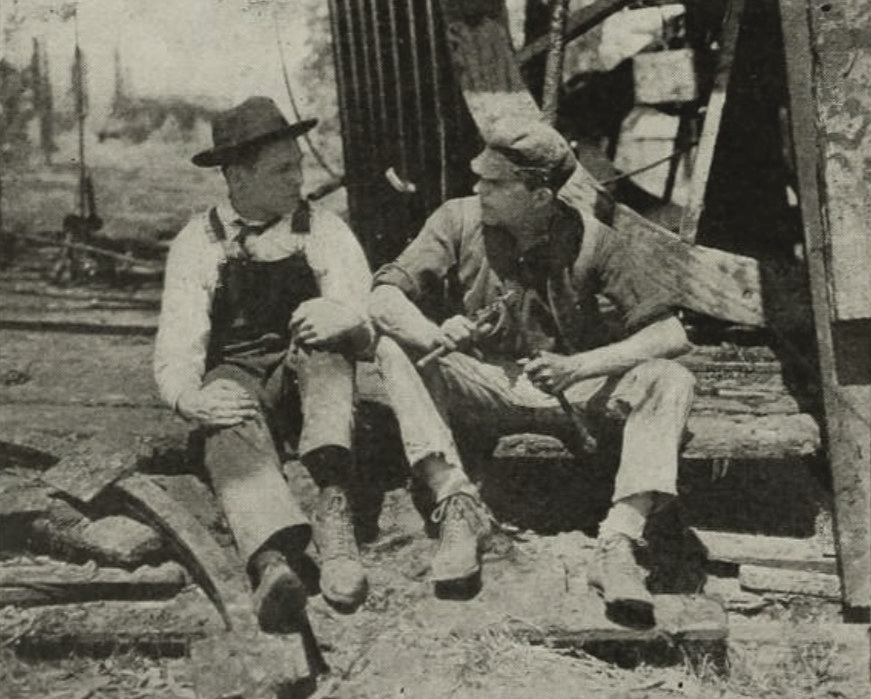
The plot thickens as Banty, a man accustomed to getting what he wants, sets his sights on Mabel. He desires her, perhaps as a trophy, perhaps as a means to solidify his local dominance. But Matthew, despite his inherent timidity, has already captured Mabel's heart. The sight of Mabel proudly displaying Matthew's engagement ring is a direct affront to Banty's ego, an unforgivable challenge. His response is swift and brutal: Matthew is given 24 hours to leave town, or face the business end of Banty's gun. Here, Matthew's ingrained diffidence resurfaces with devastating clarity. He cowers, his innate timidity paralyzing him in the face of Banty's verbal assaults. This moment, a vivid depiction of his internal struggle, is beautifully rendered through the silent film's exaggerated yet effective acting. Mabel, a woman of spirit and expectation, is utterly disgusted. Her disappointment is palpable; the engagement ring is returned, the engagement called off. It is a crushing blow, a public humiliation that threatens to send Matthew spiraling back into the "mother's boy" he swore to leave behind. This scene, in its raw depiction of a man failing to rise to a challenge, stands in stark contrast to the resolute character in The Patriot, who embodies unwavering conviction, or even the desperate choices made in Temptation, where moral fortitude is constantly tested.
But Matthew's journey is far from over. The humiliation, the loss of Mabel's respect, acts as a slow-burning fuse. He soon discovers the parallel pipelines, the undeniable evidence of Tom Glenny's illicit activities. That very night, he witnesses Tom about to tap the Centipede line once more, confirming his suspicions. This isn't just a discovery; it's a moral imperative. Matthew, spurred by a sense of duty and perhaps a desperate hope for redemption in Mabel's eyes, hurries to the telegraph office, notifying the president of the Centipede Company of his findings. It's a small act of defiance, but a significant step away from his former passivity.
The true metamorphosis, however, is yet to come, and it is triggered by a revelation of profound emotional weight. Matthew overhears Banty Jones denouncing Tom Glenny for his failure to tap the line. In that moment, the pieces click into place. He realizes that Mabel's father, the man he had come to pity, was not an evil mastermind, but merely a tool, a desperate man exploited by the true villain. This realization, coupled with the lingering affection for Mabel and a burgeoning sense of justice, ignites an unprecedented ferocity within the hitherto timid and shrinking boy. It's a sudden, visceral awakening, a shedding of the "mother's boy" skin. The transformation is complete and breathtaking. When Jones, in his arrogant self-assurance, attempts to assault Matthew, he is met not with cowering submission, but with a torrent of returned blows, delivered with such effectiveness that the battle is swiftly concluded, and decisively in Matthew's favor. This isn't just a physical victory; it's a psychological triumph, a declaration of independence, a man finally claiming his own agency. It's a classic hero's journey arc, reminiscent of many adventure tales, but rendered with a particular poignancy given Matthew's starting point.
From this pivotal confrontation, the story accelerates into a series of exciting episodes, each serving to solidify Matthew's newfound courage and demonstrate his capabilities. The vague "series of exciting episodes" in the plot synopsis leaves much to the imagination, but in the context of silent film storytelling, it implies thrilling chases, perhaps further confrontations, and ultimately, the triumph of good over evil, diligence over corruption. We can envision Matthew, no longer the reluctant participant, but an active, decisive force, navigating the dangers of the oil fields, ensuring justice for the Centipede Company investors, and, no doubt, winning back Mabel's admiration and love. The story ends, predictably for its era, on a note of happiness and resolution, a testament to the enduring power of perseverance and moral fortitude.
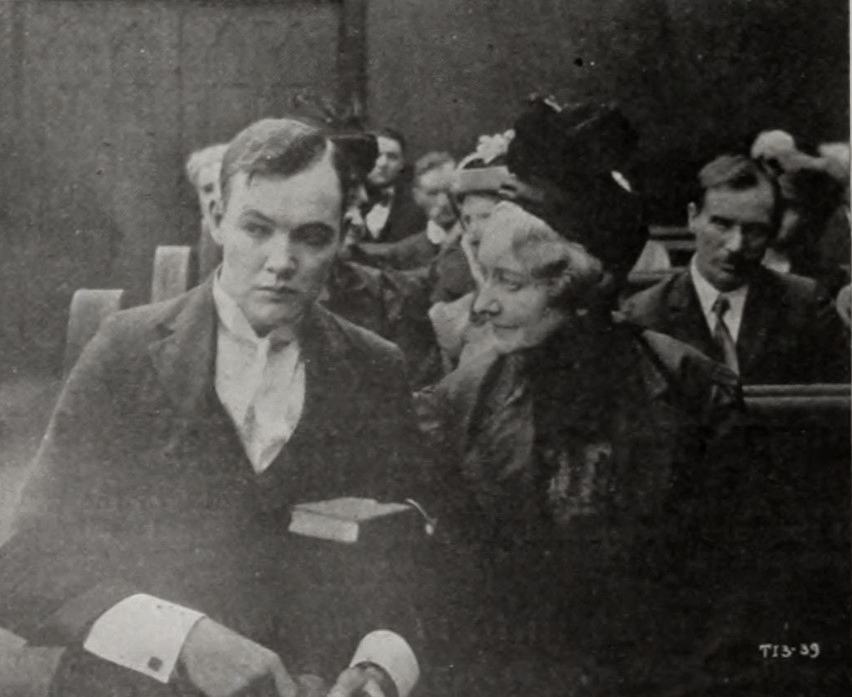
"His Mother's Boy" is more than just a simple adventure tale; it's a profound character study wrapped in the guise of a frontier drama. It masterfully explores the delicate balance between protective love and debilitating overindulgence. Matthew's journey forces us to consider how much our environment and upbringing shape us, and how a significant crisis can serve as the ultimate crucible for self-discovery. The contrast between the rigid social structures of New England and the anarchic freedom of the Texas oil fields is not merely a backdrop but an active participant in Matthew's transformation. The film subtly argues that true masculinity isn't about brute strength from the outset, but about the courage to confront one's fears, to stand up for justice, and to protect those you love.
The performances, particularly from Charles Ray as Matthew, must have been key to conveying this nuanced transformation without dialogue. The silent film actor relied heavily on pantomime, facial expressions, and body language to articulate inner turmoil and burgeoning resolve. One can imagine Ray's initial portrayal of Matthew's nervous gestures and downcast eyes, slowly giving way to a more upright posture, a firmer gaze, and decisive movements. This evolution, conveyed purely visually, would have been a powerful testament to his craft. The supporting cast, including Doris May as Mabel and William Elmer as the menacing Banty Jones, would have anchored the emotional stakes, providing the necessary foils for Matthew's growth.
In its essence, "His Mother's Boy" taps into universal archetypes. It's the story of the underdog, the quiet individual who finds his voice, the hero who emerges from unexpected places. This narrative resonates across generations and genres. We see echoes of this journey in countless other films, from the literal journey of self-discovery in Alma de sacrificio, where characters confront their inner demons, to the more overt battles against corruption in The Shadows of a Great City. The film's depiction of a community wronged and a hero rising to defend it is a timeless trope, one that continues to captivate audiences.
The thematic depth extends beyond individual transformation. It touches upon the burgeoning industrial age, the wildcatting spirit of the oil boom, and the moral ambiguities that often accompany rapid economic expansion. The Centipede Company's troubles, and the underlying corruption, reflect a broader societal concern about unchecked greed and the exploitation of the vulnerable. It's a subtle critique woven into an entertaining adventure, a hallmark of many silent films that managed to deliver both spectacle and social commentary. Even films like Der Lumpenbaron, with its exploration of class and power, or The Leopard's Bride, touching on questions of societal expectations and individual agency, share a common thread of characters navigating complex moral landscapes.
Ultimately, "His Mother's Boy" serves as a powerful reminder that heroism isn't always born in grand proclamations or inherent strength, but often forged in the fires of adversity, catalyzed by love, and honed through the courage to confront one's own limitations. It's a film that, even a century later, offers a compelling narrative of growth, resilience, and the universal quest for self-realization. It challenges us to look beyond initial impressions, to believe in the dormant potential within every individual, and to recognize that sometimes, the most profound transformations occur when we are pushed to the very brink. A delightful discovery for any enthusiast of classic cinema, it’s a story whose heartbeat resonates far beyond the silent screen.

IMDb —
1918
Community
Log in to comment.