DbcultAccessing Vault...
7.3/10
Senior Film Conservator
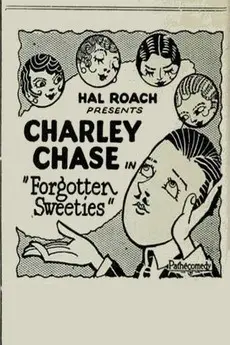
A definitive 7.3/10 rating for a film that redefined the boundaries of cult cinema. Forgotten Sweeties remains a cornerstone of transgressive art.
Is Forgotten Sweeties worth watching today? Short answer: absolutely, but temper your expectations for a silent-era short. This film is a delightful, if slight, diversion for fans of classic slapstick and those curious about the evolution of comedic timing, yet it offers little for viewers seeking deep narrative or contemporary pacing.
It’s a peculiar artifact, a snapshot of a bygone era of filmmaking that still manages to elicit genuine chuckles. For those with an appreciation for the foundational elements of screen comedy, it's a valuable watch. However, if your cinematic palate demands complex character arcs or dialogue-driven wit, you might find its charms fleeting.
This film works because: It masterfully employs the visual language of silent comedy to explore universal themes of jealousy and marital insecurity, delivering a consistently amusing, if predictable, series of escalating misunderstandings.
This film fails because: Its brevity prevents any meaningful character development or exploration beyond the immediate comedic premise, leaving some of its more intriguing social observations underexplored.
You should watch it if: You have a genuine interest in silent cinema, appreciate the physical comedy of the era, or simply want a light, unpretentious laugh from a film that knows exactly what it is.
H.M. Walker's Forgotten Sweeties, a 1929 short feature, hinges on a premise as simple as it is timeless: the awkward, often disastrous, re-entry of past romantic entanglements into present marital bliss. The film introduces us to two couples, each seemingly settled into their respective marriages. The twist arrives when an ex-girlfriend, now married, coincidentally moves into the apartment directly across the hall from her equally married former beau. This isn't a setup for a rekindled romance, but rather a catalyst for domestic chaos.
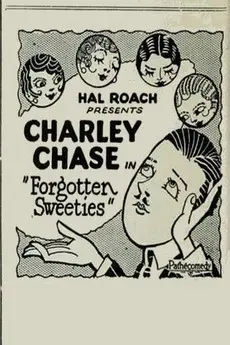
The mere proximity of the ex-lovers, even if their interactions are innocent, ignites a predictable and exaggerated jealousy in their current spouses. The wives, in particular, become engines of suspicion and escalating demands. This pressure cooker environment quickly leads to a rather drastic, albeit comically sensible, decision: both couples must move. The assumption, a deeply flawed one, is that a change of address will somehow erase the memory of a past relationship or quell the anxieties it stirs.
The film then tracks their separate, yet equally tumultuous, attempts at finding new homes. This journey is less about finding a perfect dwelling and more about the continued, almost inescapable, shadow of their past. It’s a narrative that, despite its silent-era trappings, speaks to a very modern concern: can we truly escape our past, or does it merely follow us, albeit to a new postcode?
The beauty of the plot lies in its economic storytelling. Within its short runtime, it establishes a relatable conflict, escalates it through physical comedy and absurd situations, and offers a resolution that is as much a shrug as it is a solution. It’s a testament to the power of visual narrative that such a simple premise can yield so much comedic mileage without a single spoken word.
H.M. Walker, known primarily for his writing contributions to numerous silent and early sound comedies, takes the directorial reins here with a confident, if conventional, hand. His direction in Forgotten Sweeties is precise, favoring clear sight gags and well-orchestrated physical comedy over complex camera work or abstract expressionism. This is a film built on the grammar of silent slapstick, and Walker understands that language intimately.
The pacing is brisk, a necessity for a short film of this era. Scenes transition quickly, each building upon the last in a rapid-fire succession of comedic beats. There’s no wasted motion, no lingering shots that don't serve a direct comedic or narrative purpose. For instance, the initial scene establishing the apartment building and the accidental proximity of the ex-lovers is handled with an efficiency that immediately sets the stage for the ensuing mayhem, relying on quick cuts between apartments to show parallel reactions.
Walker's strength lies in his ability to choreograph the chaos. The scenes where the spouses react to their partners' pasts, or the subsequent frantic house-hunting sequences, are a masterclass in visual storytelling. He uses the entire frame, allowing characters to react in the background while foreground action unfolds, enriching the comedic texture. Consider the moment where one spouse, consumed by suspicion, peeks through a keyhole – the exaggerated body language is a direct result of Walker’s clear direction.
While not groundbreaking in its cinematic technique, Walker’s direction is undeniably effective. It’s a functional, well-oiled machine designed for laughter, proving that sometimes, the most straightforward approach is the most potent. He doesn’t try to reinvent the wheel; he simply ensures it spins smoothly and predictably towards a chuckle.
The success of any silent comedy rests squarely on the shoulders, or more accurately, the faces and bodies, of its performers. In Forgotten Sweeties, the ensemble cast delivers a series of broad, yet effective, comedic turns that bring the rather simple premise to life. James Finlayson, a stalwart of silent comedy, is particularly memorable. His signature wide-eyed exasperation and increasingly flustered demeanor are perfectly deployed here as the ex-boyfriend caught in an impossible situation. His reactions alone often carry entire scenes, conveying a depth of comedic frustration that transcends the lack of dialogue. One can almost hear his internal groans as his wife’s jealousy spirals.
Anita Garvin, as one of the wives, provides an excellent foil with her exaggerated expressions of suspicion and indignation. Her ability to shift from feigned innocence to furious accusation with a mere tilt of the head is a testament to the physicality required for silent acting. She doesn’t just portray jealousy; she embodies it with a theatrical flourish that is both amusing and convincing within the film’s comedic context. It's a performance that, while broad, never feels entirely caricatured, hinting at the genuine anxieties beneath the farce.
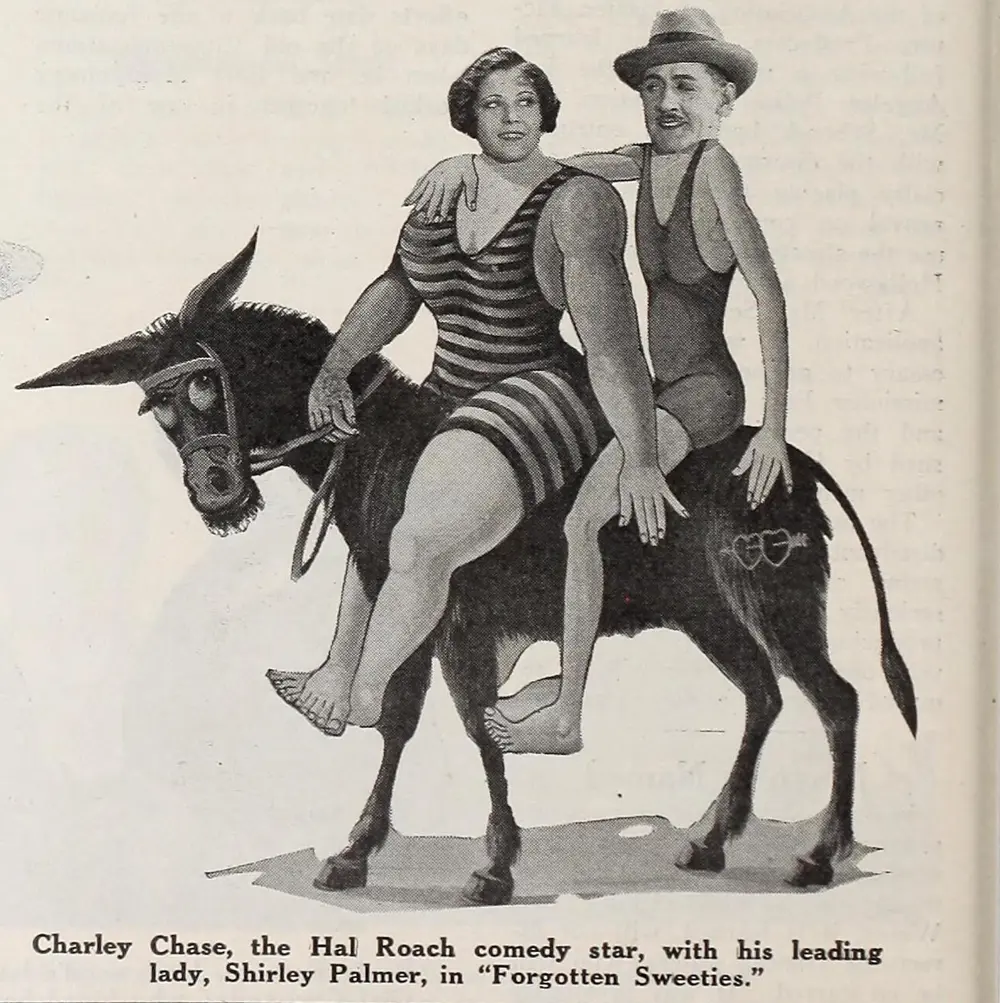
Mitchell Lewis, with his imposing physical presence, often adds an element of bewildered authority or stern disapproval that grounds the more frantic antics. His reactions, though less overtly comedic than Finlayson's, serve to heighten the tension and provide a straight man against the escalating absurdity. Al Flores, Charlie Hall, and Jerry Mandy, along with Charley Chase and Shirley Palmer, round out the cast, each contributing to the bustling, often chaotic, atmosphere. Their collective work creates a believable, if heightened, world of domestic discord, where every glance and gesture speaks volumes.
It’s a joy to watch these seasoned silent performers ply their trade. They understood the nuances of conveying emotion without words, relying on precise timing and expressive physicality. Their performances are not just funny; they are historically significant, showcasing the artistry that defined an entire era of cinema. You see the foundations of modern comedic acting in their exaggerated yet precise movements, a lineage that extends to today's physical comedians.
The technical aspects of Forgotten Sweeties, while not groundbreaking for its time, offer a fascinating window into the production capabilities of late silent cinema. The cinematography is straightforward, employing static shots and clear compositions that prioritize visibility of the comedic action. There's an absence of complex camera movements or innovative angles, which is typical for many shorts of this period, focusing instead on capturing the performances clearly.
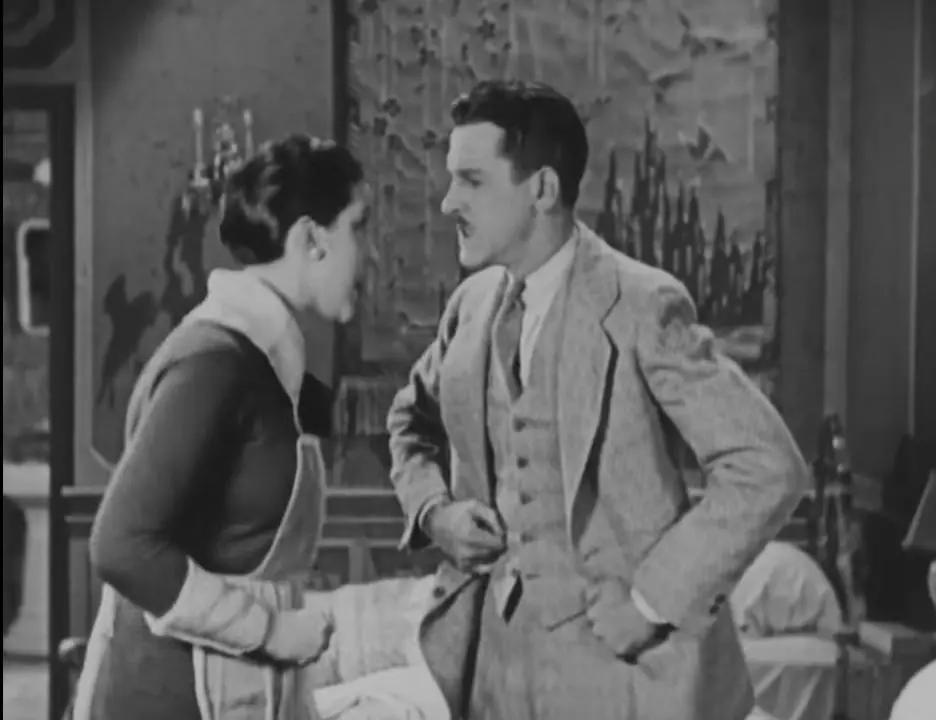
Lighting is functional, ensuring subjects are well-lit and expressions are legible, but it lacks the dramatic flair or nuanced shadow play seen in more artistically ambitious features like The Affairs of Anatol. However, this simplicity serves the film's comedic purpose well, keeping the focus squarely on the gags and the actors' reactions without visual distractions.
The production design, particularly the apartment sets, is surprisingly detailed for a short. They evoke a sense of middle-class domesticity, with period-appropriate furniture and décor that instantly place the audience in 1929. The initial apartment building feels lived-in, and the subsequent, often less desirable, dwellings the couples explore are equally convincing in their shabbiness or impracticality. These sets aren't just backdrops; they are active participants in the comedy, providing obstacles, hiding places, and visual punchlines.
The outdoor shots, likely filmed on studio backlots or carefully chosen locations, add a touch of realism to the house-hunting montage. It’s a subtle yet effective way to expand the film’s world beyond the confines of the interior sets. While no grand visual spectacle, the film's technical craftsmanship is solid, providing a robust stage for its comedic talents to shine.
Absolutely. Forgotten Sweeties holds up remarkably well as a piece of pure, unadulterated silent comedy. Its humor is universal, relying on physical gags and exaggerated human reactions that transcend the passage of time. The themes of jealousy, past relationships, and marital friction are as relevant today as they were in 1929. It works. But it’s flawed.
For those unfamiliar with silent films, it serves as an excellent entry point due to its brevity and clear narrative. It doesn't demand extensive knowledge of the era's conventions; it simply asks you to laugh. However, contemporary audiences accustomed to fast-paced, dialogue-heavy narratives might initially find the pacing deliberate. The absence of spoken words requires a different kind of engagement, a visual literacy that modern cinema often doesn't cultivate.
This film is best for viewers who appreciate the historical significance of silent cinema and are curious about the roots of screen comedy. It's also a treat for fans of specific actors like James Finlayson, whose distinctive brand of exasperated humor is on full display. If you're looking for a deep, character-driven drama, this isn't it. If you want a light, genuinely funny short that showcases the timeless appeal of slapstick, then Forgotten Sweeties is a delightful discovery.
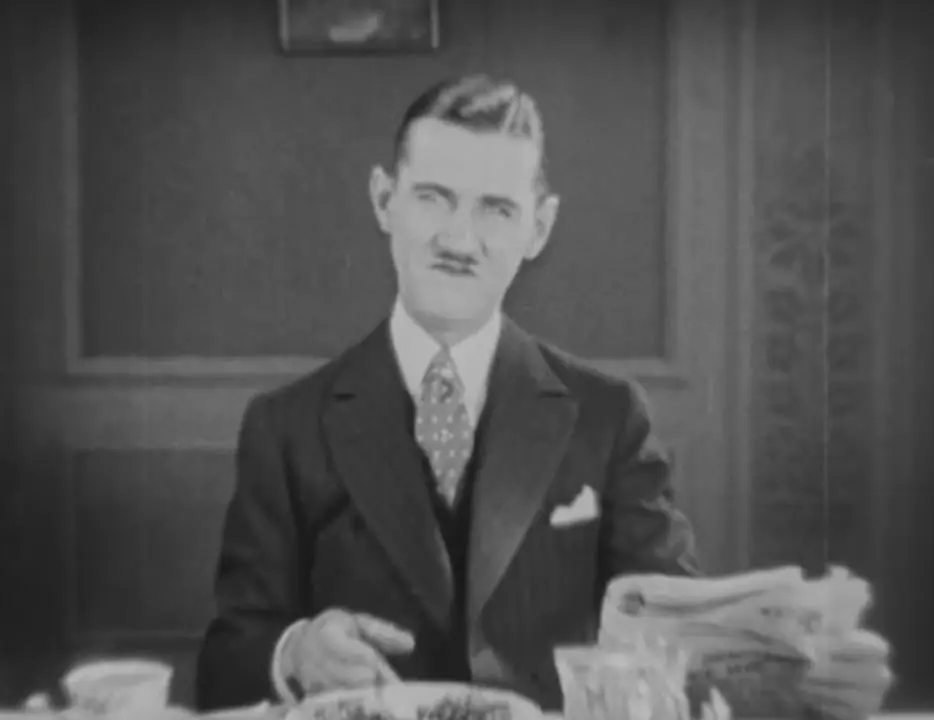
What truly elevates Forgotten Sweeties beyond mere historical curiosity is its almost cynical, yet undeniably charming, take on human relationships. The premise, that a simple change of address can resolve deeply ingrained jealousy and the lingering ghosts of past loves, is so fundamentally absurd that it becomes a profound, albeit comedic, commentary on human nature. It suggests a societal inclination to solve emotional problems with logistical solutions, a tendency that feels surprisingly contemporary.
I’d argue that the film’s failure to truly develop its characters beyond their immediate comedic function isn't a flaw but rather a strength. By keeping them as archetypes – the jealous wife, the exasperated husband, the innocent ex-lover – it allows the audience to project their own experiences onto the situation. This universal relatability is why the gags still land. It’s a bold choice, whether intentional or not, to prioritize the comedic situation over individual psychology, and it pays off handsomely.
Furthermore, the film’s relentless focus on the external, physical manifestations of internal turmoil is a brilliant distillation of silent comedy’s power. There are no monologues about insecurity, no whispered confessions of lingering affection. Instead, we get slamming doors, frantic gestures, and panicked expressions. This isn't just a stylistic choice; it's a statement about how readily our inner lives burst forth into observable, often ridiculous, actions when emotions run high.
This approach could be seen as simplistic by some, but I find it refreshingly direct. It cuts through the psychological clutter and gets straight to the core of marital farce. It's a film that believes, perhaps rightly, that the most honest emotions are often the most outwardly expressed, especially when those expressions are utterly ridiculous.
Forgotten Sweeties is far from forgotten in its comedic impact. It’s a delightful, if brief, excursion into the golden age of silent comedy, offering genuine laughs and a fascinating look at the era's storytelling sensibilities. While it won't redefine your understanding of cinema or provide deep philosophical insights, it delivers exactly what it promises: a charming, well-executed farce about the enduring complications of past loves and present jealousies.
For silent film enthusiasts, it’s a must-see, showcasing the talents of its cast and the directorial competence of H.M. Walker. For the curious newcomer, it’s an accessible and enjoyable entry point into a cinematic form that still has much to offer. It serves as a potent reminder that laughter, in its purest, most physical form, truly is a universal language. Don't let this sweetie remain forgotten.
IMDb —
1924
Community
Log in to comment.