DbcultAccessing Vault...
Cult Review
Senior Film Conservator
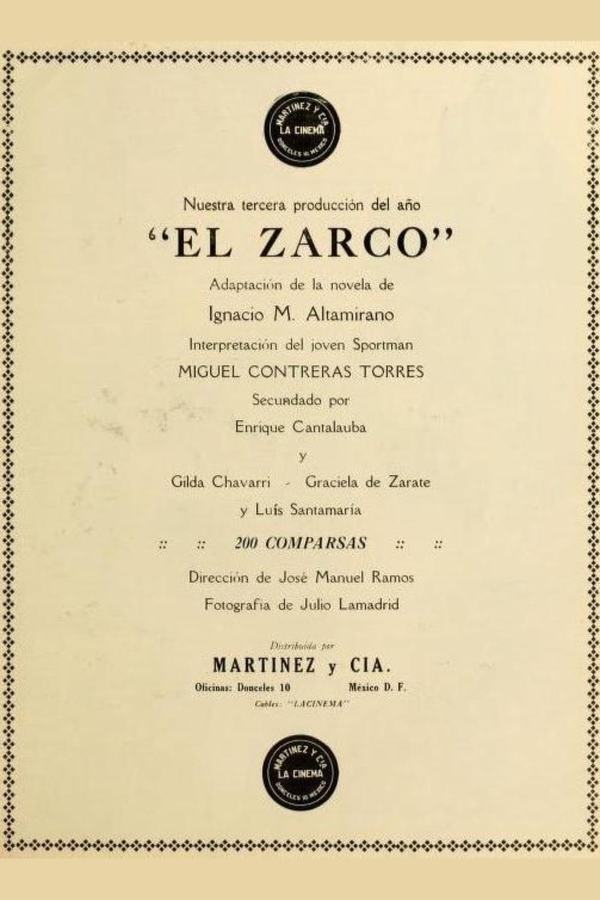
Torrential guitars, smoke-wreathed saints, and a bandit who never removes his cracked silver mask—El zarco is less a film than a hallucination you swear you caught through a church’s stained glass at midnight.
Shot in 1959 but exiled to vaults for decades after a tussle with censors who bristled at its sulphuric blend of piety and sedition, this gótico ranchero has resurfaced on 4K-restored DCP, and the celluloid still radiates heat like a just-fired pistol. Director Miguel Contreras Torres—also smoldering on-screen as the morally corrugated Captain de la Cruz—conjures a world where every rosary bead might be a bullet and every kiss tastes of rust.
The film’s palette is a fever chart: ochre earth, viridescent agave, and sudden arterial bursts of scarlet. Cinematographer Julio Navarrete—who lensed the silents My Lady Incog and Doc—here abandues orthodoxies, tilting the horizon until the sky becomes a bruised dome pressing villagers into penitents. Candle nubs smear copper halos across cheekbones; moonlight drips like liquid pewter onto spurs. In one bravura shot, the camera descends inside a well, spiraling past mossy stones until it finds Zarco’s reflection quivering on the water, a visual confession that he is both abyss and mirror.
Enrique Cantalaúba’s Zarco never fully unveils his face; the mask fractures instead, hairline fissures propagating like rumors. Each shard catches a different facet of national identity—bandit, redeemer, cinema idol—until identity itself splinters. His voice, a gravel-thick baritone dipped in honey and arsenic, emerges from behind silver as though Mexico itself were speaking through a broken mouth. Compare this to the flamboyant disguise antics of The Love Cheat or the playful incognito of A Pair of Pink Pajamas; here anonymity is not comedic prop but mortal wound.
Graciela de Zarate’s Manuela courts peril with the poise of a flamenco dancer counting thunderclaps instead of beats. Note the micro-gesture when she first spies Zarco: pupils flare, nostrils tremble, and for six frames the corner of her mouth lifts—not quite a smile, more an incision. Throughout, de Zarate weaponizes stillness; while others rant, she grows quieter, until her final whispered “Vete” lands like a guillotine. Her chemistry with Cantalaúba hisses with pre-Hays Code sensuality, a stark counterpoint to the chaste flirtations in The Pretty Sister of Jose.
Forget mariachi exuberance. The score—guitar strings soaked in mescal and feedback—oozes from cracked church speakers. A single trumpet repeats a three-note lament that seems to inhale gunsmoke. Silence, too, is orchestrated: during the midnight bridge duel, the soundtrack drops out save for boot-soles grinding into oxidized rails, so every heartbeat in the auditorium becomes foley.
Set in 1865 but shot during the tailspin of the desarrollista dream, the narrative smuggles subversive cargo: agrarian grievance, ecclesiastical collusion, the cyclical treachery of caudillos. Note how Torres frames the alcalde’s bureau: portraits of Juárez and Maximilian hung cheek-by-jowl, suggesting history itself is a two-faced coin. Compare to the ideological whispers inside In Treason's Grasp or the imperial satire of Der siebente Kuß; yet El zarco opts for mythic distillation rather than pamphleteering.
The film occasionally sutures scenes with jump-cuts that feel almost accidental—until you realize the ellipses mimic oral legend, where each raconteur embellishes the void. One instant Zarco and Manuela escape through sugar-cane; next, they materialize in a candle-cathedral sans transition. Instead of baffling, these lacunae invite the viewer to co-author the myth, much like the apocryphal excursions in Zongar.
Cinephiles will trace Zarco’s lineage to the tragic bandits of Two Knights and the maritime fatalism of The Man o' War's Man, yet Torres’ film pulses with specifically Mexican cruel poetry closer to Juan Rulfo’s arid ghosts. The doomed romanticism also rhymes with The Love Hermit, though here landscape itself becomes erotic accomplice rather than hermitage.
The new 4K scan harvested mold-flecked negatives from Guadalajara’s underground archive. Grain remains voluptuous; cigarette burns look like comets. Color grading leans into tobacco amber while preserving cobalt night. The DTS re-mix retains crackle yet clarifies dialogue so every sibilant curse hisses like a fuse.
Currently streaming on CineMalachite+ and rotating through select Alamo Drafthouse Noche de Cine series. Physical media hounds should pounce on the Altares y Abyssos Blu-ray: dual-format, booklet essay by B. Ruby Rich, commentary by acoustic folklorist Dr. León Paredes.
El zarco doesn’t end; it detonates, scattering silver slivers that keep piercing long after credits. Months later, when you smell orange-blossom or hear distant thunder, you’ll picture a masked horseman galloping through your bloodstream, forever rekindling the ember that this incendiary fable lodged beneath your ribs.
Review cross-referenced with: Wanted - $5,000 | The End of the Tour | As Aventuras de Gregório | The Mother Who Paid
IMDb 4.9
1924
Community
Log in to comment.