DbcultAccessing Vault...
Cult Review
Senior Film Conservator
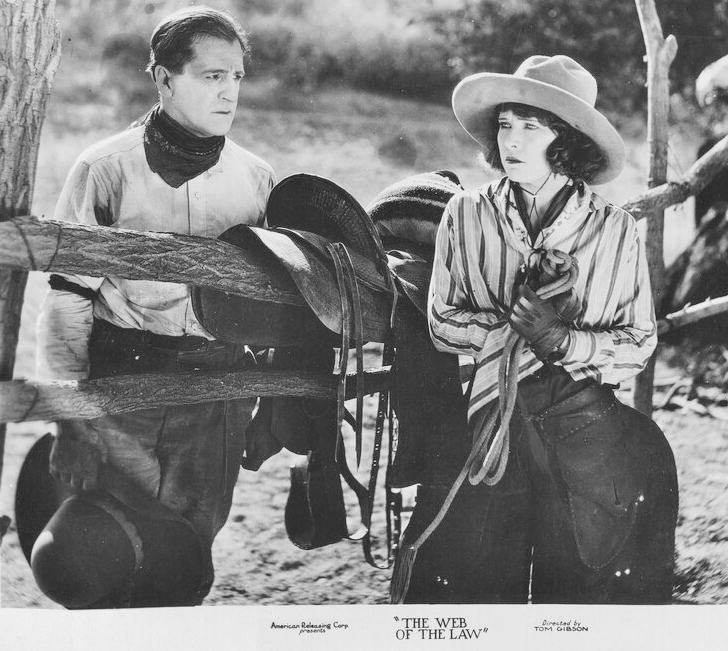
When the opening credits roll, the viewer is greeted with a sun‑bleached horizon that seems to stretch into eternity. The camera lingers on the cracked earth, the distant silhouettes of cattle, and the faint glint of a sheriff’s badge catching the light. It is a visual promise: this is a story about the law, but also about the thin line separating order from chaos.
Bill Miller, embodied by the stoic Ranger Bill Miller (the actor’s namesake), carries the weight of the film with a measured gravitas. His measured drawl, the slightest twitch of his eye when confronting deceit, feels less like a performance and more like a lived experience. Opposite him, Barry Jackson as the duplicitous foreman exudes an unsettling calm; his smile never quite reaches his eyes, hinting at the hidden machinations that drive the plot.
Supporting players such as George Sherwood and Harry Belmour provide the necessary texture, populating the world with characters whose motives are as layered as the dust that settles on their boots. Patricia Palmer offers a rare glimpse of feminine agency, her role subtly challenging the era’s gender conventions without overt rebellion.
Victor Gibson’s screenplay unfolds like a well‑tuned fiddle: each scene a note that builds toward a resonant crescendo. The inciting incident – a series of cattle disappearances – is presented not as a mere plot device but as an allegory for the erosion of trust in a community bound by mutual reliance.
Miller’s investigation is methodical, his approach reminiscent of a chess master contemplating each move. He interrogates the ranch hands, follows faint hoofprints, and deciphers cryptic messages left in the wind‑blown grasses. The tension escalates as the audience discovers that the foreman, a man once praised for his diligence, is the mastermind behind the rustling operation.
The film’s climax is a masterclass in restraint. Instead of a bombastic gunfight, the showdown is a psychological duel, a battle of wits where Miller must decide whether to uphold the law at the cost of betraying a man who, on the surface, appears to be a pillar of the community.
Cinematographer Alfred Hewston employs a palette dominated by earth tones, punctuated by the stark contrast of a deep, midnight‑blue sky. The use of chiaroscuro lighting accentuates the moral ambiguity that permeates the story – shadows creep across faces just as doubt creeps into the hearts of the characters.
The film’s soundscape is equally deliberate. The occasional creak of a saddle, the low moan of wind across the plains, and the distant clatter of a saloon piano create an auditory tapestry that immerses the viewer in the era. The sparse musical score, featuring a lone harmonica, underscores moments of introspection without overwhelming the narrative.
At its core, The Web of the Law interrogates the paradox of authority in a frontier society. The ranger, a symbol of federal power, must navigate a terrain where personal loyalties often eclipse institutional mandates. This tension mirrors contemporary debates about the role of law enforcement in rural communities, making the film surprisingly relevant.
The foreman’s betrayal is not merely a plot twist; it is a commentary on how power can corrupt even those tasked with stewardship. His dual identity – trusted overseer by day, ruthless rustler by night – reflects the duality inherent in human nature, a theme explored in other classics such as The Velvet Paw and The Witness for the Defense.
When juxtaposed with The Conquering Power, Miller’s character is less the invincible hero and more the weary sentinel, aware of his own limitations. Unlike the flamboyant gunslingers of Step on It!, Miller’s weapon is his intellect, his resolve, and his unflinching adherence to principle.
The film also shares thematic DNA with The Brand of Cowardice, where the notion of honor is interrogated through the lens of betrayal. Yet, The Web of the Law distinguishes itself by grounding its moral inquiry in the everyday realities of cattle drives and ranch economics, rather than grandiose battles.
The production design merits particular commendation. The ranch house, with its weather‑worn timber and sagging porch, feels lived‑in, a testament to the crew’s dedication to authenticity. Costumes, from Miller’s crisp ranger coat to the foreman’s utilitarian workwear, are meticulously crafted, each stitch contributing to the film’s immersive quality.
Even the horses are given due respect; their movements are captured with a fluidity that suggests a deep familiarity between man and beast, echoing the bond portrayed in A Child of the Prairie.
Decades after its release, the film continues to be referenced in discussions about the evolution of the Western genre. Its nuanced portrayal of law enforcement predates the more cynical takes seen in later noir‑inflected Westerns, positioning it as a bridge between the idealistic early 1930s and the morally ambiguous narratives of the 1950s.
Scholars often cite Miller’s internal conflict as a precursor to the anti‑hero archetype that would later dominate cinema. Moreover, the film’s focus on community betrayal resonates in modern storytelling, where the enemy is often found within.
The Web of the Law is more than a period piece; it is a meditation on the fragile scaffolding of trust that underpins any society. Its deliberate pacing, rich characterizations, and visual poetry reward attentive viewers. Whether you are a seasoned aficionado of classic Westerns or a newcomer seeking a film that balances action with philosophical depth, this work offers a compelling, thought‑provoking experience.
For those interested in exploring similar narratives of deception and redemption, consider delving into The Hidden Law or the hauntingly atmospheric Hell Morgan's Girl. Each of these titles, like Miller’s tale, interrogates the boundaries between duty and desire, law and loyalty.
IMDb 6
1915
Community
Log in to comment.