DbcultAccessing Vault...
Cult Review
Senior Film Conservator
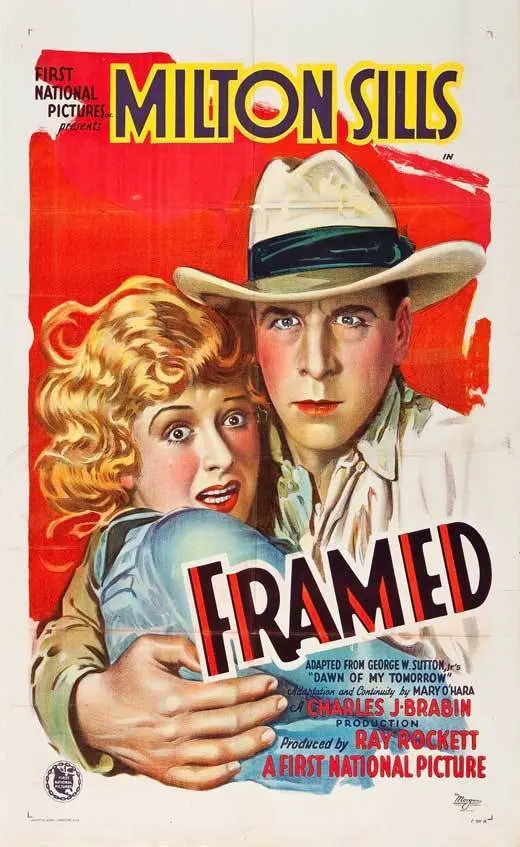
Is 'Framed (1927)' worth watching today? Short answer: yes, but with significant caveats that demand a specific kind of cinephile. This silent drama, a relic from a bygone era, offers a fascinating glimpse into early cinematic storytelling, yet its appeal is decidedly niche, primarily resonating with those deeply invested in film history, the evolution of narrative, and the expressive art of silent performance.
It is unequivocally for viewers who appreciate the dramatic conventions of the 1920s, are patient with slower pacing, and can find beauty in the profound, often exaggerated, emotional power of a pre-sound film. Conversely, it is decidedly NOT for audiences seeking modern narrative structures, rapid-fire dialogue, or a quick, casual viewing experience. If you require spoken words to connect with characters or find intertitles disruptive to immersion, this film will likely test your patience rather than reward it with its quiet, potent drama.
This film works because of its raw emotional core and a surprisingly potent sense of injustice that still resonates, proving universal themes transcend technological limitations.
This film fails because its narrative contrivances feel overly simplistic by today's sophisticated standards, and some performances, while effective for their time, lean into broad melodrama rather than nuanced expression.
You should watch it if you are a dedicated student of silent cinema, keenly interested in the roots of the wrongful conviction trope, or simply curious about the dramatic capabilities and visual language of early Hollywood storytelling.
'Framed' unfolds a narrative that, while familiar in its beats, feels remarkably potent for its time. Captain Hilaire’s initial court-martial, an event shrouded in unelaborated injustice, serves as a brutal opening salvo, immediately establishing him as a man wronged. His subsequent flight to Brazil isn't merely a change of scenery; it's a desperate search for anonymity and a chance to rebuild a shattered life. The diamond mine setting introduces a primal, almost mythical backdrop, where wealth and greed simmer beneath the surface, ripe for conflict.
The romance between Hilaire and Diane, played with earnest conviction, provides a beacon of hope, making the inevitable betrayal all the more crushing. Remsen’s villainy is painted in broad, unambiguous strokes, a necessary simplification for silent storytelling, but effective nonetheless. His act of framing Hilaire for theft is a classic trope, yet here it feels foundational, a blueprint for countless cinematic injustices to follow. The descent into the prison camp, a clear allegorical stand-in for Devil's Island, is where the film truly leans into its dramatic weight. It’s a stark, brutal portrayal of isolation and suffering, made all the more impactful by the silent medium’s reliance on visual despair.
The film’s central themes—the fragility of reputation, the enduring power of love in the face of adversity, and the slow, often agonizing grind toward justice—are universal. What’s unconventional is the almost biblical simplicity with which these themes are presented. There’s a directness, a moral clarity that modern cinema often shies away from, preferring ambiguity. 'Framed' operates less like a complex character study and more like a morality play, where good and evil are distinct, and redemption, though hard-won, is ultimately assured. This unvarnished approach gives the film a certain timeless resonance, even as its execution firmly roots it in its era.
The final confession, delivered on Remsen’s deathbed, is a convenient, if dramatically satisfying, resolution. It speaks to a certain narrative expectation of the period, where evil must ultimately be vanquished and truth revealed. While contemporary audiences might scoff at such a tidy conclusion, within the context of 1927, it provides the emotional catharsis necessary for a story so heavily invested in one man's suffering.
The direction in 'Framed', while not revolutionary, demonstrates a solid grasp of silent film grammar. The director, working within the constraints of the era, prioritizes clear visual storytelling to convey plot and emotion. Close-ups are employed judiciously to emphasize character reactions—a tearful gaze from Diane, a grimace of pain from Hilaire, or Remsen’s sneering triumph. These moments are crucial, acting as the visual equivalent of dialogue, guiding the audience through the emotional landscape of the story.
The cinematography, though lacking the sophisticated camera movements of later eras, effectively captures both the exotic allure of Brazil and the oppressive gloom of the prison camp. The use of natural light in the outdoor sequences lends an authenticity to the mine scenes, while the stark, high-contrast lighting inside the prison cells emphasizes Hilaire's despair. Consider the scene where Hilaire is framed: the director relies on a sequence of quick cuts, showing Remsen surreptitiously placing the diamonds, then Hilaire’s unwitting proximity, and finally the discovery. The visual implications of treachery are clear, even without a single spoken word, a testament to the power of visual editing in an nascent art form. It’s a less frenetic approach than you’d find in a modern thriller, but arguably more deliberate in its intent, forcing the viewer to piece together the deception.
One could argue that the film's visual language, while often primitive by today's standards, frequently achieves a stark, almost poetic beauty that modern cinema sometimes sacrifices for hyper-realism. There’s a theatricality to the compositions, a deliberate staging that makes every frame feel like a tableau. This isn’t a flaw; it’s a characteristic of the period, inviting the audience to engage with the images in a different, perhaps more imaginative, way. The visual cues—a hand reaching out, a head bowed in defeat, a furtive glance—are the true narrative drivers, demanding active interpretation from the viewer.
Compared to contemporaries like Autour de la roue, which pushed experimental boundaries, 'Framed' remains firmly within the commercial narrative tradition. Its visual choices are functional and effective, aiming for clarity and emotional impact rather than stylistic innovation. Yet, within that framework, it carves out moments of genuine visual power, particularly in its depiction of Hilaire's suffering and the stark, uncompromising environment of his captivity.
In silent cinema, the burden of conveying emotion rests almost entirely on the actors’ shoulders. Milton Sills, as Captain Hilaire, delivers a performance that is both earnest and physically demanding. His portrayal of a man unjustly brought low is convincing, particularly in the prison sequences where his gaunt appearance and desperate expressions communicate a profound sense of suffering. Sills manages to convey Hilaire’s initial dignity, his burgeoning hope in Brazil, and his utter despair in captivity with a range of gestures and facial work that, while broad, never feels entirely artificial. It works. But it’s flawed.
Natalie Kingston, playing Diane, embodies the ideal silent film heroine—beautiful, virtuous, and fiercely loyal. Her character’s unwavering faith in Hilaire provides the emotional anchor for the audience. Kingston excels in conveying devotion and heartbreak through subtle shifts in expression and posture, making her a compelling, if somewhat archetypal, love interest. Her scenes of longing and despair are particularly effective, serving as a vital counterpoint to Hilaire’s physical torment.
Charles K. Gerrard, as the villainous Remsen, leans into the melodramatic conventions of the era with relish. His performance is a masterclass in silent film villainy, complete with sneering glances, manipulative gestures, and an undeniable aura of malice. While modern audiences might find his portrayal overtly theatrical, it perfectly serves the film's moralistic tone, providing a clear and unambiguous antagonist for the audience to despise. The effectiveness of his villainy is crucial to making Hilaire's suffering feel earned and his eventual redemption satisfying.
The supporting cast, including E.J. Ratcliffe and Burr McIntosh, provide solid, if less memorable, contributions. Their roles are primarily functional, moving the plot forward or reacting to the central drama. Overall, the performances in 'Framed' are a testament to the skill required to communicate complex emotions without the aid of spoken dialogue. They are performances rooted in a different theatrical tradition, one that prioritized visual clarity and emotional directness, and they largely succeed in their aims.
The pacing of 'Framed' is undeniably deliberate, a characteristic common to many silent films. Narrative progression is often slower than contemporary cinema, allowing for sustained emotional beats and a more gradual build-up of tension. This isn't a film designed for instant gratification; it demands patience and an appreciation for a narrative tempo that allows moments to breathe. The extended sequence depicting Hilaire’s time in the prison camp, for instance, is not rushed. It allows the audience to truly feel the passage of time and the grinding weight of his suffering, a stark contrast to the often truncated portrayals of incarceration in modern films.
The tone is overwhelmingly melodramatic and earnest. There's a sincerity to the storytelling, a lack of cynicism that feels refreshing in an age of ironic detachment. This earnestness is a hallmark of 1920s cinema, reflecting a period where film was still solidifying its narrative language and often drew heavily from theatrical traditions. The moralistic undertones are strong, clearly delineating good from evil, virtue from vice. This directness, while potentially feeling simplistic to modern sensibilities, was a vital emotional conduit for audiences of the time, providing clear heroes to root for and villains to condemn.
One might argue that this melodrama, often perceived as a weakness today, was in fact a powerful and necessary tool in silent film, bridging the gap left by the absence of dialogue. 'Framed' leverages it effectively, even if its overt emotionalism feels somewhat dated. It’s a window into a different era of storytelling, where emotions were writ large across the screen, demanding empathetic engagement from the viewer. This film exists in a fascinating transitional period, just before the talkies would revolutionize the industry, and its tone reflects that moment perfectly.
The film’s overall tone and pacing provide valuable insight into the cinematic tastes and narrative expectations of 1927. It's a snapshot of how stories were told and consumed before sound irrevocably changed the medium. Compared to the more frantic energy of some early comedies or the stylized dramas like The Red Circle, 'Framed' settles into a steady, dramatic rhythm, allowing its core themes of injustice and redemption to slowly but surely unfold.
Yes, 'Framed (1927)' is worth watching, particularly for specific audiences. It offers a valuable historical perspective on silent cinema. The film provides a clear, compelling narrative of a man wronged. Its themes of injustice and perseverance remain timeless. Viewers interested in the evolution of film storytelling will find much to appreciate. However, be prepared for silent film conventions. The pacing is slower than modern movies. Emotional expression is often exaggerated. It is not for casual viewers seeking contemporary thrills.
'Framed (1927)' is not a film that will redefine your understanding of cinema, nor is it a forgotten masterpiece waiting to be unearthed by the masses. Instead, it is a sturdy, well-crafted example of silent-era drama, a film that competently executes its narrative with the tools available to it. Its power lies in its directness, its earnestness, and its commitment to a story of profound injustice and eventual, hard-won vindication. For those willing to engage with its specific conventions, it offers a rewarding experience—a window into a different time, a different way of telling stories, and a testament to the enduring appeal of a compelling human drama.
While it may not possess the experimental flair of some of its contemporaries, 'Framed' stands as a solid entry in the annals of silent film, proving that even a century later, a clear narrative and heartfelt performances can still resonate. It's a film for the curious, for the patient, and for anyone who believes that the roots of cinematic storytelling hold their own unique charm and lessons. Don't expect a modern blockbuster; expect a piece of history that still manages to stir the soul.
IMDb 6.8
1935
Community
Log in to comment.