DbcultAccessing Vault...
5.5/10
Senior Film Conservator
A definitive 5.5/10 rating for a film that redefined the boundaries of cult cinema. Kino-pravda no. 2 remains a cornerstone of transgressive art.
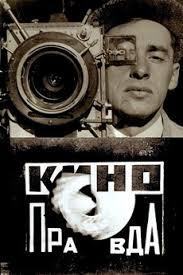
Kino-pravda no. 2 is less a discrete documentary than a cardiac event you watch. The arteries are strips of 35 mm nitrate; the blood is sunlight, coal dust, and the restless curiosity of three Bolshevik cine-journalists who believed the camera more trustworthy than any human tongue. Released in Moscow’s dilapidated cinemas during the spring of 1922, the twenty-minute bulletin arrived when newsprint was rationed and electricity flickered like a doubtful promise. Vertov’s solution? Let images supplant paragraphs, let montage mimic synaptic fire. The result feels closer to today’s algorithmic social feed—fragmented, argumentative, ironic—yet stripped of corporate gloss. Each segment is a live grenade lobbed into the czarist past: street orphans gnawing crusts beside tables groaning with red propaganda; tram conductors doubling as orators; a magician’s top-hat rabbit transmogrifying into a slaughterhouse carcass. You sense the filmmakers asking: What does freedom look like before it has a language?
Montage here is not mere editing but class warfare at twenty-four frames per second. Vertov, his editor-spouse Elizaveta Svilova, and cinematographer Mikhail Kaufman splice together antagonistic worlds: a starving woman sells matches; cut to a military band tooting triumphant marches; cut again to empty factory yards where idle smokestacks resemble broken flutes. The collision breeds meaning no single shot could gestate. Eisenstein would later theorize “attractions”; Vertov simply practices shock therapy. The cadence is jazz-like—syncopated, improvised, risky. One moment we linger on a child’s marble game; the next we’re inside a surgical theater where forceps extract typhus lice from scalps. The tonal whiplash is intentional: life under War Communism was precisely this schizophrenic. If early Soviet viewers flinched, that was the desired civic reflex.
Vertov’s collective loathed narrative fiction, branding it “the opium of the masses.” Yet Kino-pravda no. 2 is anything but unadorned reality. Cameras are hidden inside lunch pails; news events are restaged for sharper silhouettes; intertitles scream in agit-poetry. Truth, for Vertov, is deeper than fact: it is the algebraic sum of social relationships made visible through rhythm. Consider the sequence depicting the “living newspaper”: a wall newspaper in Petrograd changes headlines hourly. The filmmakers compress a week into thirty seconds, superimposing dates, caricatures, and worker doodles until the wall itself appears to breathe. This is reportage transmuted into hallucination, predating modern vlog jump-cuts by a century. The trick anticipates our contemporary suspicion of “deepfakes,” only Vertov’s fakery serves not deception but revelation.
Close-ups arrive like uninvited confessions. A railway porter squints into the lens, sunburn peeling off his nose like old wallpaper; an elderly clerk adjusts pince-nez, the glass reflecting barricades. Vertov understood that in a nation where millions were anonymous, the magnified face became a ballot. We vote for the future with our cheekbones, our missing teeth, our wary half-smiles. Svilova’s cutting pattern is relentless: alternately nurturing and brutal, she lets a child’s tear hang for exactly eight frames—long enough to wound, short enough to prevent pity from hardening into apathy. The cumulative effect is a nationwide mug-shot album, a typology of endurance. You exit the film feeling you have co-signed a social contract with every visage.
Unlike contemporaries such as The Girl of My Heart or Bridges Burned, which chase invisibility, Kino-pravda no. 2 flaunts its artifice. We see Kaufman hoisting a hand-crank on a rooftop; we see Svilova’s petite fingers splicing two strips at a communal editing table. The apparatus is both protagonist and pen. Such transparency births a Brechtian estrangement decades before Brecht. When a soldier stares at the camera and then back at his rifle, the moment asks: which weapon will determine the epoch? In 1922 this was urgent. Lenin’s New Economic Policy permitted limited capitalism; bourgeois pleasures—chocolate, lipstick, jazz records—crept back. Vertov’s reflexive gestures caution: Do not trust images that hide their scaffolding. The warning feels freshly minted in our age of curated Instagram lives.
The film’s tempo map charts the metabolism of a recovering city: dawn (machines yawn awake), noon (citizens swarm like photons), dusk (factories exhale soot silhouettes). Scholars often compare the structure to later city symphonies like Walter Ruttmann’s Berlin or even the slapstick modularities of The Play House (though that Buster Keaton romp bends reality for laughs, not Marxist analytics). Yet Vertov’s urban pulse is more electrocardiogram than waltz. Note how he records the introduction of radio: first the antenna, then the operator’s Morse hand, finally a crowd cupping ears toward an invisible voice. The sequence crescendos with a superimposition of ear-drums and loudspeakers, a synesthetic prophecy of our podcast era.
While Western fare like A Harem Hero or A Prisoner in the Harem traded orientalist fantasy, Soviet actuality films had to negotiate women’s emancipation in real time. Svilova’s presence behind the scenes shapes the gaze. We see milkmaids operate centrifuges, a female Komsomol chairwoman pounding a gavel, and—shockingly for 1922—a woman filing a divorce petition in a revolutionary tribunal. Intertitles trumpet: “She who was property now weighs evidence.” The line lands like a slap, reminding us equality arrived first in rhetoric, later in wages. Vertov’s camera lingers not on legs but on hands—hands counting ballots, stitching boots, calibrating cameras—asserting competence over desirability.
Modern viewers confront eloquent silence. Archival footage shows 1920s screenings accompanied by factory whistles, balalaika bursts, or spirited declamation of agit-poems. Imagine a contemporary revival: a noise trio improvising glitch beats while the film runs, bridging century-old visuals with post-digital acoustics. Such accompaniment respects Vertov’s own philosophy; he envisioned sound/image counterpoint long before the technology existed. Ironically, his later Enthusiasm would pioneer location-recorded audio, but the absence here liberates the spectator to hallucinate clangs, yells, and the rasp of film running through a projector gate—metasound as score.
Vertov branded his collective “Kinoks”—cinema-eyes—declaring death to acted cinema. While Stalinist orthodoxy later smothered experimentation, the DNA survives in jump-cuts, guerrilla docs, and algorithmic feeds. Every TikTokker smashing disparate clips into fifteen-second micro-sagas owes an unacknowledged debt. Yet few descendants match the moral urgency. When surveillance capitalism harvests our images, the revolutionary promise of kino-pravda mutates into commodity. Revisiting Kino-pravda no. 2 today is therefore not nostalgia but inoculation: it reminds us that images can either indict or commodify, depending on who cranks the handle.
High-resolution scans rest in Russia’s state archives; 2K restorations circulate via Edition Filmmuseum and occasional Kananda streams. If you can, attend a live celluloid projection—nitrate’s flicker imparts a ghostly halo absent in digital. Home viewers should disable default motion-smoothing on TVs; Vertov’s percussive montage turns into mush under algorithmic interpolation. Pair the experience with readings on NEP economics or compare with reactionary fantasies of the same year, say Der Galeenensträfling, to gauge how divergent cultures metabolized post-WWI trauma. Finally, keep a notebook; the film’s dialectics spark ideas like flint on steel.
Masterpiece feels too stately for this combustible bulletin. Kino-pravda no. 2 is a callus-forming handshake with history: uncomfortable, necessary, and ultimately transformative. It will not hold your plot-hungry hand, but it will rewire your retinas. Approach expecting narrative and you’ll starve; approach expecting oxygen and you’ll breathe fire. The film belongs in every cinephile’s DNA, nestled between Méliès’ moon and Kubrick’s monolith. Watch it, argue with it, splice it mentally with present-day clips, and you fulfill Vertov’s imperative: to decipher the chaos of the everyday, to edit oneself into a sharper citizen, to never trust an image that refuses to reveal its sprocket holes.
After this, chase echoes in Gengældelsens ret’s moral calculus, or sample Conrad in Quest of His Youth for the way fiction can also interrogate memory. For lighter tonal palette, His Country Cousin offers pastoral slapstick, while Locked Lips dives into noir secrecy. Each stands at a different azimuth on the 1920s moral compass; taken together they sketch the full cartography of a world learning to see itself through newly invented lenses.
IMDb 6.6
1926
Community
Log in to comment.