DbcultAccessing Vault...
Cult Review
Senior Film Conservator
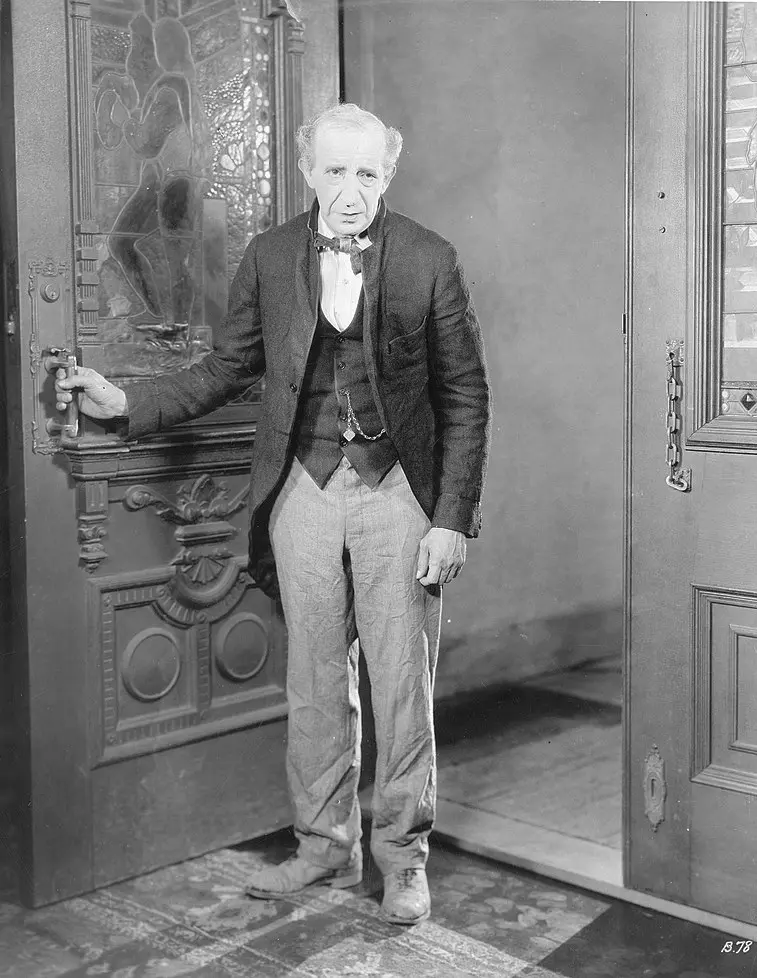
Is Friendly Enemies worth watching today? Short answer: Yes, but primarily as a historical artifact that captures the frantic, often clumsy efforts of early cinema to define 'Americanism.' It is a film for those who appreciate the transition of Vaudeville legends to the silver screen and students of propaganda history. It is emphatically not for those who demand narrative nuance or a balanced exploration of wartime ethics.
1) This film works because the established comedic rhythm of Joe Weber and Lew Fields provides a human pulse to what would otherwise be a dry, didactic morality play.
2) This film fails because its transition from lighthearted domestic comedy to high-stakes espionage is jarringly inconsistent, often losing the emotional thread in favor of political grandstanding.
3) You should watch it if you want to see how silent-era filmmakers used melodrama to process the trauma of immigrant identity during World War I.
Friendly Enemies is worth watching if you are interested in the evolution of American propaganda and the history of the Weber and Fields comedy duo. While the plot is predictable by modern standards, the film offers a unique window into the 1920s psyche. It serves as a visual record of how the United States attempted to reconcile the heritage of its German-American citizens with the demands of wartime loyalty. It works. But it’s flawed.
To understand Friendly Enemies, one must understand the weight carried by its leads. Joe Weber and Lew Fields were the titans of the Vaudeville stage, famous for their 'Dutch' act—a caricature of German immigrants. By the time they made this film, they weren't just actors; they were an institution. Their chemistry is the only thing that saves the first act from being a tedious series of arguments. Every time they share the frame, there is a palpable sense of history. They bicker with a timing that can't be taught, only lived.
Take, for example, the early scene where Carl and Henry argue over the morning newspaper. The way they lean into each other, the exaggerated gestures, and the physical comedy of their indignation feel like a bridge between the 19th-century stage and the 20th-century screen. It’s a refined version of their stage work, toned down just enough for the camera. Without their specific energy, the film would collapse under the weight of its own earnestness. They bring a levity that makes Carl’s later descent into guilt actually feel earned rather than merely scripted.
If the leads represent the film's heart, Stuart Holmes as Miller represents its most glaring weakness. Miller is not a character; he is a plot device dressed in a suit. He is the 'German Menace' incarnate, slinking through scenes with a predatory intent that feels almost comical today. The film doesn't bother giving him a motive beyond a generic desire for destruction. This lack of depth robs the central conflict of any intellectual weight. We aren't watching a struggle between two valid ideologies; we are watching a good man get tricked by a cartoon.
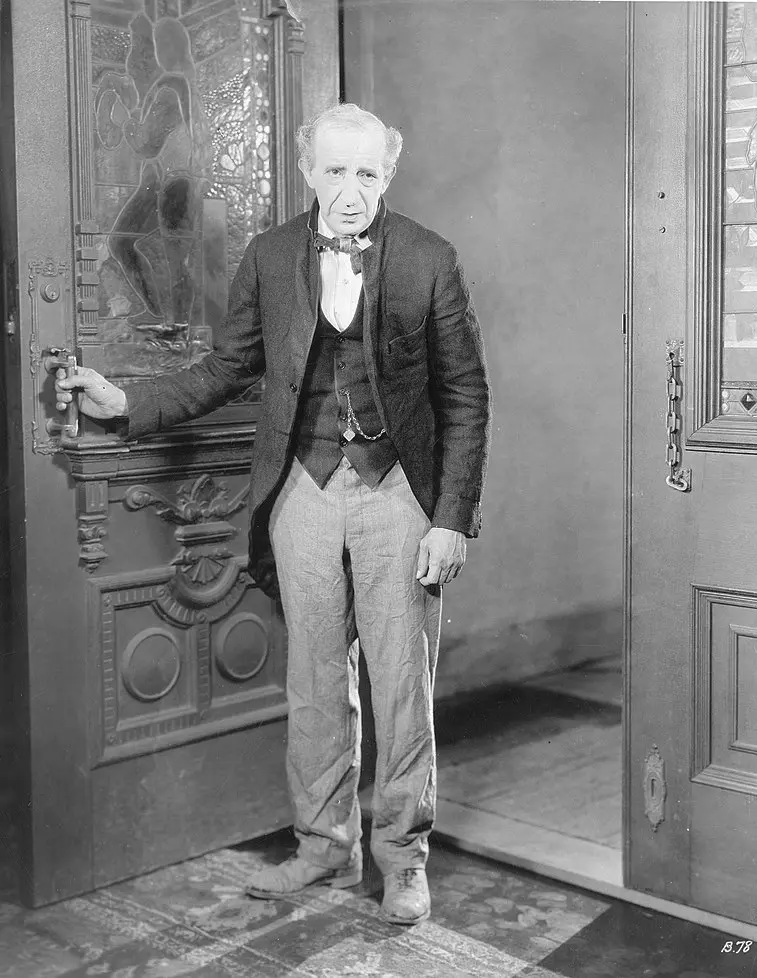
The scene where Miller convinces Carl to donate money is particularly frustrating. Carl is portrayed as a successful businessman, yet he falls for Miller’s transparent manipulation with the ease of a child. It’s a necessary beat for the plot—leading to the sabotage of the troopship—but it feels forced. The film prioritizes the 'lesson' over the logic. It wants to warn the audience that 'loyalty is binary,' and it’s willing to make its protagonist look foolish to prove it. For a more nuanced take on crime and consequence from this era, one might look toward The Third Degree, which handles its suspense with a bit more grace.
Visually, Friendly Enemies is a standard production of the mid-20s, but it has moments of surprising impact. The sabotage of the troopship is handled with a sense of dread that contrasts sharply with the domestic comedy of the earlier scenes. The use of shadows in the port scenes creates a noir-lite atmosphere that prefigures the thrillers of the 1940s. The director (George Melford) uses wide shots to emphasize the scale of the war’s reach, making the Pfeiffer living room feel increasingly claustrophobic as the news of the ship's fate arrives.
The moment Carl receives the report that his son is dead is the film's emotional peak. The camera lingers on his face, capturing a realization that transcends the melodrama of the script. It is a brutal, simple moment. His world collapses because he realizes he didn't just lose a son; he helped kill him. This is where the film moves beyond simple propaganda and touches on something universal: the horror of realizing one's own complicity in tragedy. It’s a sharp departure from the tone of something like A Friendly Husband, which keeps its stakes firmly in the realm of domestic farce.
We have to talk about the ending. The resolution—where William returns unharmed and the two fathers unite in their Americanism—is as subtle as a sledgehammer. The film demands a total erasure of Carl’s German identity as the price for his redemption. In the world of Friendly Enemies, there is no room for the hyphen in 'German-American.' You are either one or the other. This binary view was common in 1925, but watching it now, it feels remarkably harsh.
The marriage between William and June Block serves as the final seal on this new American identity. It’s a symbolic union that suggests the only way forward is to bury the past and embrace the flag. While it provides a 'happy' ending, it leaves many of the film's more interesting questions unanswered. What about the community Carl belonged to? What about the cultural heritage he so clearly loved? The film isn't interested. It wants a parade, not a conversation. It’s a stark contrast to the more lighthearted social observations found in Stop That Wedding.
Pros:
The film is a fascinating time capsule of 1920s social pressures. The physical comedy in the first act is genuinely charming. The production values are high for the period, especially during the maritime sabotage sequence.
Cons:
The plot relies on a massive coincidence to achieve its happy ending. The villain is a one-dimensional caricature. The message is delivered with zero subtlety, making it feel more like a lecture than a story at times.
Friendly Enemies is a loud, proud, and deeply flawed piece of American cinematic history. While its politics are dated and its plot is thin, the performances of Weber and Fields provide enough charisma to keep the engine running. It’s a film that tells us more about the time it was made than the story it’s trying to tell. If you can stomach the heavy-handed patriotism, you’ll find a surprisingly touching story about two friends trying to find their place in a world that’s changing too fast for them. It isn't a masterpiece, but it is essential viewing for anyone interested in how the movies helped build the American identity. It works. But it’s flawed.
IMDb 6.4
1927
Community
Log in to comment.