DbcultAccessing Vault...
Cult Review
Senior Film Conservator
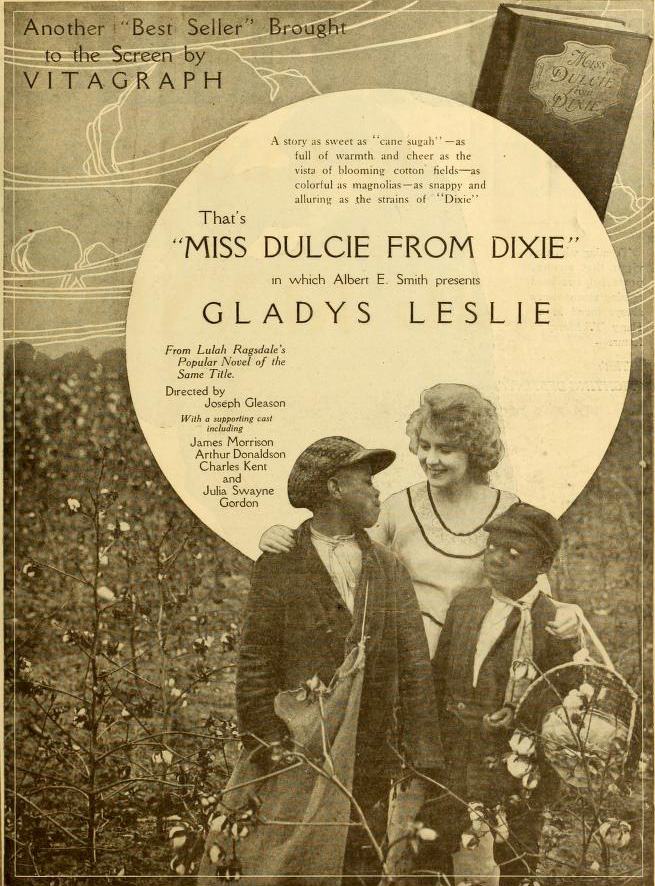
The year 1919 stood as a temporal bridge between the Victorian sensibilities of the past and the burgeoning jazz-age hedonism of the 1920s. In this fluid cultural landscape, Vitagraph’s Miss Dulcie from Dixie emerged as a poignant, if somewhat formulaic, exploration of regional identity and the restorative power of youth. Directed with a steady hand that prioritizes character nuance over grandiosity, the film serves as a vehicle for Gladys Leslie, whose screen presence during this era was often compared to the ethereal charm of Mary Pickford, yet possessed a distinct, grounded vitality.
The narrative architecture of the film rests upon the 'inheritance plot,' a staple of silent cinema that allowed filmmakers to explore class mobility and moral integrity. However, Miss Dulcie from Dixie adds a layer of geopolitical friction by centering the conflict on the lingering resentment of the American Civil War. Dulcie’s father, a Confederate colonel, is a relic of a bygone era, his pride as rigid as his military posture. The tension between him and his brother, John, is not merely personal; it is a microcosm of a divided nation still grappling with its shadow. Unlike the more somber explorations of this theme found in contemporary works like The Tides of Fate, Dulcie’s journey is painted with a palette of sentimental optimism.
When Dulcie arrives in New York, the visual language of the film shifts. The pastoral warmth of her Southern home is replaced by the sharp angles and opulent, yet cold, interiors of the Northern elite. This transition highlights the film's central thesis: that the 'New South' must find a way to integrate with the 'Industrial North' without losing its inherent soul. The second Mrs. John and her son Orrin represent the perceived mercenary nature of the North—a theme also touched upon in the social dynamics of A Girl Like That.
Gladys Leslie carries the emotional weight of the production with a performance that balances slapstick playfulness with genuine pathos. Her portrayal of Dulcie is not that of a helpless ingenue, but rather a proactive agent of change. The sequence where she fakes a sprained ankle to capture Orrin’s attention is a masterclass in silent-era physical comedy. It is a moment of artifice that reveals a deeper truth: Dulcie understands the performative nature of courtship and uses it to break through Orrin’s social conditioning. This level of character agency is far more sophisticated than the passive heroines found in Mother, I Need You.
James Morrison, playing Orrin, provides a steady foil to Leslie’s luminescence. His transformation from a detached, somewhat haughty New Yorker to a man capable of sincere affection is subtle and well-paced. The chemistry between the two is palpable, even through the flickering grain of a century-old master. It is this central romance that anchors the film, preventing it from drifting into purely didactic territory regarding the reunification of the states.
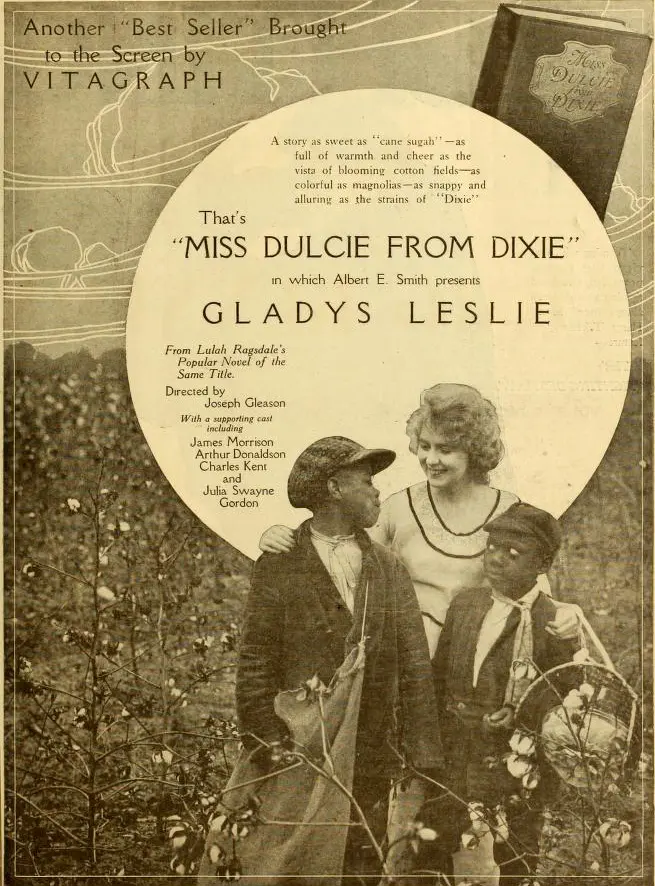
The plot pivot—the discovery of the $500,000 codicil—serves as the film’s moral crucible. In the world of Miss Dulcie from Dixie, wealth is a double-edged sword. To the Aunt, played with a deliciously sharp edge by Julia Swayne Gordon, the money is the only metric of value. Her sudden 'affection' for Dulcie upon learning of the inheritance is a scathing indictment of the upper-class obsession with dowries and social climbing. This cynical perspective on marriage as a financial transaction echoes the domestic tensions explored in The Neglected Wife.
Dulcie’s reaction to this perceived betrayal—returning to her Southern roots—is the film’s most emotionally resonant arc. It underscores the theme of authenticity versus artifice. She would rather forfeit a fortune than exist in a union predicated on a lie. This moral fortitude is what ultimately earns her the right to both the money and the man, a narrative resolution that satisfied the moral codes of 1919 audiences while providing a cathartic end to the family's internal strife.
Technically, the film reflects the high production standards of Vitagraph. The cinematography utilizes natural light in the Southern sequences to create a soft, nostalgic glow, while the New York scenes are lit with a more clinical precision. This visual storytelling is far more advanced than the somewhat static framing seen in Forget-Me-Not or the rugged, unpolished aesthetic of Ghost of the Rancho. The direction by Joseph Bauman (uncredited in some sources but historically linked) ensures that the pacing remains brisk, avoiding the melodramatic slog that often plagued long-form silent features.
One cannot discuss this film without acknowledging the role of 'Mammy,' a character archetype that is undeniably problematic by modern standards but was a ubiquitous fixture of the era's 'Lost Cause' mythology. In the context of the film, she serves as the emotional bridge, the one who facilitates the final reconciliation by bringing the Northern men to the South. Her presence is a reminder of the complex and often painful history that early cinema sought to romanticize. While films like A Girl's Folly poked fun at the artifice of filmmaking, Miss Dulcie from Dixie fully embraces its artifice to deliver a message of national healing.
Final Critical Assessment
Ultimately, Miss Dulcie from Dixie is a fascinating study in the psychology of a nation in transition. It uses the intimate scale of a family feud to address the broader anxieties of its time—wealth, regional loyalty, and the sincerity of human connection. While it shares some DNA with the mystery-driven narratives of The Grell Mystery or the action-oriented The Adventures of Lieutenant Petrosino, its true power lies in its quiet moments of domestic drama. For the modern viewer, it offers a window into the soul of 1919, a year when the world was desperate to believe that love and a little bit of Southern charm could mend even the deepest of rifts.
IMDb 6.4
1934
Community
Log in to comment.