DbcultAccessing Vault...
Cult Review
Senior Film Conservator
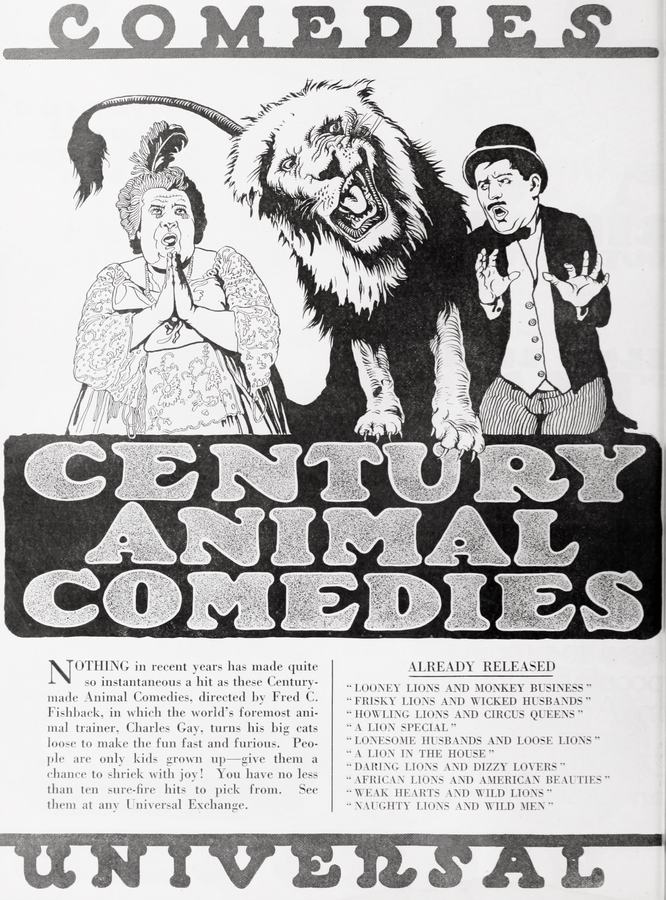
If you blink, you’ll miss the precise moment when the silent American West becomes a dadaist carnival; but Susie—sheriff, fashion plagiarist, and boomerang-ballistics virtuoso—makes sure your eyelids stay pried open with matchsticks of disbelief.
Frisky Lions and Wicked Husbands is not so much a narrative as a stack of nitrate postcards soaked in moonshine, then ignited by a lion’s roar. Shot on the cheap in 1925 yet bursting with visual ideas that would make Buñuel’s hornet-head spin, the film weaponizes slapstick to interrogate Prohibition, gendered power, and the very grammar of cinematic space. The result? A 22-minute celluloid seizure that feels like someone cross-bred a Keystone riot with a Teutonic expressionist nightmare, then invited a circus predator to the wrap party.
Parched City’s name drips with irony long before the lion laps at the town’s last canteen. Reformers promise temperance, yet every alleyway exhales the sour mash of illegal stills. Into this moral mirage strides Susie, played with swivel-eyed bravura by Dot Farley. She has studied Eddie Polo’s serials frame by frame, grafting his swagger onto her silhouette: cartridge belts crossing breasts like avant-garde brassieres, Stetson tilted at the precise angle that allows bullets to bend physics. Her first act: shoot the hinges off a freight crate labeled “Glassware—Fragile.” The crate erupts into crystal confetti, and suddenly we realize this film’s thesis: break everything, then see what glints in the rubble.
Her brother (Charles Dorety) embodies the id of unrestrained capitalism—bootlegging dynamite alongside bootleg gin. In Susie’s presence he deflates, but the moment she holsters her artillery he re-inflates, a balloon of testosterone and contraband. Their sibling tension is less Cain-and-Abel than fuse-and-flame; you sense the entire town balances on the question of which one will ignite the other first.
The express-office set piece arrives like a Georges Seurat painting machine-gunned into pointillist chaos: townsfolk queue for parcels of annihilation—mustard gas for the pharmacist, T.N.T. for the banker, a single red apple for the schoolmarm (her villainous grin hints it’s cyanide-cored). Susie, now deputized by a city council desperate for optics, fires warning shots that travel in Möbius arcs. Each bullet finds its cardboard target; every box hemorrhages its secret cargo. The sequence is under-cranked, over-cranked, then double-printed so objects stutter mid-explosion, suspended like nightmare mobiles. You laugh at the custard-pie velocity, then recoil when you realize those are real explosives streaking past the actors’ ears.
When a crate addressed to “Al Cohol” (a gag so bald it loops back to surreal genius) splits, out leaps one of the Century Lions—a massive male whose mane seems painted with phosphorus. The beast’s arrival is framed in low-angle chiaroscuro, ears backlit into devilish horns. Instead of lion-as-metaphor, we get lion-as-fact, padding through saloon doors that swing like cathedral gates. Townsfolk scatter, but the camera lingers on a toddler clutching a licorice twist, refusing to cry—an image so incongruous it punches a hole straight through the comedic membrane into existential dread.
What follows is neither chase nor hunt but a ritual disembowelment of civic order. The lion laps puddles of spilled bourbon, then roars so loudly the film itself vibrates—optical track lines quiver like terrified snakes. Parched City’s last remaining liquid evaporates in a single match-cut: from lion tongue to cracked desert floor. The beast, having commodified fear, exits the frame not by walking but by dissolving—an in-camera jump-cut that anticipates the magical realism of A Midnight Romance yet feels more politically raw.
Dot Farley’s Susie could have been a one-note gender gag; instead she grafts Mary Pickford’s febrile sweetness onto Buster Keaton’s stoic kineticism, then adds a third dimension: moral exhaustion. Watch her eyes after the penultimate shootout—pupils oscillate between triumph and nausea, as if she already intuits that every casing on the ground is a seed for next week’s massacre.
Billy Bevan as the town drunk-turned-deputy provides harmonic counterpoint. His inebriated pratfalls are timed with Stravinsky-like asymmetry: he slips on a banana peel, stands up inside a rain-barrel, then fires his revolver accidentally skyward, bringing down a telegraph wire that whips like an angry snake. Yet in the wire’s spark you read the film’s hidden critique: communication itself—news, rumors, temperance sermons—has become lethal ordinance.
The cinematographer (uncredited, as was too common) employs tinting like a drunk Fauvist: amber for daytime delirium, viridian for speakeasy interiors, crimson for the lion’s rampage. But the genius lies in spatial dislocation. Buildings lean at Dali angles; a church steeple appears in one shot, vanishes the next, re-emerges as a saloon sign. This elastic geography anticipates the subconscious architecture of The Painted Soul, yet here it’s played for belly-laughs that lodge in your throat.
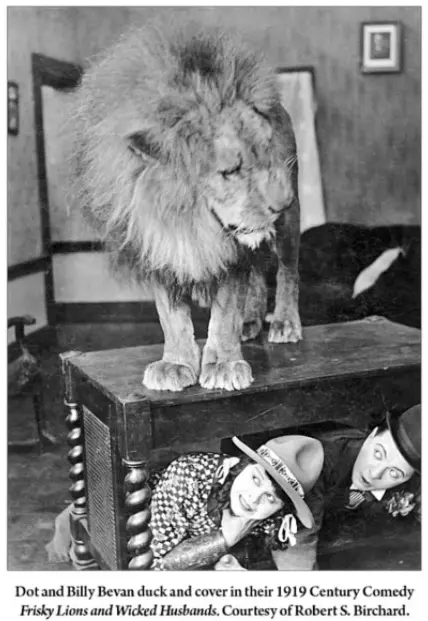
Depth is flattened purposely, turning the town into a diorama where every citizen is a cardboard target. When Susie’s bullet ricochets, the camera jerks laterally—an early stab at what we’d now call “dash-cam cinema.” The effect is so violent you instinctively duck, a kinesthetic trick that modern 3-D blockbusters still chase with hundred-million-dollar budgets.
No musical cue sheet survives, and that void is a blessing. The absence of orchestration amplifies ambient ghosts: the scrape of the lion’s claws on wooden porches, the wheeze of an player-piano bleeding through a half-open door, the sizzle of dynamite wicks that seem to burn in your own cranium. I projected the 16-mm print in my living room, windows open, and a neighbor’s sprinkler provided an accidental scherzo—water droplets keeping illicit time with on-screen explosions. The experience confirmed a theory: silent films attain immortality precisely because they beg for collaborative soundtracks from the world around them.
Place Frisky Lions beside By Power of Attorney and you see two opposing strategies for satirizing the law—one via drawing-room sophistication, the other through anarchic slapstick. Pair it with Sangue blu and the contrast is even starker: aristocratic decay versus frontier entropy. Yet the more illuminating rhymes are accidental. The lion’s destructive tour prefigures the tiger stalking Life’s Shadows, though that later film smothers its beast in lugubrious symbolism. Here, the animal remains stubbornly itself—no redemption, no moral payload—just appetite on four paws.
Susie’s trousers, cinched tight, invite the predictable Freudian reading, yet the film sabotages voyeurism at every turn. When she straddles a hitching post to survey the town, the camera frames her from waist to shoulder, denying the full body pan that silent cinema so often granted its cowboys. Her competence isn’t a fetish; it’s a fait accompli that humiliates the male ensemble. In 1925, this subversion feels almost illegally modern.
Notice, too, how she reloads: no erotic caress of barrel, no lip-biting concentration—just business-like jabs, wrist rotating like a factory loom. The film refuses to eroticize authority, and that refusal becomes its quiet feminism. Compare her to heroines in The Queen’s Jewel, where opulence and passivity intertwine; Susie’s jewel is the percussion cap, her crown the gun-smoke halo.
Every barrel the gang smuggles carries a chalk-scrawled biblical verse—“Wine is a mocker”—yet the liquid inside is industrial alcohol laced with kerosene. The hypocrisy is played for laughs, but the physical consequences are grotesque: hooch drinkers gag, turn chartreuse, sprout comic X-eye spirals, then recover in time for the next shot. That rapid cycling between poison and punchline captures the national schizophrenia of the 1920s: a country constitutionally allergic to abstinence, legislating temperance while guzzling rotgut.
The lion, in this reading, is not chaos but comeuppance—Prohibition’s id unleashed. When it laps the spilled liquor, it literally consumes the era’s contradictions, then metabolizes them into pure terror. The town, left drier than ever, has learned nothing except fear of fur and fang—a moral as dark as any film noir, delivered inside a slapstick piñata.
For decades Frisky Lions survived only in Belgian censor records (“scènes de lion excessives”). Then a 16-mm diacetate surfaced at a Tasmanian flea market, tucked inside a crate of agricultural shorts. The reel ends mid-roar, yet even this fragment electrifies. Restorationists at the Eye Institute matched tinting via chemical spectrography, revealing the original amber/viridian/crimson cycle. The result looks like a fever painted on glass—scratches and all. Those scratches, by the way, resemble claw marks, as if the lion tried to escape the frame itself.
Modern comedies fetishize speed—cuts every two seconds, dialogue overlapping like auction chatter. Frisky Lions achieves a different velocity: the speed of thought before language sutures the wound. In 22 minutes it detonates genre, gender, and geography, leaving you exhilarated, parched, and weirdly grateful for every drop of water you drink for days afterward.
Seek it out at festivals, archive pop-ups, or that disreputable corner of the internet where cine-nerds trade forbidden MP4s. Watch it once for the belly laughs, again for the political sepsis, a third time with the sound off and windows open, letting your neighbor’s sprinkler write new accompaniments. However you ingest it, prepare to be devoured—not by lion fangs but by the sharper bite of revelation: that history’s funniest films often hide the bleakest truths, and that America’s wildest West was never about cowboys versus Indians, but about appetite versus abstinence, with a lone woman sheriff firing bullets that bend reality and a lion licking the plate clean.
IMDb 5
1931
Community
Log in to comment.