DbcultAccessing Vault...
Cult Review
Senior Film Conservator
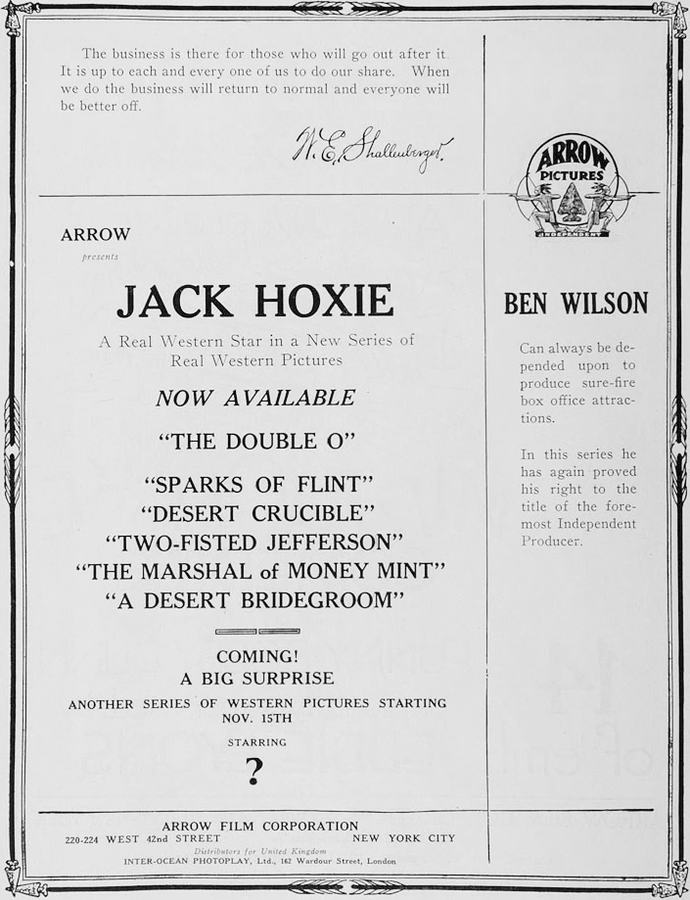
Sunlight drips like molten brass across the opening shots of The Desert’s Crucible, and you instantly sense that this 1922 six-reeler—lanky, sun-scarred, and mostly forgotten—wants to brand its mark on the mythology of the West. Director Roy Clements, armed with a scenario that reads like dime-store Shakespeare, corrals a cast of stalwarts and near-anonymous faces inside a frame that quivers with heat mirage. The result? A curio that both genuflects to and quietly subverts the square-jawed conventions of the frontier epic.
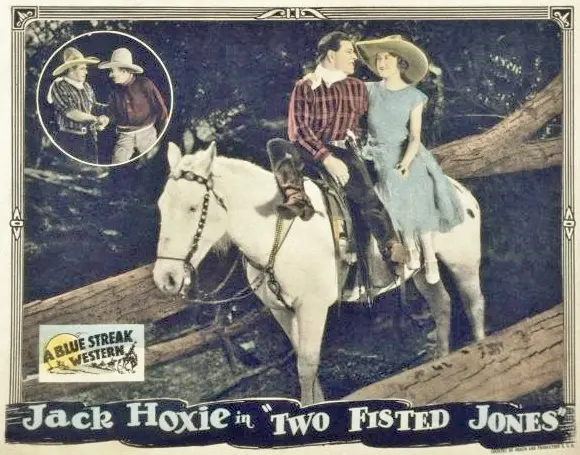
Plot-wise we’ve trod this trail before: greenhorn heir shipped west to “become a man,” tempest-shy romance, outlaw bullet-aria, last-minute moral algebra. Yet the film’s emotional valence keeps slipping its harness. Jack Hardy Jr.—played with coltish bewilderment by Jack Hoxie, bronc-buster turned matinee idol—never fully morphs into the laconic gunslinger the poster promises. Instead, he’s all gawky elbows and damp brow, a man learning that valor is less a medal than a scar you keep picking at.
Enter Evelyn Nelson’s Miss Benson, the ranch secretary whose smirk could slice rope. She’s no schoolmarm in gingham waiting to be rescued; she’s the narrative’s flint, striking sparks against Jack’s fragile self-image. When she scoffs that he’ll “never break that devil horse,” the line lands like a gauntlet soaked in whiskey. What follows is the film’s bravura set piece: a dusty cyclone of man vs. mustang, photographed in long unbroken takes that let the stunt work breathe. The horse—aptly named Lucifer—bucks, sun-fishes, pirouettes on its spine. Jack is hurled into the sawdust, rises, and climbs back aboard with a doggedness that borders on masochism. Clements refuses to glamorize: sweat blooms through denim, knuckles split, camera lingers on a mouth filling with blood that’s spat back onto the arena grit. It’s baptism by concussion.
Compare this bruised masculinity to Carmen where desire is a flamenco-dagger, or the urbane repartee of The Opened Shutters where conflict is corseted drawing-room sarcasm. Crucible insists that becoming a man means absorbing the dust of your own hubris, tasting iron in your mouth, and still swinging back into the saddle—because the gaze of a woman you can’t decode demands it.
The second half shifts from psychodrama to vengeance fable. Tex Fuller’s gang—skulking silhouettes straight out of a Saturday serial—descend upon the spread, thirsty for ransom and retribution. Bullets whine, a corral gate is splintered, and in the chaos Deerfoot (Thomas G. Lingham), the half-Kiowa half-brother whose very existence is the family’s open secret, intercepts the slugs meant for Jack. The moment is staged in chiaroscuro: smoke-choked lantern light carves cavernous shadows across Deerfoot’s torso as he crumples, breath fluting through a punctured lung. His dying glance toward Jack contains whole volumes of unspoken fraternity—colonial guilt, fraternal rivalry, the tragic half-blood who can never inherit but will always protect.
Contemporary viewers might wince at the “noble savage” shorthand, yet Lingham undercuts stereotype with a minimalist stoicism that feels closer to Bresson than Buck Jones. His Deerfoot is less sidekick than moral counterweight: the man who absorbs history’s bullets so the white protagonist can stride into myth. It’s an uneasy transaction, but the film at least acknowledges the debt—something The Blow That Killed Father or The Buyer from Cactus City never cared to question.
Once the gang is hogtied and the marshal dispatched, you’d expect the clinch, the iris-in on reunited lovers. Instead, Clements pivots toward emotional sabotage. Word arrives of Jack’s prior engagement to a manicured debutante in Philadelphia—an allegiance of capital, not affection. Miss Benson’s face shutters, the same woman who earlier dared Jack to eat dust now retreats behind propriety’s lacquered mask. The final twist arrives like a slap: Dad—Jack Sr. himself—announces he will marry the Eastern girl, thereby severing Junior’s last obligation. Only then does Miss Benson relent, folding into Jack’s arms with a tear that feels suspiciously like concession rather than triumph.
It’s this denouement that rescues Crucible
Silent-era acting often ages like milk left in a mineshaft, but Hoxie’s physical credibility—he was a working rodeo champ before Hollywood lassoed him—imbues the riding sequences with muscular authenticity. His face, a plank of oak bisected by wary eyes, telegraphs vulnerability better in close-ups than in the broader pantomime demanded by intertitles. Nelson matches him beat for beat, her cocked eyebrow or subtle shoulder-bob speaking louder than the florid dialogue cards (“You’re still a boy in boots two sizes too large!”). Together they sketch a courtship that oscillates between flirtation and cruelty, reminding one of the sparring lovers in When Love Is King, though stripped of ballroom refinement.
Walter Williamson as Jack Sr. is granite-jawed tyrant incarnate—part railroad baron, part Old Testament judge—while Claude Payton’s Tex Fuller oozes menace with minimal screen time, a testament to how villainy can be sketched through posture alone: hat brim tilted just so, silver conchos catching moonlight like warnings.
Shot around California’s arid Kern County, the picture leverages wide-open tableaux that feel almost Fordian before Ford fully forged his iconography. Cinematographer Andrée Tourneur (yes, relation to Maurice) captures dawn light filtering through dust clouds until the very air seems amber-glazed. Interior scenes rely on kerosene lamplight that carves ochre halos around faces, evoking Rembrandt if he’d moonlighted as a wrangler. The tinting—sepia for day, cobalt for night, rose for amorous interludes—survives in the 4K restoration (courtesy of a 35mm Czech print) and adds emotional legibility without the need for sound.
The editing is refreshingly modern for 1922. Rather than spelling out every narrative beat, Clements allows ellipses: a smash-cut from Jack’s blood-slicked palm to Miss Benson’s trembling coffee cup implies emotional ricochet without literal exposition. Compare this efficiency to the comparatively stagebound Tillie’s Tomato Surprise where scenes unfold in tableau like vaudeville sketches.
No original score survives, so festival screenings invite accompanists to improvise. I first saw Crucible at the Castro with a junk-percussion ensemble; sheet-metal thunder underscribed the horse-breaking sequence, while bowed saw lent Tex’s ambush an eerie Ligeti-like dread. The absence of authoritative music liberates the viewer to author aural meaning—something streamable talkies rarely permit. If you cue it in your living room, try pairing it with William Tyler’s guitar loops or the dusty ambience of Earth’s Hex; Or Printing in the Infernal Method. The marriage is uncanny.
One can’t overstate how rare it was in 1922 to grant a female ranch secretary narrative agency. Miss Benson keeps the ledgers, brandishes the branding iron, and ultimately dictates the terms of affection. She’s both object and adjudicator, a duality the film explores through visual metaphor: her first appearance framed behind a typewriter whose metallic teeth resemble a bear trap. The implication? Courtship is as risky as livestock management, and love can castrate as cleanly as any knife. This proto-feminist streak aligns CrucibleThe White Moll’s urban femme fatale than with the passive frontier sweethearts populating The Bull-Dogger.
Despite robust regional box-office returns (Variety reported “capacity crowds” in Ogden and Bakersfield), the picture never attained the canonical halo of The Covered Wagon or 3 Bad Men. Partly this was due to distributor feuds—Aywon Pictures folded into First Division the following year, scattering prints like tumbleweeds. Only one 35mm nitrate element survived in Prague’s Národní filmový archiv, rescued by a savvy collector who swapped two Chaplin posters for it in 1968.
Yet echoes reverberate. George Stevens cribbed the brother-sacrifice beat for Shane; Nicholas Ray’s Johnny Guitar borrows the sexualized horse-taming as political foreplay. Even Brokeback Mountain’s melancholic finale—two shirts, one inside the other—feels like a lyrical extrapolation of Jack’s final embrace under the courthouse sign. Clements may not be a household moniker, but his DNA courses through the genre’s bloodstream.
If you crave the kinetic slapstick of In a Pinch or the maritime noir of The Undertow, look elsewhere. The Desert’s Crucible is a slow-burn character study masquerading as a shoot-’em-up, a film that asks whether manhood is forged or merely leased from the bank of paternal approval. Its sexual politics are knotty, its racial optics imperfect, yet its bruised heart beats loud beneath the dust.
Stream it on your largest TV, lights dimmed, bourbon poured. Let the amber of the liquor rhyme with the amber of the desert. Note how the tinting shifts like mood rings, how intertitles sometimes vanish for minutes, forcing you to decode bodies in motion. Note, too, how the final clinch feels less like happily-ever-after than like two bruised souls agreeing to settle accounts.
In an era when blockbuster Westerns sprint toward CGI railroads and algorithmic swagger, Crucible offers the radical notion that becoming a man might mean admitting you’re half-broken, that love might arrive wearing your father’s ring, and that the frontier—sprawling as it is—can still feel claustrophobic when your heart’s under brand. That’s a lesson worth wrangling, even a century later.
IMDb —
1921
Community
Log in to comment.