DbcultAccessing Vault...
4.8/10
Senior Film Conservator
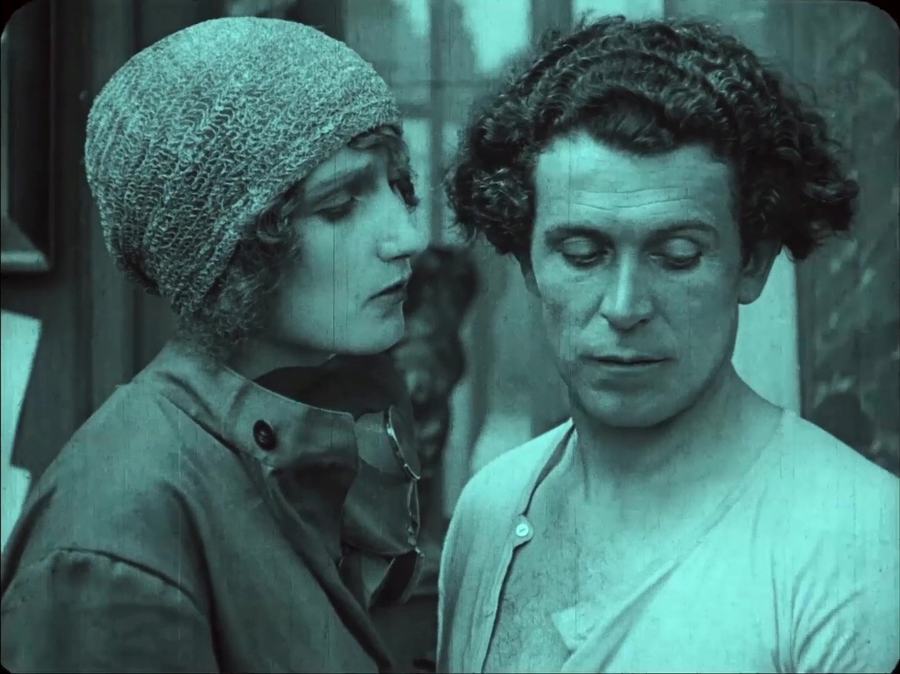
A definitive 4.8/10 rating for a film that redefined the boundaries of cult cinema. Sansone e la ladra di atleti remains a cornerstone of transgressive art.
To witness Sansone e la ladra di atleti in the modern era is to engage with a foundational pillar of physical cinema. Released in 1919, this Italian silent masterpiece transcends its simple genre trappings to offer a fascinating glimpse into the post-WWI European psyche. Luciano Albertini, a man whose very silhouette commanded the screen, imbues the character of Sansone (Samson) with a gravitas that few of his contemporaries could emulate. Unlike the domestic fragility explored in Molly Entangled, Albertini’s world is one of externalized conflict and raw, unadulterated capability.
The film’s central conceit—the systematic theft of athletes—functions as a brilliant, if eccentric, macguffin. In an age where the human body was being increasingly scrutinized through the lens of industrial efficiency and athletic prowess, the idea of a 'thief of athletes' resonates with a peculiar cultural anxiety. This isn't merely a story of kidnapping; it is an exploration of the commodification of the body. The 'Ladra' herself represents a proto-femme fatale, a character archetype that would later find more nuanced expression in films like Colomba, yet here she possesses a predatory agency that is both jarring and compelling for the period.
The cinematography in Sansone e la ladra di atleti is surprisingly sophisticated, utilizing the natural light of the Italian landscape and the stark shadows of industrial interiors to create a sense of impending doom. The director understands the geography of the human form; every muscle flex and every desperate leap is captured with a clarity that belies the technical limitations of 1919. While a production like The Mystery Ship relied heavily on its titular prop for tension, this film relies entirely on the kinetic energy of its cast.
One cannot discuss this film without mentioning the supporting cast, particularly Linda Albertini and the legendary cyclist Costante Girardengo. Their presence adds a layer of 'celebrity' realism that was quite revolutionary for the time. The integration of a real-life sporting hero like Girardengo into a fictional narrative about the abduction of athletes creates a meta-textual layer that must have been electrifying for contemporary audiences. It bridges the gap between the circus, the stadium, and the cinema—a trifecta of early 20th-century entertainment.
"Albertini does not merely perform; he occupies the frame with a muscularity that feels both ancient and modern, a bridge between the myths of antiquity and the burgeoning cult of the individual."
When placed alongside its peers, Sansone e la ladra di atleti stands out for its sheer momentum. If we look at the structural pacing of A Successful Failure, we see a focus on social maneuvering and comedic timing. In contrast, Sansone is a film of perpetual motion. Even the more dramatic beats, which in The Blindness of Divorce would be treated with heavy-handed moralizing, are here filtered through the lens of an adventure serial. It shares more DNA with the breathless pursuit seen in The Voice of Destiny than with the slow-burn domesticity of Her Maternal Right.
The writing, though uncredited in many archives, follows the logic of the 'Maciste' films, where the protagonist is a moral compass whose physical strength is a direct manifestation of his inner virtue. This is a sharp departure from the moral ambiguity found in A Man and the Woman. In Sansone’s world, the lines are drawn in thick, bold strokes. The villains are unequivocally corrupt, and the hero is a paragon of resilience. This lack of nuance is not a flaw but a stylistic choice that allows the action to remain the focal point.
The character of the 'Ladra' (the thief) is an intriguing study in early cinematic villainy. While the film doesn't grant her the psychological depth of a character in A Factory Magdalen, she represents a significant threat to the patriarchal order. She is a woman who controls men, not through seduction alone, but through a sophisticated criminal apparatus. Her ability to neutralize even the strongest athletes through cunning and technology makes her a formidable foil for Sansone. This dynamic creates a tension that is far more engaging than the standard Western tropes found in When Arizona Won.
The set pieces involving her lair are particularly noteworthy. They evoke a sense of 'pulp' wonder that would eventually evolve into the spy thrillers of the mid-century. There is a proto-Bondian quality to the way she operates, utilizing hidden doors and elaborate traps. This level of art direction is a far cry from the gritty realism of Alone in New York, opting instead for a heightened reality that prioritizes spectacle over verisimilitude.
Technically, the film is a marvel of its era. The editing by Eduardo Rivalta (who also appears in the cast) shows a keen understanding of rhythmic continuity. The way the film cuts between Sansone’s feats of strength and the villain’s reactions creates a mounting sense of excitement. This is a stark contrast to the often static framing of Evangeline. Here, the camera feels alive, almost as if it is trying to keep up with Albertini’s explosive movements.
Luciano Albertini’s performance is a masterclass in silent film acting. He avoids the excessive gesticulation that plagued many actors of the 1910s, opting instead for a stoic, physical presence. His eyes convey a sense of focused determination that is entirely modern. It is this groundedness that makes the more fantastical elements of the plot—such as his superhuman escapes—feel earned. He is the anchor that prevents the film from drifting into mere absurdity, much like the grounded performances in Ein Ehrenwort.
It is impossible to ignore the timing of this film’s release. In 1919, Europe was a continent in tatters, recovering from a war that had mechanized death on an unprecedented scale. Sansone e la ladra di atleti offered a return to the primacy of the individual. Sansone is a hero who doesn't need a tank or a machine gun; his power is innate and human. This celebration of the body can be seen as a reactionary response to the horrors of industrial warfare. While Calibre 38 might focus on the cold lethality of firearms, Sansone reminds the audience of the potential for human excellence.
Furthermore, the film’s portrayal of international athletic competition (even in a fictionalized kidnapping context) speaks to a growing globalism. The 'thief' isn't just stealing local talent; she is amassing a collection of the world’s best. This reflects a world that was becoming smaller, more interconnected, and more obsessed with the idea of 'the best.' The film captures this zeitgeist perfectly, blending it with the escapist thrills of the adventure genre.
In the final analysis, Sansone e la ladra di atleti is much more than a historical curiosity. It is a vibrant, muscular piece of filmmaking that deserves a place in the pantheon of great silent cinema. It lacks the cynicism of The Indestructible Wife and the melodrama of Molly Entangled, opting instead for a pure, unadulterated joy in the possibilities of the human form. Luciano Albertini remains one of the most charismatic figures of the early screen, and this film is perhaps the finest showcase of his unique talents.
For the modern viewer, the film offers a lesson in economy of storytelling. It moves with a purpose, never dwelling too long on any one scene, always pushing forward toward the next confrontation. It is a reminder that before cinema was a medium of complex dialogue and psychological subtext, it was a medium of light, shadow, and movement. Sansone e la ladra di atleti is a celebration of that original magic, a film that flexes its cinematic muscles and leaves the audience breathless even a century later.
Cast: Arnold, Dorry Lilian, Luciano Albertini, Linda Albertini, Antonietta Calderari, Varada, Aldo Mezzanotte, Costante Girardengo, Eduardo Rivalta.
Historical Note: This film represents the peak of the 'Athletic-Acrobatic' genre in Italian cinema, a precursor to the modern action blockbuster.
IMDb —
1916
Community
Log in to comment.