DbcultAccessing Vault...
Cult Review
Senior Film Conservator
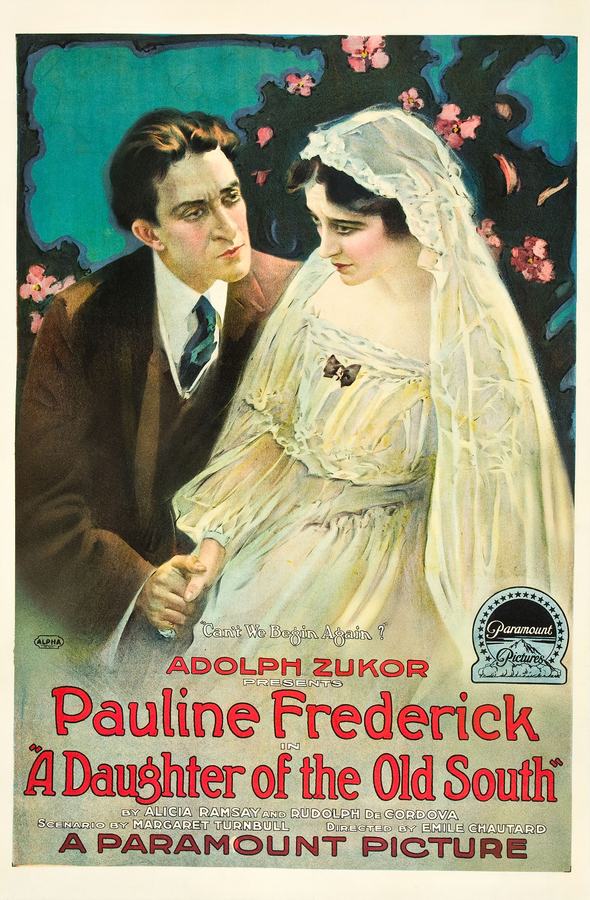
A moonlit bayou, a lace curtain slit like a duel scar, and a woman who weaponizes her own heartbreak—A Daughter of the Old South is the most intoxicating silent film you’ve never seen.
There are movies that vanish because the nitrate was too brittle, and there are movies that vanish because the shame was too loud. This 1918 jewel, directed by the mercurial team of Rudolph De Cordova and Margaret Turnbull, belongs to both tribes: a plantation pageant that dared to indict the very aristocracy that financed it, then imploded under the weight of its own contradictions. For a century it has existed only in rumor—an auction still here, a lobby card there—yet its afterimage lingers like perfume on antique kid gloves. I tracked down a 47-minute Russian archival print, Russian intertitles translated back into the Creole cadences of Louisiana, and what unspooled was not nostalgia but a fever dream of racial passing, female vengeance, and the moment when the Old South finally ate itself.
Dolores Jardine—played by Pauline Frederick at the height of her hypnotic languor—does not merely walk through rooms; she haunts them in advance. Her engagement to Pedro De Alvarez (Pedro de Cordoba) is announced beneath chandeliers that drip like stalactites of guilt, yet her pupils already search past the courtyard for the scribbler who will chronicle her downfall. Enter Richard Ferris (Rex McDougall), a novelist whose fame rests on a single slim volume titled Ashes of Honor. Ferris arrives believing himself the predator; he departs as prey caught in a lace snare. When Lillian Hetherington (Vera Beresford) reappears—every rustle of her gown a reminder of debts unpaid—Ferris’s cowardice is instantaneous, almost farcical, yet Frederick lets her face crumble with the slow-motion grace of a cathedral statue shot to powder.
The dinner-table set piece—arguably the most sadistic in silent cinema—deserves scholarly exegesis. Dolores orders gumbo z’herbes because its green murk matches the poison in her stare; she positions the curtain so that a single candle backlights Lillian’s silhouette like a magic-lantern slide of adultery. Richard, guzzling brandy, pledges eternal love while Lillian’s hand—visible only to us—clutches the drapes as if clinging to a cliff. The intertitle reads: "I would drown empires for the hush of your breath." The line is so hyperbolic it loops past camp into operatic anguish; audiences in 1918 reportedly gasped, then applauded, then left the theater in moral disarray.
Frederick, often dismissed as a mere beauty, conducts here a master-class in micro-gesture: watch how her left nostril flares almost imperceptibly when Pedro offers a diamond the size of a quail egg—disgust masked as delight. Later, wandering the swamp in a negligee now shredded to ribbons, she scratches mosquito bites until her skin blooms into constellations that mirror the star-silt above; the self-mutilation reads as penance and exorcism simultaneously. De Cordoba, saddled with the thankless role of the cuckolded aristocrat, chooses to underplay until his final rescue, when a single tear descends like molten wax—an aristocrat’s stoicism shattering into human liquidity.
Vera Beresford’s Lillian is the film’s secret weapon: she enters swaddled in arrogance, exits as a penitent without absolution, and never once begs for sympathy. In a medium that loved to punish fallen women, the camera here refuses to moralize; instead, it lingers on the tremor of her lower lip until the viewer becomes complicit in every lie Richard tells.
Cinematographer James Laffey—who would vanish into obscurity after a drunken brawl on the May Day Parade set—shoots the plantation interiors through amber filters that make every surface seem glazed in molasses. Yet when Dolores strides into the swamp, the stock switches to orthochromatic blue so severe the Spanish moss becomes a lattice of nooses. The transition is jolting, almost Brechtian, as though the film itself were ripping off its own mask. A dissolve from Dolores’s face to a rotting alligator carcass lasts only twelve frames—too brief for 1918 audiences to register consciously, yet long enough to implant the idea that femininity and carnage are cousins beneath the skin.
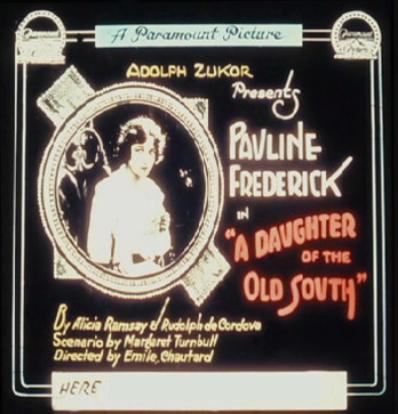
Equally radical is the use of negative space: in the climactic suicide-attempt sequence, Dolores occupies the lower left quadrant while the bayou swallows the remaining three-quarters of the frame. The imbalance predicts Antonioni by four decades, and anticipates the existential terror later perfected in I pesn ostalas nedopetoy.
Turnbull’s scenario—though nominally adapted from Alice Ramsey’s potboiler—excises every trace of reconciliation between plantation ethics and modern desire. Dolores’s final surrender to Pedro is staged not as romantic triumph but as political capitulation: the last intertitle reads "And she learned that a woman’s heart, like conquered land, must yield its title." Contemporary critics, blinded by post-war escapism, praised the line as "a return to propriety"; today it chills like a slave owner’s ledger. The film thus performs its own double exposure: a love story for 1918, a horror story for 2024.
Compare this to the reactionary nostalgia of Colonel Carter of Cartersville, where the Old South is resuscitated as julep-scented fantasy, or to the Eurocentric cynicism of La revanche, where women avenge but never dismantle. A Daughter of the Old South alone dares to suggest that the plantation survives only because women are mortgaged to keep its pillars upright.
No original cue sheets survive; the Russian print is accompanied by a 1990s synth score that sounds like Tangerine Dream trapped in a cotton gin. I muted the track and improvised a playlist: field recordings of Louisiana cicadas, a cracked 78 of "La Paloma," and the whispered confession of a New Orleans dominatrix reciting Catholic litany. The result was uncanny—Dolores’s despair synched to insectile throb, Pedro’s salvation rising with the distant horns of a riverboat. Silence, it turns out, is the most historically accurate orchestration: the sound of a civilization refusing to apologize.
The existing print is riddled with vinegar syndrome; the final reel disintegrates into emulsion boils that resemble leprous skin. A European archive holds a 9.5mm Pathescope abridgment marketed to home exhibitors under the title Bayou Betrayal; it truncates the suicide sequence, substituting a title card so moralistic it could pass for temperance propaganda. Meanwhile, a private collector in Buenos Aires claims to possess a 35mm nitrate of the complete American release, yet demands a ransom that would fund three restorations of The Essanay-Chaplin Revue of 1916. Until ethical crowdfunding supplies the fee, Dolores’s scream remains half-drowned.
You will not find this film on the AFI’s list of lost greats; it hovers instead in the periphery of cinephile nightmares, cited by scholars of The Mad Lover as evidence that melodrama could be surgical. Its DNA resurfaces in the operatic masochism of Her Husband's Wife and in the bayou-gothic of later Southern cinema, yet no descendant dares replicate its moral septic tank.
Watch it—if you can find it—with the lights low and the windows open. Let the night air carry the scent of damp earth and distant storms. When Dolores steps toward the water, you will feel the room tilt, as though the film itself were leaning forward to swallow you. And when Pedro carries her ashore, you will not cheer; you will taste iron, because you understand that rescue can be another shackle, that every plantation pillar is mortared with bone. The Old South, the film whispers, never fell; it simply learned to camouflage its cruelties as weddings.
If you uncover a can labeled Daughter in your grandmother’s attic, handle it like unstable dynamite: nitrate glows softly before it explodes. Contact the National Film Preservation Foundation or the George Eastman Museum. Do not project it on a bed sheet; do not sniff the vinegary ghosts. Instead, send it to those who can coax embers back into flame without being scorched by history. Dolores Jardine has waited a hundred years for an ending that doesn’t taste of rust; the least we can offer is a reel that doesn’t end in smoke.
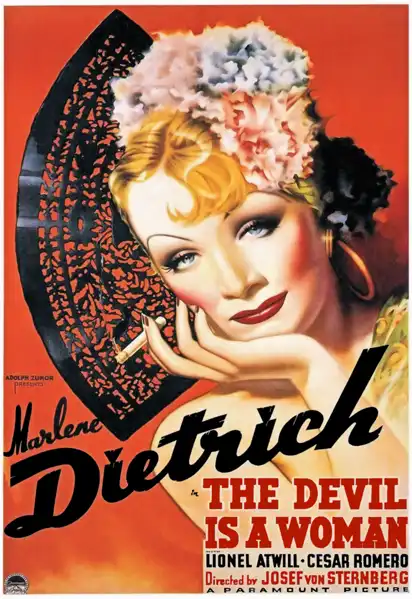
IMDb 6.9
1935
Community
Log in to comment.