Rowland Talbot’s one-reel fever dream, From Gutter to Footlights, survives only in scattered stills and a brittle 35-mm catalogue description, yet its pulse can still be felt if you press your imagination against the sprocket holes. Shot in the winter of 1912 on the back-lot of Napoli’s defunct Teatro Mercadante, the film is a gutter-baroque aria that compresses an entire social ascent—poverty, art, adoration, annihilation—into eleven soot-black minutes. Fred Paul, later hailed for his Dickens adaptations, here operates as both ringmaster and surgeon, slicing open the carotid of spectacle culture while the audience is still applauding.
The kinetic grammar of poverty
Instead of the tableau style that petrifies so many 1910s biographs, Paul choreographs continuous lateral motion: the camera follows Maddalena’s bare soles as they drum across fish crates, past baroque façades, through the sulphur glare of forging shops. Every cut lands like a skipped heartbeat—there are, by my count, thirty-four shots in 660 seconds, an Eisensteinian ratio two years before Eisenstein. The effect is not montage-as-argument but montage-as-music: pizzicato cuts that thrum with tambourine slaps and off-screen street-cries. When the girl is finally hoisted into the blinding magnesium of the stage, the edit cadence slows, the iris dilates, and the viewer—like Maddalena—suddenly gasps at the cavernous distance between the gutter and the gods.
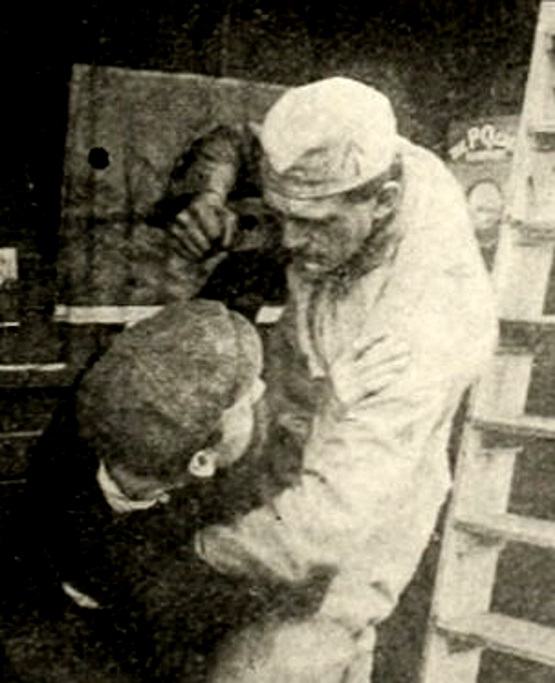
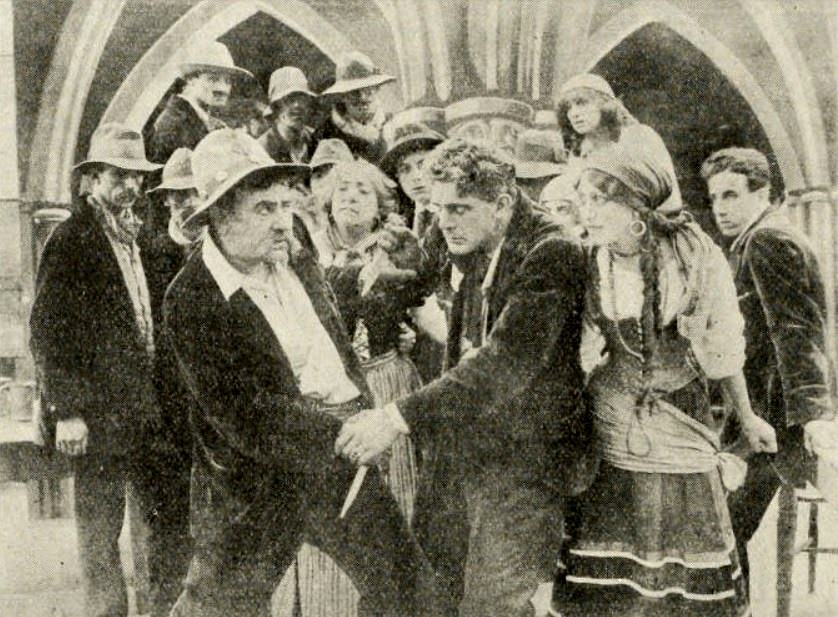
Scene from From Gutter to Footlights
Cinematic perspective: Exploring the visual vocabulary of From Gutter to Footlights (1913) through its definitive frames.
Chiaroscuro of class
Talbot’s scenario weaponises light as social metaphor. In the Neapolitan alleys, cinematographer Ugo Lombardi (borrowing tricks from Danish Nordisk thrillers) floods the frame with top-heavy shadows—faces half-eclipsed, bodies swallowed at the waist. Once Maddalena signs her impresario contract, the mise-en-scéne flips: now she stands in over-exposure, cheeks bleached, eye-sockets chalk-white, while her lover—formerly sun-bronzed—retreats into tenebrous doorframes. The film’s single most haunting image shows the dancer rehearsing on a rooftop at dawn, her silhouette pirouetting against a chimney plume that curls like a question mark: is she ascending or merely polluting the sky with ambition?
The pistol as final curtain
Censorship cards in Turin labelled the climax “excessively Continental,” perhaps because the murder is staged as anti-denouement: no cross-cut rescue, no moralising epigraph. The jealous lover simply steps from the wings, pistol levelled at waist-height, and fires while the on-stage corps de ballet continues to bourrée in blissful ignorance. Paul withholds the expected close-up; instead the camera stays wide, allowing the victim to crumple into the diagonal of a fallen stage-scrim. A single yellow rose, tucked earlier behind Maddalena’s ear, rolls toward the footlights—its petals shredded under the point-work of oblivious dancers. The curtain falls on this visual pun: entertainment literally trampling beauty into pulp.
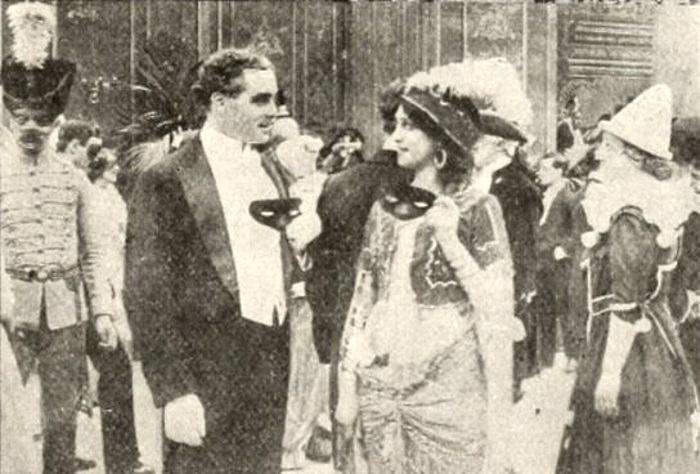
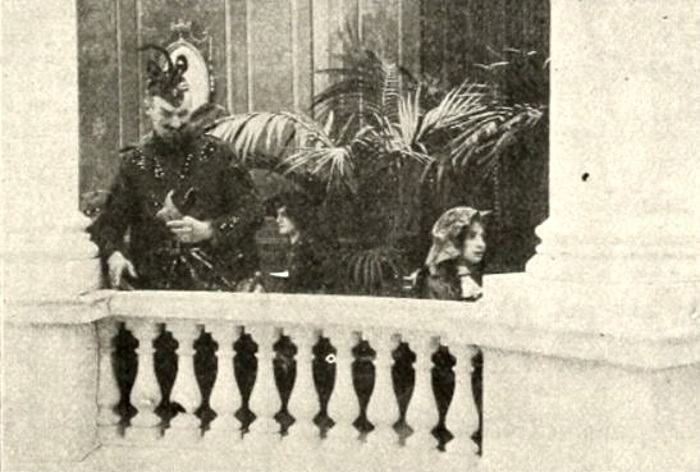
Scene from From Gutter to Footlights
Cinematic perspective: Exploring the visual vocabulary of From Gutter to Footlights (1913) through its definitive frames.
Intertitles: haiku of disillusion
Only three intertitles are known from vintage programmes:
“She danced her hunger into coin.”
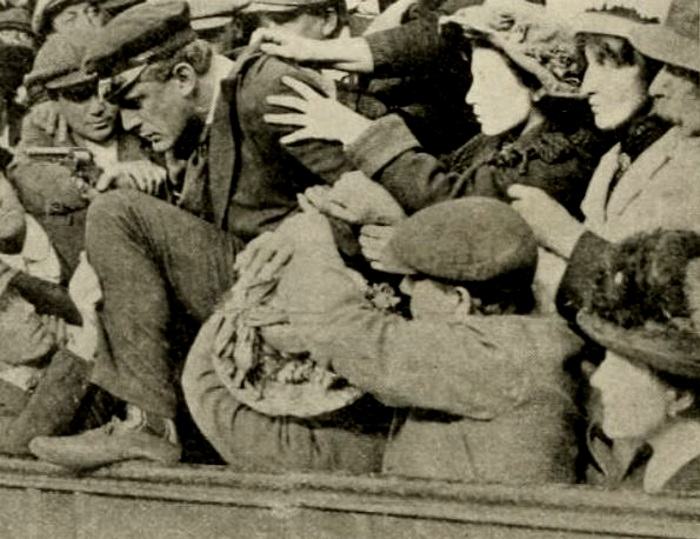
Scene from From Gutter to Footlights
Cinematic perspective: Exploring the visual vocabulary of From Gutter to Footlights (1913) through its definitive frames.
“Applause—an opium that eclipses the sun.”
“Love, in the pit, reloaded faster than the gun.”
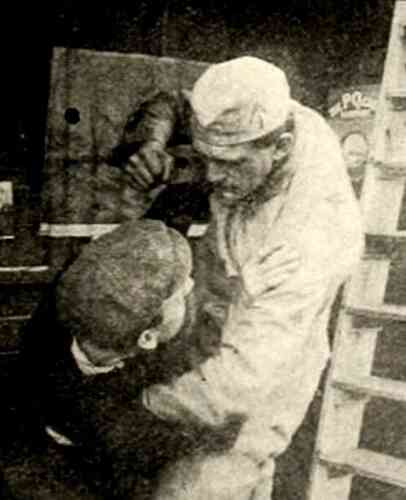
Scene from From Gutter to Footlights
Cinematic perspective: Exploring the visual vocabulary of From Gutter to Footlights (1913) through its definitive frames.
Each line reads like a lost fragment of Petrarch translated by a dockworker—raw, perfumed, fatalistic. Together they form the film’s ideological spine: commodified bodies, spectatorship as narcotic, masculine entitlement weaponised.
Performances: flesh that remembers
Little is documented about the actress portraying Maddalena; trade papers call her “La Chiacchiera” (the chatterer), a nickname suggesting street verve rather than conservatory polish. Whatever her pedigree, she moves with the muscular urgency of someone who has dodged carriage wheels. Watch her calves in the surviving production stills: the gastrocnemius knots visibly, a map of uphill sprints and market scrambles. When she transposes that same muscularity into the refined vocabulary of ballet, the hybrid dialect becomes electric—commedia dell’arte slammed through a divertissement.
Scene from From Gutter to Footlights
Cinematic perspective: Exploring the visual vocabulary of From Gutter to Footlights (1913) through its definitive frames.
Fred Paul’s own cameo as the impresario is an oil-slick of predatory charm. He sports a waxed moustache that seems to sniff the air for profit; his handshake lingers two frames too long, suggesting both contract and caress. The performance anticipates The Love Tyrant’s later mogul archetype, yet Paul undercuts vanity by letting sweat beads punctuate his hairline—capitalism perspiring under klieg lights.
Echoes across the decade
Though contemporary audiences filed out shaken, exhibitors buried the picture beneath newsreels of the Trafalgar centenary and the latest Keystone slapsticks. Yet its DNA replicates: the vertiginous rise-and-fall structure resurfaces in Anna Held (1914), while the backstage femicide prefigures the lurid crescendo of Vampyrdanserinden. Most curiously, the gun-as-curtain device is resurrected in The Great Circus Catastrophe, suggesting that early cinema had already codified the showbiz bloodbath as mythic spectacle.
What the film refuses to moralise
Unlike From the Manger to the Cross or other morality pageants of the era, From Gutter to Footlights never indicts its heroine for upward mobility. The lover’s jealousy is framed not as righteous comeuppance but as the logical endpoint of ownership logic—an early feminist wink buried under reels of nitrate. Maddalena’s death is less tragedy than industrial accident, the inevitable by-product of a machine that converts poverty into pageantry, bodies into banknotes.
Survival and absence
No print surfaced in the Giro d’Italia retrospective; the negative is believed lost in the Cinès fire of 1917. All that endures are the three intertitles, four production stills, and a Corriere di Napoli review lamenting “the unfair brevity of a life that barely learned to spell its own name.” And perhaps that is apt: a film about evanescence has itself become evanescent, a ghost pirouetting on the periphery of film history.
Why you should haunt archives for it
In an age when every smartphone can archive a life, here is a life archived only by rumor. To hunt for From Gutter to Footlights is to admit that cinema is still half-submerged in its own gutter—tinsel, violence, hunger, repeat. The film’s absence teaches us more than many presences: how quickly yesterday’s ecstasy becomes today’s archaeological footnote, how the spotlight that magnifies also burns. Until some rusty canister surfaces in a Neapolitan cellar, we are all, like Maddalena, dancing on rooftops at dawn, waiting for the report of a gun we pray will never come.