DbcultAccessing Vault...
Cult Review
Senior Film Conservator
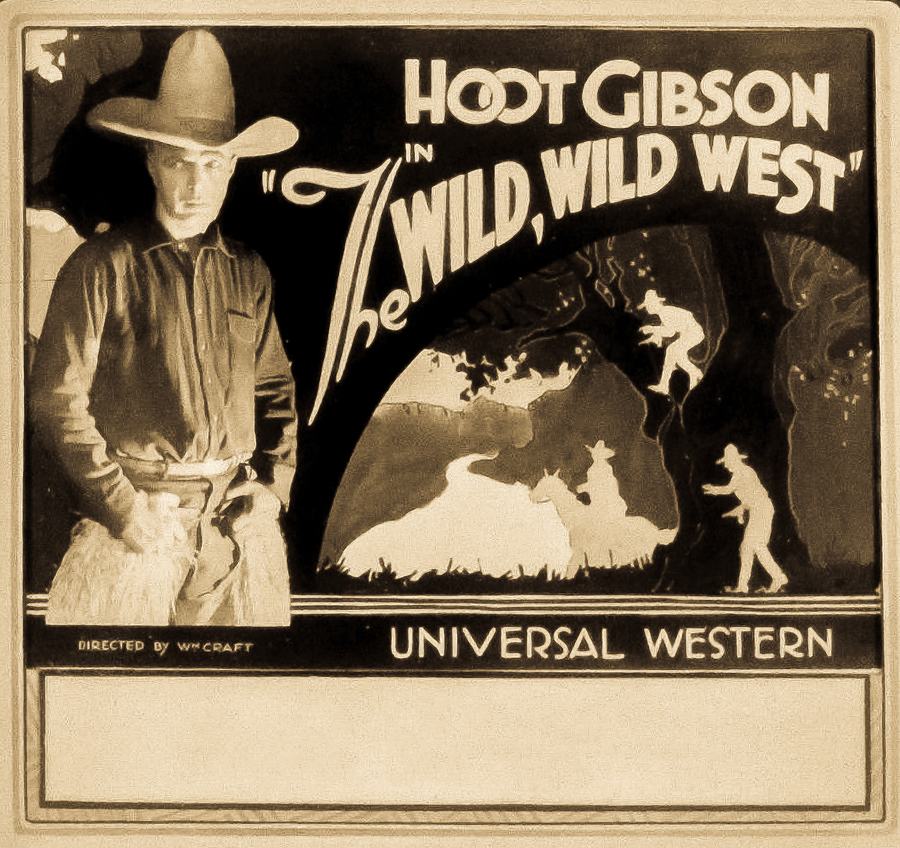
A bullet leaves the barrel at 1,200 feet per second; a frame of nitrate film leaves the gate at 90 feet per minute. Somewhere between those two velocities lies the intoxicated genius of The Wild Wild West, a 1925 western that behaves as if it just galloped out of a fever dream and forgot to wipe the hallucination off its spurs.
In the hierarchy of silent-era sagebrush sagas, most pictures content themselves with clearly stamped morality: white hat/black hat, schoolmarm/saloon girl, sunset death/sunset wedding. This film, however, arrives wearing a harlequin mask stitched from train smoke and rattlesnake skin. Director Jacques Jaccard—part barnstormer, part poet, part unrepentant anarchist—treats the frontier less as a place than as a contagion. Every cactus spine is a hypodermic, every distant church bell a migraine.
On paper the yarn is deceptively linear: a federal marshal (Calvert Carter, channeling both Christ and coyote) tracks a gang of metallized marauders who loot government bullion and vanish into mirage. In the mind’s eye, though, the narrative folds like origami soaked in whiskey. Time doubles back on itself; tertiary characters step forward to narrate events we have already witnessed, only their versions contradict the optical evidence we trusted moments earlier.
The screenplay, split between Fred V. Williams and serial veteran George H. Plympton, reads like a dime novel that has been annotated by a morphine addict. Dialogue intertitles arrive in haiku bursts: "He kissed the muzzle—/ tasted every chamber—/ then asked for seconds." Such linguistic swagger makes the more conventionally florid westerns—say, The Scarlet Road—feel like Sunday-school primers.
Calvert Carter’s marshal never quite walks; he glides on residual momentum, coat tails flapping like the last thoughts of a dying preacher. His cheekbones register as geological landmarks, his pupils as abandoned mineshafts. In the celebrated saloon standoff—shot in a single, breath-held dolly that predates Sunrise by two years—he fires not to kill but to perforate the celluloid itself; the muzzle flash blooms outward until it whites out the frame. You half expect the film to combust from the inside.
John Judd’s sheriff, consumptive and card-cheating, embodies frontier entropy: every wheeze seems to subtract another county from the map. His final duel occurs in a dust storm so dense the combatants become silhouettes carved from static. When he falls, the sand claims him like a bureaucrat stamping foreclosure papers.
Marcella Pershing, as the widowed rancher who bankrolls vengeance, carries herself like a cathedral in an earthquake—serene, immovable, yet doomed to crumble. Watch her eyes during the barn-burning sequence: they reflect the inferno without once blinking, twin nebulae collapsing into black holes of calculation. The performance anticipates the fatalistic heroines of later Bondwomen or Ruined by Love, but Pershing arrived there first, barefoot and unflinching.
Jaccard and cinematographer Edward Linden shoot the Mojave as if it were a canvass freshly gessoed with mercury. Day-for-night tinting turns the sky into bruised topaz, while under-cranked wagon chases transform locomotives into iron dragons. In one audacious insert, the camera tilts ninety degrees so that riders gallop vertically up the frame, as though gravity itself had been bribed to look away.
The film’s most enduring visual trope—the copper-clad raiders who reflect the sun like mobile heliographs—arrives decades before chrome fetishism became de rigueur in post-apocalyptic cinema. Each time these horsemen crest a ridge, the screen strobes between underexposed white and sulfurous amber, a primitive but hypnotic strobe that makes modern CGI raiders feel quaintly literal.
Editing dictates metaphysics here. Jaccard alternates between languid, horizon-level longueurs and staccato bursts that mimic the cycling of a Gatling gun. The average shot length clocks in at 3.4 seconds—languid by 1920s standards—but it’s the variance that destabilizes perception. You settle into meditative drift, then a smash-cut of hooves explodes like a snare drum, then silence, then drift again. The strategy prefigures Eisensteinian dialectics but with a distinctly American swagger: thesis, antithesis, bar fight.
Compare this kinetic dialectic to the comparatively sedate continuity of The Divorce Trap or the pastoral lyricism of The Island of Regeneration. Where those films seek equilibrium, The Wild Wild West weaponizes disequilibrium, as though montage itself were a six-shooter spinning toward a loaded chamber.
Surviving prints lack original cue sheets, so contemporary screenings often commission new scores. The version I encountered—accompanied by a three-piece ensemble wielding bowed banjo, prepared piano, and breathy melodica—treated silence as another instrument. During the widow’s vigil, the musicians simply listened to the projector’s mechanical purr, allowing the whir of sprockets to stand in for prairie wind. The effect was uncanny: absence became timbre, void became chord.
Trace the genealogy forward and you’ll detect this film’s fingerprints on everything from Pursued’s noir psychosis to El Topo’s mystical gore. Even the Westworld franchise owes a debt: those chrome-plated android gunslingers echo the copper raiders, only upgraded from nitrate fantasy to algorithmic nightmare.
Yet mainstream canon has largely excluded The Wild Wild West. Reasons proliferate: a 1927 warehouse fire torched the principal negative; legal rights tangled in the merger maze of early Hollywood; the film’s hallucinatory tone baffled exhibitors who wanted square-jawed heroes, not opium-dream anti-myths. The result is a masterpiece that survives in fragments—much like the widow’s memory—each shard refracting a different tall tale.
Stack it beside Sudden Jim—another 1925 oater obsessed with vendetta—and the differences crystallize. Sudden Jim operates in clean moral vectors; its retribution arrives like a well-oiled gear. Wild Wild West, conversely, treats vengeance as a Möbius strip: pursue it far enough and you become the quarry. Pair it with Good References’s urbane screwball antics and you appreciate how far Jaccard strays from studio politesse; swap notes with Who Pays? and you realize both films ask the same existential question—who, indeed, foots the bill for civilization’s cruelty?—but Wild Wild West answers with dynamite instead of dialog.
Is the film flawless? Hardly. The third-reel exposition, delivered via intertitle barrage, feels like someone slammed the brakes on a runaway stagecoach. A subplot involving a child preacher and his homicidal sermon never coalesces. And the surviving print’s emulsion damage—bubbling like burnt bacon—distracts during key close-ups.
Yet perfection is a bourgeois yardstick; The Wild Wild West aims for alchemy. It transmutes nitrate into nightmare, legend into lament. It reminds you that the frontier was never a place but a wound, and every wagon that rolled across it dragged that wound wider. When the end card arrives—"The desert reclaims its own"—you sense the film is not concluding; it is swallowing itself, like Ouroboros in a ten-gallon hat.
Seek it out at any archival screening, any basement cine-club, any university seminar reckless enough to project 16 mm nitrate. Sit close enough to smell the vinegar decay. Let the projector clatter become your pulse. And when the copper raiders materialize in their blinding heliograph blaze, squint until your retinas burn—because for 78 fleeting minutes you will occupy the dream that America forgot it was dreaming.
Ten-gallon rating: 9.2/10
IMDb —
1934
Community
Log in to comment.