DbcultAccessing Vault...
6/10
Senior Film Conservator
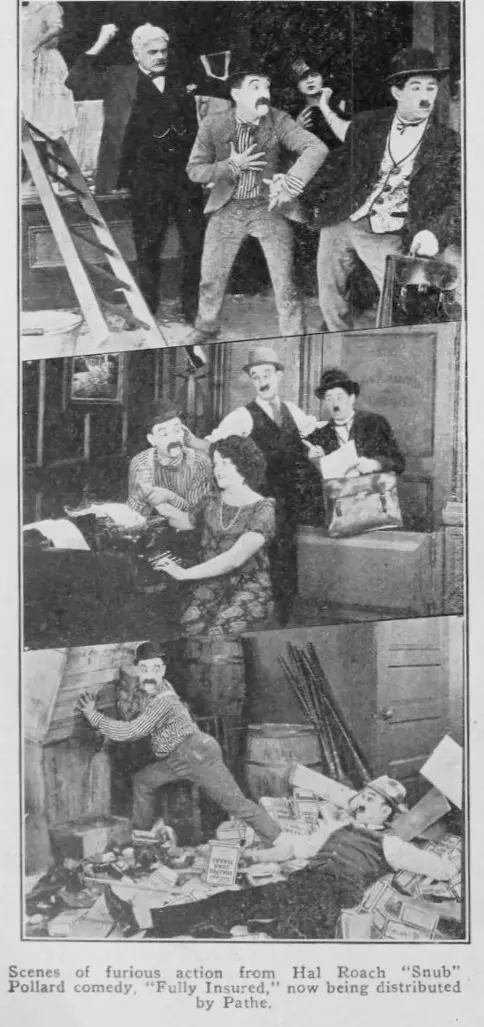
A definitive 6/10 rating for a film that redefined the boundaries of cult cinema. Fully Insured remains a cornerstone of transgressive art.
The opening tableau of "Fully Insured" establishes a world where the promise of a paycheck is as fragile as a soap bubble, yet the insurance policy Snub clutches feels like a talisman against the capricious whims of the labor market. The camera lingers on the inked contract, a visual metaphor for the illusion of security that pervades the modern workplace.
Snub's first termination arrives with a pratfall that is both physical comedy and a commentary on the suddenness with which employers can discard their workforce. The agent, a slickly dressed figure whose smile never wavers, appears like a deus ex machina, handing Snub a new badge and a fresh set of responsibilities, only for the cycle to repeat with a different backdrop each time.
The film’s pacing mirrors the frantic tempo of an assembly line, each scene cutting briskly to the next job assignment—factory foreman, street vendor, circus performer—each role more outlandish than the last, underscoring the absurdity of a system that treats workers as interchangeable cogs.
George Rowe delivers a deadpan performance as the insurance agent, his stoic demeanor a perfect foil to Snoddy Pollard’s manic energy. Rowe’s subtle eyebrow raises convey volumes about the predatory nature of profit-driven intermediaries, while Pollard’s slapstick timing remains impeccable, his pratfalls echoing the physical humor of Buster Keaton yet infused with a uniquely satirical edge.
James Finlayson, famed for his exaggerated expressions, appears as a disgruntled employer who dismisses Snub with a flourish of a handkerchief, his exaggerated sighs amplifying the melodrama of each termination. The interplay between Finlayson’s theatrical disdain and Pollard’s earnest desperation creates a comedic tension that drives the narrative forward.
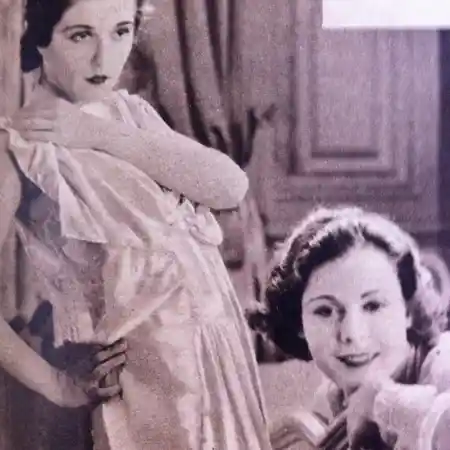
Blanche Mehaffey’s brief but luminous cameo as a sympathetic clerk adds a fleeting moment of humanity, her eyes conveying empathy that the insurance agent’s polished veneer never offers. Her presence hints at the possibility of genuine connection amidst the transactional chaos.
The film’s visual composition draws inspiration from the German Expressionist aesthetic, employing stark shadows and angular set pieces that echo the internal turmoil of a man trapped in an endless employment loop. The chiaroscuro lighting accentuates Snub’s isolation, even when surrounded by bustling crowds.
When comparing "Fully Insured" to contemporaneous works such as The Pretenders (1916), one notices a shared preoccupation with societal expectations, yet Pollard’s film diverges by focusing on the economic mechanisms that dictate personal identity.
The recurring motif of the insurance policy itself functions as a visual leitmotif, appearing in close-up shots whenever Snub’s fortunes shift. Its crisp parchment contrasts sharply with the grimy backdrops of factories and street markets, symbolizing the fragile veneer of financial safety.
Billy Engle’s role as a bumbling coworker provides comic relief that is both slapstick and poignant; his constant misreading of instructions mirrors Snub’s own missteps, suggesting that the system’s failures are collective rather than individual.
The screenplay, though lacking a credited writer, demonstrates a sophisticated understanding of satire. Each gag is meticulously timed, and the dialogue—delivered through intertitles—balances wit with a biting critique of capitalist exploitation.
A particularly striking sequence occurs when Snub is assigned to a circus act, forced to juggle flaming torches while the insurance agent watches from the sidelines, clipboard in hand. The scene juxtaposes the spectacle of entertainment with the perilous reality of workers forced into dangerous roles for the sake of a paycheck.
The film’s soundscape, though silent, is enriched by a lively piano accompaniment that underscores each comedic beat, while occasional crescendos accentuate moments of tension, echoing the emotional rollercoaster of job insecurity.
In a scene reminiscent of Bag and Baggage, Snub attempts to carry a suitcase of paperwork that never seems to end, a visual gag that encapsulates the endless bureaucracy surrounding employment contracts.
The film’s climax arrives when Snub, exhausted by the relentless cycle, confronts the insurance agent in a deserted office. The confrontation is silent yet charged, the intertitles sparingly used to let the actors’ expressions convey the underlying power dynamics.
The resolution does not offer a tidy happy ending; instead, Snub walks away from the insurance desk, his silhouette fading into the night, suggesting that true liberation may require abandoning the very system that promises security.
Comparatively, Over Night explores romantic entanglements with similar brisk pacing, yet "Fully Insured" distinguishes itself by embedding its humor within a socio-economic critique, making its satire more resonant.
The supporting cast, including John M. O'Brien as a stern foreman and 'Tonnage' Martin Wolfkeil as a burly laborer, enrich the tapestry of workplace archetypes, each embodying a facet of the industrial hierarchy that Snub must navigate.
The film’s editing is noteworthy for its rapid cross-cutting between Snub’s various employments, a technique that predates the montage sequences popularized by Soviet filmmakers, thereby heightening the sense of relentless motion.
A brief interlude featuring a newspaper headline—"Insurance Guarantees Salary During Unemployment"—serves as a meta-commentary on the era’s burgeoning consumer culture and the allure of financial safety nets.
The cinematography employs low-angle shots when Snub is dismissed, emphasizing his vulnerability, while high-angle shots of the insurance agent convey an unsettling authority, reinforcing the power imbalance inherent in the employer-employee relationship.
When juxtaposed with the Western melodrama of Tex of the Timberlands, "Fully Insured" offers a city-bound critique, yet both share a fascination with the individual's struggle against larger forces.
The film’s humor never loses its edge; even the most slapstick moments—such as Snub slipping on a banana peel while holding a stack of paychecks—carry an undercurrent of tragedy, reminding viewers that laughter can mask profound despair.
The final intertitle reads, "Freedom lies beyond the contract," a succinct statement that encapsulates the film’s central thesis: true autonomy cannot be purchased, no matter how comprehensive the policy.
In the broader context of silent-era cinema, "Fully Insured" stands alongside works like The Better Wife and The Lone Star Ranger, sharing a willingness to interrogate societal norms through accessible storytelling.
The film’s legacy endures as a prescient commentary on gig economy precarity, its themes resonating with contemporary audiences who grapple with contract work, freelance instability, and the illusion of safety nets.
Overall, "Fully Insured" is a masterclass in blending physical comedy with incisive social critique, a silent gem that rewards repeated viewings with ever-deeper insights into the human cost of economic commodification.
IMDb 7.1
1931
Community
Log in to comment.